
The U.S. National Transportation Safety Board (NTSB) has released preliminary findings from its ongoing investigation into the September 6, 2026, runway overrun involving 21 Air Flight 7598, a Boeing 767-33A freighter operating for Amazon.com Services LLC at Miami International Airport (MIA).
The aircraft, registration N1997A, was operating a Part 121 domestic cargo flight from Luis Muñoz Marín International Airport in San Juan, Puerto Rico, to Miami. During landing on Runway 30, the aircraft touched down thousands of feet beyond the threshold and subsequently overran the runway, striking two ground vehicles. Five people on the ground were killed and three others suffered serious injuries. The two flight crew members sustained minor injuries.
The NTSB's investigation remains active, and the agency stresses that the recorder data and sequence are preliminary and subject to change. No probable cause has been established.
According to the preliminary information, Flight 7598 was cleared to land on Runway 30 at approximately 1349 EDT, when it was about 12 nautical miles from the runway's displaced threshold.
ADS-B and flight-data-recorder (FDR) information indicates that the 767 crossed the runway threshold at approximately 105 feet above ground level and 177 knots groundspeed.
The aircraft subsequently touched down approximately 3,750 feet beyond the runway threshold, at about 160 knots. Investigators found tire marks from the main landing gear at approximately 3,750 and 3,820 feet from the threshold. The weight-on-wheels indication also intermittently switched between "air" and "ground" for approximately seven seconds before remaining in the ground state.
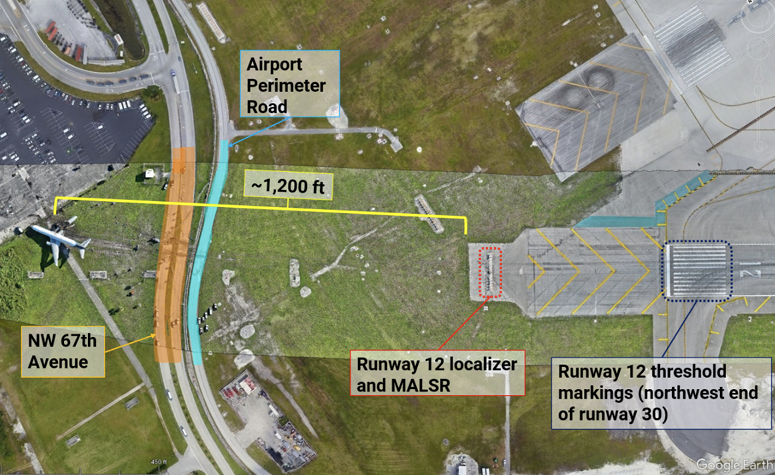
The aircraft continued along the runway and reached the departure end at approximately 113 knots. It then struck the runway localizer and the Medium Intensity Approach Lighting System with Runway Alignment Indicator Lights (MALSR), before leaving the paved surface.
One of the most significant findings concerns the aircraft's deceleration systems.
The FDR indicates that speed brakes remained stowed and the thrust reversers did not deploy during the landing rollout. Wheel braking was initially applied at approximately 146 knots.
About eight seconds later, the brakes were released at approximately 120 knots, while the engine throttle resolver angles increased to values consistent with go-around thrust. At that point, only about 930 feet of runway remained.
Approximately four seconds later, both throttles were reduced to idle at about 117 knots, and the wheel brakes were reapplied. Only about 415 feet of runway remained.
The aircraft ultimately departed the runway at approximately 113 knots.
The NTSB's earlier recorder update also identified a cockpit warning concerning excessive speed during the approach. The agency has emphasized that the interpretation of these events remains preliminary and that the CVR/FDR evidence will be incorporated into a broader airplane-performance study.
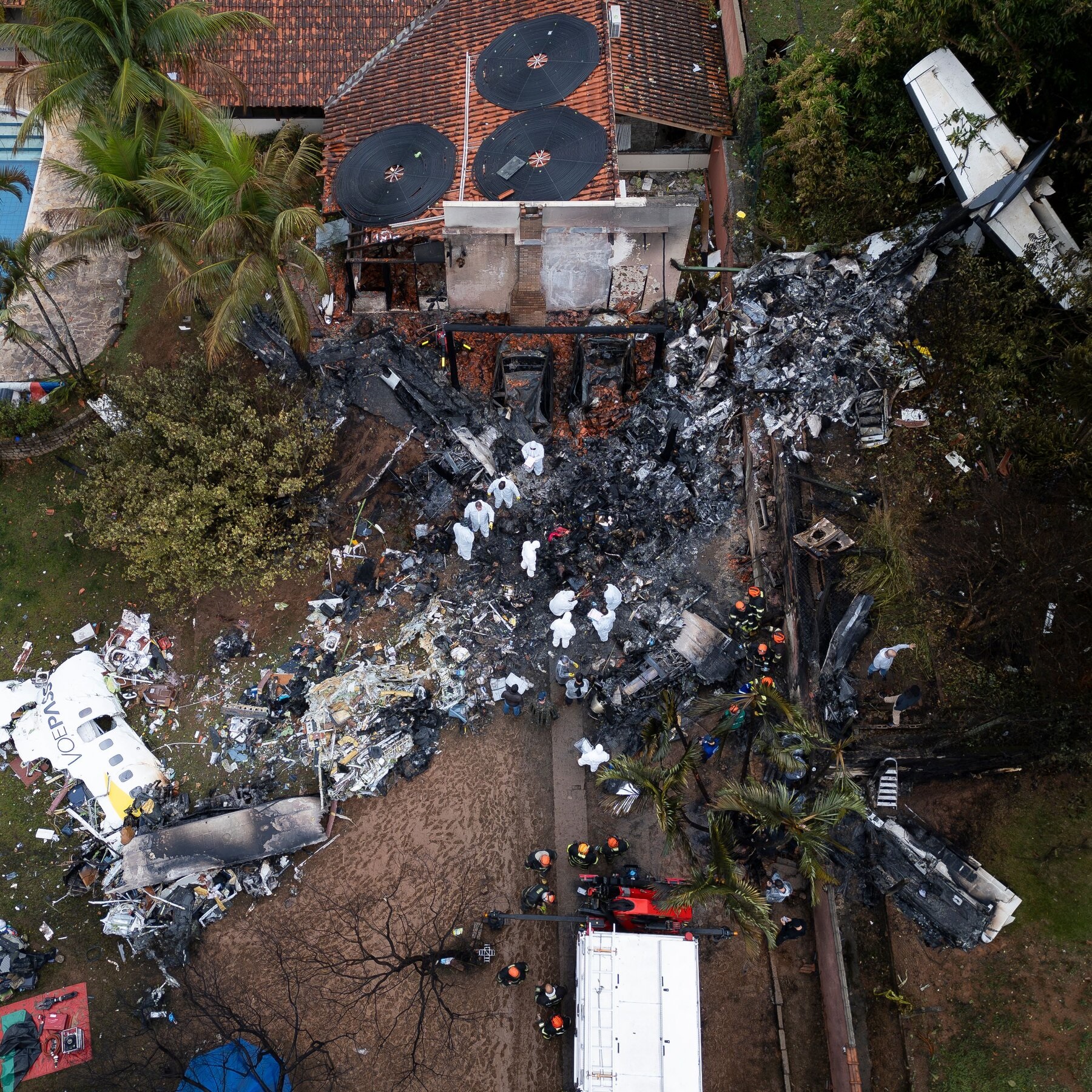
After leaving the runway, the 767 travelled approximately 1,200 feet beyond the paved surface before coming to rest.
Before reaching the airport perimeter fence, the aircraft struck a Ford Econoline passenger van travelling along an airport perimeter road. Seven people were aboard the van: five sustained fatal injuries and two suffered serious injuries.
The aircraft subsequently crossed NW 67th Avenue, where it struck a Toyota Corolla Cross SUV. The SUV's sole occupant sustained serious injuries.
The aircraft then struck a chain-link fence surrounding a parking area and came to rest in a grass area adjacent to the parking lot. A post-crash fire developed on the aircraft's right wing.
The captain had approximately 7,267 hours of total flight experience, including about 150 hours on the Boeing 767. He had joined 21 Air in April 2026 and received his Boeing 767 type rating in May 2026.
The first officer had approximately 2,800 total flight hours, including about 800 hours on the Boeing 767. He joined 21 Air in February 2025 and received his 767 type rating in April 2025.
The Boeing 767 was manufactured in June 1994 and originally delivered as a passenger aircraft before being converted to freighter configuration in 2016. It was powered by GE CF6 engines and had accumulated approximately 110,077 flight hours and 24,505 flight cycles.
21 Air operated a fleet of 22 Boeing 757 and 767 aircraft at the time of the accident.
Investigators successfully recovered and downloaded both the cockpit voice recorder (CVR) and flight data recorder (FDR).
The CVR contained approximately 2 hours and 4 minutes of recording, including the accident flight. The FDR contained approximately 54 hours of data covering 16 flights and recorded more than 400 parameters.
The NTSB has assembled specialized investigative groups covering structures, systems, powerplants, air-carrier operations and human performance, air traffic control, airports and survival factors, hazardous materials, and the CVR. Specialists in meteorology and aircraft performance are also examining the accident.
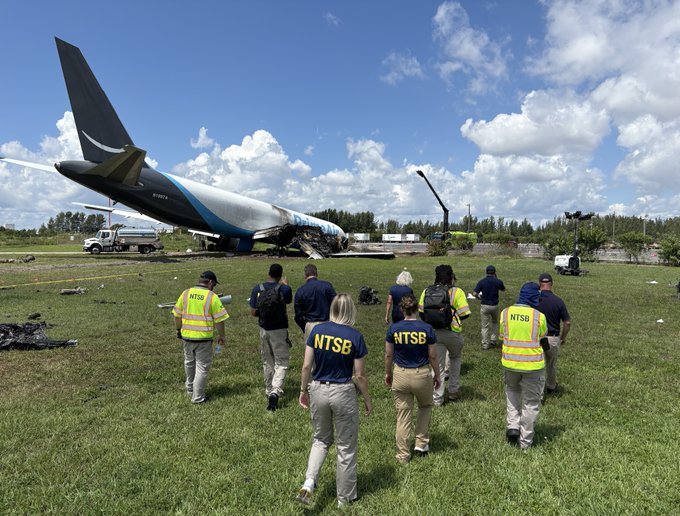
The NTSB began its on-scene investigation on September 7, documenting the wreckage and collecting evidence. NTSB Chairwoman Jennifer Homendy served as the Board Member on scene.
The agency has not yet determined why the aircraft touched down so far along the runway, why the speed brakes and thrust reversers did not deploy, or why thrust was subsequently increased and then reduced during the rollout. Those questions will form part of the continuing investigation.
The NTSB's preliminary findings should therefore be viewed as a reconstruction of the accident sequence—not a determination of cause.
You may like to read.......


.jpg)
.jpg)