
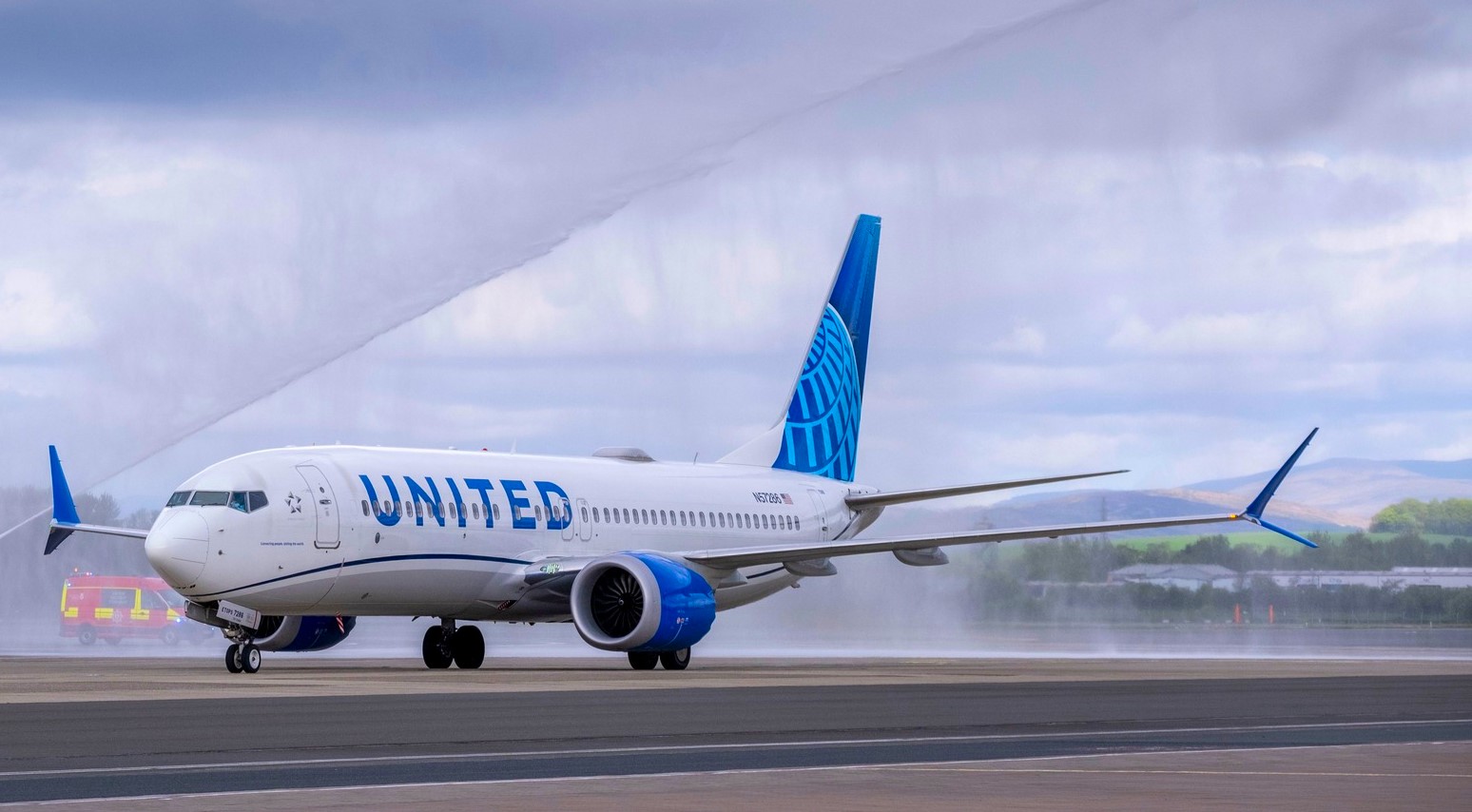
The battle for the future of airline bookings may no longer be just between airlines and online travel agencies. Artificial intelligence agents could become the next powerful intermediaries – and United Airlines is signalling that it wants to retain control.
United Airlines' November 11, 2026 announcement restricting unauthorised third-party AI agents from making flight reservations marks an important development in the relationship between airlines and emerging travel technologies.
As AI-powered assistants become increasingly capable of searching flight options, comparing fares, managing itineraries and completing purchases, the airline industry faces a fundamental question:
Who should control the passenger's journey – the airline, the travel agency, or an AI agent acting on behalf of the customer?
United's decision highlights the growing tension between technological innovation, passenger data protection, aviation security, regulatory compliance and the commercial interests of airlines.
This is potentially the beginning of a much larger transformation in airline distribution.
United announced its decision through its official newsroom on November 11, 2026.
The airline is taking steps to restrict unauthorised third-party personal AI agents from accessing its digital platforms and completing transactions.
Its concerns fall into four major categories:
|
Concern |
Potential consequence |
|---|---|
|
Data security |
Exposure of passenger credentials and payment information |
|
Unauthorised transactions |
Incorrect bookings or unwanted purchases |
|
Loyalty programmes |
Unintended spending of MileagePlus miles |
|
Regulatory compliance |
Automated actions conflicting with required passenger declarations |
United also intends to extend restrictions through travel agencies and aggregators and update its booking, ticketing and distribution policies.
Importantly, this is not a ban on AI technology itself. United says it will continue evaluating how personal AI assistants interact with its services.
There is another important dimension to United's decision: control over airline distribution.
United CEO Scott Kirby reportedly expressed concern about creating another intermediary between the airline and its customers.
That statement is significant.
Airlines have spent decades trying to reduce their dependence on traditional travel agents and online travel agencies (OTAs). AI agents could potentially become an even more powerful intermediary because they can independently search multiple airlines, compare prices, select itineraries and eventually complete transactions.
For an airline, this raises several commercial questions:
Who controls the customer relationship?
Who owns the passenger's travel preferences and booking data?
Who determines which airline appears first in an AI recommendation?
Who receives the booking commission or service fee?
Can an AI agent negotiate or select fares without the airline controlling the customer experience?
United's decision is therefore as much about distribution strategy as it is about cybersecurity.
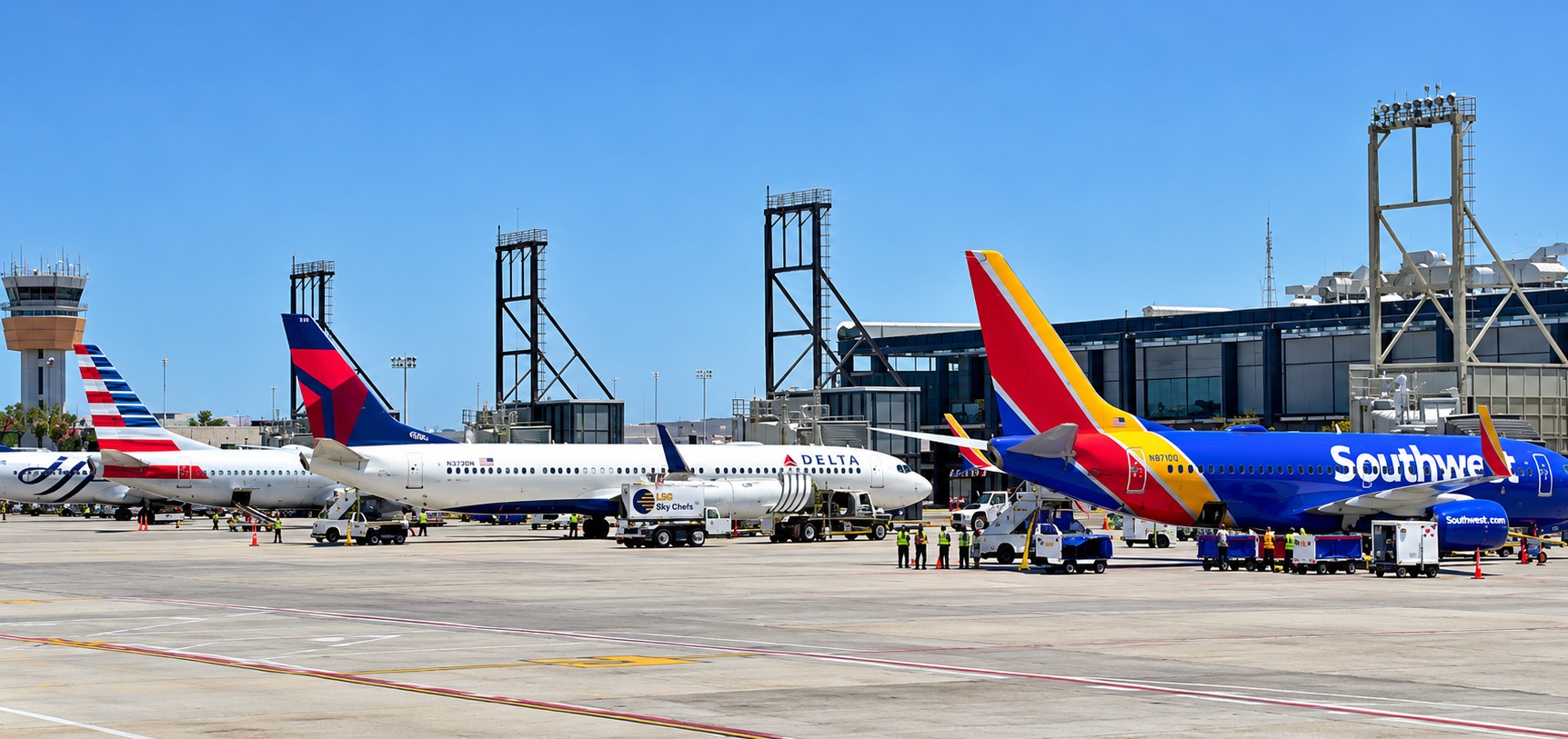
The airline industry is not yet following a single strategy for AI-powered reservations.
United Airlines – Restricting third-party agents
United is blocking unauthorised personal AI agents from completing transactions through its platforms and distribution partners. It wants to retain control over customer accounts, bookings and payment processes.
Restrictive approach
Delta Air Lines – Controlled AI access
Delta has indicated that authenticated AI assistants can complete bookings, with additional safeguards for sensitive transactions, including travel involving unaccompanied minors.
Controlled access
Southwest Airlines – AI-assisted discovery
Southwest has introduced ChatGPT integration to help customers explore flight options and search for available travel.
AI integration
This difference illustrates the strategic dilemma facing airlines: blocking AI agents could protect existing distribution channels, but embracing them could provide access to a new generation of customers.
To understand the potential impact, it is important to distinguish traditional AI chatbots from agentic AI.
A conventional chatbot responds to questions and provides recommendations. An AI agent can potentially execute a sequence of actions with limited human intervention.
Imagine a passenger giving an AI assistant the following instruction:
Find the cheapest business-class flight from Kuwait to London next Friday, allow one checked bag, avoid overnight connections, use my frequent-flyer benefits where possible and book the best option under US$2,500.
Search multiple airlines and travel platforms.
Compare fares, baggage allowances and connection times.
Check loyalty programme benefits.
Evaluate flight schedules and aircraft types.
Select an itinerary based on the passenger's preferences.
Complete payment after receiving authorisation.
Monitor schedule changes and manage rebooking options.
This is fundamentally different from simply visiting an airline website and purchasing a ticket.
The potential disruption is that the passenger may no longer need to visit an airline's website at all.
The AI assistant could become the primary interface between the passenger and the entire travel industry.
|
Traditional booking |
Agentic AI booking |
|---|---|
|
Passenger searches individually |
AI searches across providers |
|
Passenger compares fares |
AI compares total trip value |
|
Passenger selects flights |
AI recommends based on preferences |
|
Passenger enters details |
AI can populate authorised information |
|
Passenger manages changes |
AI can potentially monitor and manage the itinerary |
This transformation could make airline products easier to compare, but it could also increase competition over price, service quality, reliability and loyalty benefits.
The next three to five years could determine how AI becomes integrated into airline retailing and passenger services.
I see five major developments emerging.
Rather than allowing independent AI assistants to control the booking process, airlines could introduce their own AI-powered travel assistants.
Passengers might simply tell an airline's AI:
Find the cheapest suitable flight.
Upgrade my seat using miles.
Change my itinerary if a flight is delayed.
Rebook me automatically if a connection is missed.
Recommend a hotel near my destination.
The airline would retain control over its booking system while providing the convenience of an AI assistant.
This could become a competitive advantage for carriers with strong digital platforms and loyalty programmes.
A likely compromise is a system in which AI agents are permitted to transact only through verified and authorised connections.
This could involve:
Passenger-approved digital identity verification.
Secure, limited-duration access tokens instead of sharing passwords.
Explicit confirmation before payments or ticket issuance.
Spending limits and transaction notifications.
Separate authorisation for redeeming loyalty miles.
Audit trails recording every action performed by the AI agent.
Instead of completely blocking AI agents, airlines could establish a framework determining which agents are trusted to perform which transactions.
This would allow passengers to benefit from automation without giving unrestricted access to their airline accounts.
One of the most important developments is the International Air Transport Association's (IATA) New Distribution Capability (NDC).
NDC is designed to allow airlines to distribute richer offers through different sales channels, including travel agencies and technology providers.
It provides a foundation for more personalised airline retailing, allowing airlines to offer different products, ancillary services and pricing options across distribution channels.
As AI agents become more sophisticated, NDC and newer Offer and Order systems could provide the technological foundation for authorised AI-driven travel purchases.
In the future, an AI agent might receive a personalised airline offer directly from an airline rather than relying on publicly displayed fares alone.
The most significant impact of AI in aviation may actually come from behind the scenes.
According to an Amadeus report published in June 2026, agentic AI has several potential airline applications beyond flight booking.
These include:
|
Aviation function |
Potential AI application |
|---|---|
|
Flight operations |
Monitoring operational disruptions |
|
Aircraft turnaround |
Coordinating refuelling, maintenance and ground handling |
|
Customer service |
Automated rebooking and disruption management |
|
Revenue management |
Analysing demand and recommending pricing strategies |
|
Maintenance |
Supporting predictive maintenance workflows |
|
Crew management |
Identifying scheduling conflicts and operational requirements |
Amadeus has also reported successful testing of AI-assisted voice rebooking, where an agent can identify alternative flights, explain fare differences and initiate payment.
These applications could deliver measurable operational savings while improving the passenger experience.
This is perhaps the biggest unanswered question.
Aviation is a highly regulated industry where passenger identity, security declarations, payment authorisation and operational accountability matter.
Existing aviation security laws already establish responsibilities for screening passengers and baggage. However, United's statement does not establish that every AI-assisted booking or check-in is prohibited by federal law.
The industry may eventually need clearer rules covering:
Whether an AI agent can legally complete a passenger's check-in.
Who is responsible for incorrect or unauthorised bookings.
How passenger consent must be verified.
How airlines should protect personal and financial information.
Whether AI agents can independently manage disruptions and rebooking.
How regulators can audit automated transactions.
The challenge will be to accommodate technological progress without weakening aviation security or passenger protections.
The emergence of AI-powered airline booking could redistribute power across the aviation ecosystem.
|
Stakeholder |
Potential impact |
|---|---|
|
Airlines |
Greater automation, but risk of losing direct customer relationships |
|
Passengers |
Faster searches, personalised offers and easier disruption management |
|
Online travel agencies |
Potential loss of traditional search and booking traffic |
|
AI technology companies |
Opportunity to become major travel distribution platforms |
|
Global distribution systems |
Opportunity to supply authorised booking infrastructure |
|
Frequent-flyer programmes |
More personalised rewards, but greater account-security risks |
|
Aviation regulators |
New responsibilities for automated transactions and accountability |
The biggest potential winners could be airlines and technology companies that establish trusted AI booking infrastructure early.
Traditional online travel agencies could face pressure if customers increasingly delegate travel planning to AI assistants.
However, they could also adapt by becoming authorised suppliers of inventory, services and booking capabilities to AI platforms.
Scenario 1 – Controlled AI adoption
Most practical outcome
Airlines introduce approved AI booking assistants with authentication, payment controls and passenger confirmation. Independent agents gain access through regulated or commercial partnerships.
Scenario 2 – Airline-controlled digital ecosystems
Strong commercial possibility
Major airlines develop proprietary AI assistants and retain control of fares, customer accounts, loyalty programmes and ticket issuance. Third-party agents remain restricted or operate through airline-approved channels.
Scenario 3 – AI becomes the dominant travel intermediary
Longer-term possibility
Passengers increasingly use independent AI agents to plan and purchase entire journeys across multiple airlines, hotels and ground transport providers. Airlines risk becoming inventory suppliers competing for visibility within AI recommendations.
Assessment is that the first two scenarios are more likely to develop initially.
Airlines have invested heavily in direct booking platforms, loyalty programmes and customer databases. They are unlikely to surrender control of these assets without safeguards and a clear commercial benefit.
However, they cannot afford to ignore AI-powered travel distribution either. If passengers increasingly prefer booking through AI assistants, airlines that refuse to participate could lose access to an important customer acquisition channel.
The eventual outcome will probably be a hybrid system: airline-controlled transactions supported by authorised third-party AI agents.
United's decision is an early indication of how seriously airlines are considering the implications of agentic AI.
For decades, airlines have competed through fares, routes, schedules, aircraft, cabin products and loyalty programmes. The next competitive frontier could be the digital relationship between an airline and its passenger.
The question is no longer simply whether AI can find a cheaper flight.
It is whether an AI agent can be trusted to select, purchase, manage and modify an entire journey without compromising passenger security or airline control.
United may be blocking unauthorised AI agents today, but the wider aviation industry is unlikely to stop experimenting with them.
The future of airline reservations could be less about passengers searching airline websites and more about AI assistants negotiating with airline systems on their behalf.
The airlines that successfully balance automation, security, customer trust and commercial control could gain a significant advantage in the next decade of aviation.
United Airlines – Official announcement on restricting third-party AI agents, November 11, 2026.
Amadeus – How Agentic AI Is Transforming Airlines, June 2026.
US Code – Aviation passenger and baggage security requirements.