
Hong Kong's Cathay Group has placed a firm order for 14 additional Airbus aircraft, strengthening its fleet renewal and expansion programme with a combined investment commitment exceeding HK$150 billion (approximately US$19.2 billion) between 2026 and 2035.
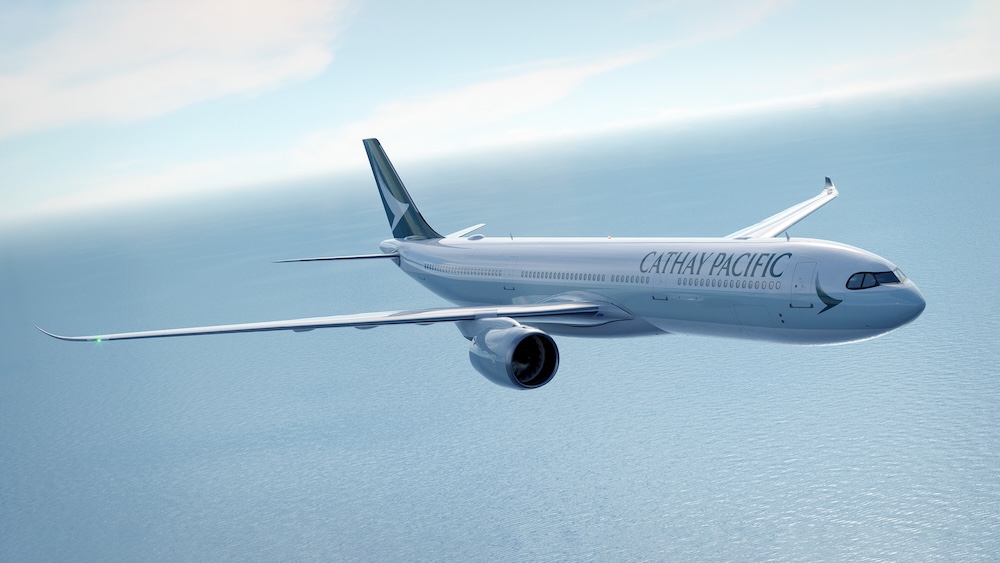
Announced on November 11, 2026, the latest order comprises 11 Airbus A330-900 widebody aircraft and three Airbus A321neo narrowbody aircraft. The purchase rights were exercised under the group's existing aircraft agreements, taking its total firm commitment for the A330-900 to 41 aircraft.
The new aircraft will support the expansion of Cathay Pacific's regional and Asia-Pacific operations, while the additional A321neos will strengthen the short-haul network of its low-cost subsidiary, HK Express.
Cathay originally ordered 30 A330-900s in 2024, with additional purchase rights. Exercising rights for another 11 brings the type's firm order total to 41.
The three additional A321neos build on the 32 A320neo-family aircraft ordered in 2023. The resulting commitment for that family is 35 aircraft, although it includes both A320neo and A321neo variants.
The A330-900 is expected to become a major component of Cathay Pacific's medium-haul and regional widebody fleet.
Cathay currently operates 43 Airbus A330-300 aircraft, making the type one of the airline's largest fleet categories. These aircraft are an important part of its regional network, but their ageing fleet profile makes replacement increasingly important.
According to ch-aviation fleet data, the A330-300 fleet has an average age of approximately 18.2 years. The A330-900 offers a modernised replacement while retaining the advantages of the A330 family.
Key Airbus A330-900 specifications:
|
Specification |
A330-900 |
|---|---|
|
Maximum range |
8,100 nautical miles |
|
Range in kilometres |
15,000 km |
|
Engines |
2 × Rolls-Royce Trent 7000 |
|
Fuel efficiency improvement |
Up to 25% |
|
Aircraft category |
Widebody, twin-engine |
|
Cabin |
Airbus Airspace |
Airbus claims the A330neo delivers up to 25% lower fuel consumption, CO₂ emissions and operating costs compared with previous-generation competing aircraft.
The aircraft's longer range also gives Cathay greater flexibility to operate beyond its traditional regional network, potentially opening opportunities for longer flights from Hong Kong. These efficiency figures are manufacturer claims rather than independently verified savings specific to Cathay's operations.
The three additional A321neos are intended for HK Express, Cathay Group's low-cost subsidiary.
The airline has been expanding its network, particularly across mainland China and other short-haul Asian destinations.
The A321neo provides:
Higher passenger capacity than smaller A320-family aircraft.
Greater operational flexibility on short- and medium-haul routes.
Improved fuel efficiency and lower emissions.
Greater capacity to support high-demand regional markets.
The A320neo family offers at least 20% lower fuel consumption and CO₂ emissions compared with previous-generation single-aisle aircraft, according to Airbus.
The latest Airbus purchase is part of a much larger fleet modernisation and growth strategy.
Cathay Group CEO Ronald Lam Siu-por said the latest commitments bring the group's planned aircraft deliveries from 2026 onwards to 120.
The airline group has also outlined an ambitious longer-term objective.
The 150-aircraft and 150-destination objectives are conditional on favourable market conditions. The 120 figure is the current planned delivery pipeline, not the group's entire fleet size.
The group's aircraft pipeline includes:
Airbus A320neo and A321neo narrowbodies.
Airbus A330-900 regional widebodies.
Boeing 777-9 long-haul aircraft.
Airbus A350F freighters.
Airbus A330 freighters.
Cathay is targeting 150 new aircraft deliveries and a network serving 150 destinations over the next 10 years, subject to favourable market conditions.
Cathay Pacific Airways Limited+2
The delivery schedule is particularly important because the new aircraft are intended to support Cathay's longer-term fleet renewal programme.
|
Aircraft |
Quantity |
Delivery information |
|---|---|---|
|
A330-900 |
11 |
2031–2035 |
|
A321neo |
3 |
Specific delivery dates not disclosed |
|
Total |
14 |
New firm orders |
The 11 additional A330-900s are scheduled for delivery between 2031 and 2035. The delivery schedule for the three A321neos has not been publicly specified in the announcements reviewed.
Cathay's aircraft investment programme also includes two additional Airbus A350F freighters ordered in May 2026, alongside its existing Boeing 777-9 commitments. This demonstrates that the group is pursuing growth across passenger and cargo operations, rather than focusing exclusively on regional passenger services.
Cathay's latest order reinforces Hong Kong's ambitions to remain one of Asia's leading international aviation hubs.
The A330-900s will provide additional passenger and cargo capacity across Asia-Pacific, while the A321neos will allow HK Express to expand its short-haul network.
The investment also reflects a broader industry trend: airlines are increasingly replacing older aircraft with more fuel-efficient, longer-range and technologically advanced models to control operating costs while expanding capacity.
For Cathay, the challenge will be managing its substantial delivery pipeline amid continuing aircraft manufacturing and supply-chain constraints.
|
Metric |
Figure |
|---|---|
|
Latest Airbus order |
14 aircraft |
|
Additional A330-900s |
11 |
|
Additional A321neos |
3 |
|
Total A330-900 firm commitments |
41 |
|
Previous A330-900 order |
30 (2024) |
|
Previous A320neo-family order |
32 (2023) |
|
New A320neo-family commitment |
35 |
|
A330-300s currently operated |
43 |
|
Average A330-300 age |
Approx. 18.2 years |
|
A330-900 maximum range |
8,100 nm |
|
A330neo claimed fuel saving |
Up to 25% |
|
A330-900 new delivery window |
2031–2035 |
|
Cathay investment commitment |
HK$150bn+ |
|
Planned deliveries from 2026 |
120 |
|
Long-term aircraft delivery target |
150 |
|
Network destination target |
150 |