
Beijing reportedly plans to accelerate restructuring of China's aviation industry, targeting smaller loss-making airlines, stricter market-entry requirements and improved financial sustainability, with the number of domestic carriers potentially declining by 2030.
China is considering a major restructuring of its domestic airline industry from 2027, with the Civil Aviation Administration of China (CAAC) reportedly examining measures to consolidate the market, address persistent financial losses and strengthen regulatory oversight.
According to a report published by the South China Morning Post on November 25, 2026, citing industry sources, the proposed programme could include mergers, restructuring and stricter operating requirements for smaller and financially struggling airlines.
The initiative remains under development, and no final regulatory framework or implementation timetable has been officially announced. Importantly, the report does not establish that the CAAC intends to impose compulsory mergers.
The reported initiative comes as China's aviation industry faces mounting financial and competitive pressures, despite passenger traffic reaching record levels.
According to the CAAC's 2025 industry statistical bulletin:
Although passenger demand has continued to recover, profitability remains a major challenge for several carriers.
The situation deteriorated further during 2026, particularly as fuel prices increased and competition intensified.
The financial difficulties are no longer limited to smaller regional operators. China's three largest state-controlled airline groups have also experienced substantial pressure.
Their third-quarter 2026 financial results illustrate the scale of the challenge:
| Airline | Q3 2026 net result | Year-on-year performance |
|---|---|---|
| Air China | RMB270.6 million profit | Down 92.6% |
| China Eastern Airlines | RMB64 million profit | Down 98.2% |
| China Southern Airlines | RMB609 million loss | Reversed from RMB3.84 billion profit |
All three airlines reported losses for the first nine months of 2026, despite having recorded profits during the corresponding period in 2025.
Several factors contributed to the deterioration:
These conditions have intensified pressure on airline profitability and strengthened the economic argument for industry restructuring.
According to the industry sources cited by the South China Morning Post, the CAAC is considering several measures designed to improve the financial health and operational sustainability of China's airline sector.
Although the final proposals have not been published, the reported areas of consideration include:
1. Higher financial requirements for new airlines
The regulator could increase minimum capital requirements and introduce stricter financial conditions for companies seeking to establish new airlines.
China's revised Civil Aviation Law, effective July 1, 2026, already establishes minimum paid-in registered capital of RMB600 million for passenger air transport companies and RMB400 million for cargo and mail operators.
This provides an existing statutory foundation for tighter financial oversight.
2. Restructuring of loss-making airlines
Smaller airlines experiencing persistent financial difficulties could become candidates for restructuring, ownership changes or mergers with stronger operators.
3. More clearly defined airline exit mechanisms
The proposed framework could establish clearer procedures for dealing with carriers that cannot maintain sustainable operations.
4. Greater scrutiny of new market entrants
Stricter licensing and financial requirements could make it more difficult for new operators to enter an already competitive domestic aviation market.
5. Improved industry profitability
The broader objective is to improve operational efficiency, reduce unsustainable competition and encourage more disciplined capacity and fleet planning.
These are reported policy considerations rather than confirmed regulatory requirements.
One important distinction concerns the regulator's legal authority.
The CAAC is China's principal civil aviation regulator, responsible for airline operating licences, aviation safety oversight, operational standards and industry supervision.
However, its regulatory authority should not automatically be interpreted as the power to order two independent airline companies to merge.
Corporate mergers generally involve decisions by the companies and their shareholders, relevant state-owned asset authorities where applicable, and regulatory procedures, including competition review by China's State Administration for Market Regulation (SAMR) when required.
Consequently, the CAAC could potentially encourage consolidation through licensing policies, financial requirements, regulatory oversight and industry planning. However, an actual corporate merger would require the appropriate corporate and government approval processes.
This is why the reported initiative should be understood as a potential regulatory-driven consolidation programme rather than a confirmed government order for compulsory airline mergers.
China has experience with large-scale airline consolidation.
One of the most significant restructuring exercises took place in 2002, when the government reorganised major aviation assets into three principal state-owned airline groups:
The restructuring helped establish the structure of China's modern commercial aviation market.
Subsequent developments also demonstrated the potential for airline consolidation.
The 2009 merger of China Eastern Airlines and Shanghai Airlines strengthened the former's position in the Shanghai market.
Meanwhile, the restructuring of HNA Group's aviation businesses following its financial crisis demonstrated how financially distressed airline groups could undergo extensive ownership and corporate restructuring.
These developments provide historical context for the latest discussions, although the reported 2027 initiative has not yet identified specific airlines for consolidation.
The proposed consolidation could also have implications extending beyond China's airline operators.
If smaller airlines are merged, restructured or prevented from expanding, their aircraft procurement strategies could change significantly.
Potential consequences include:
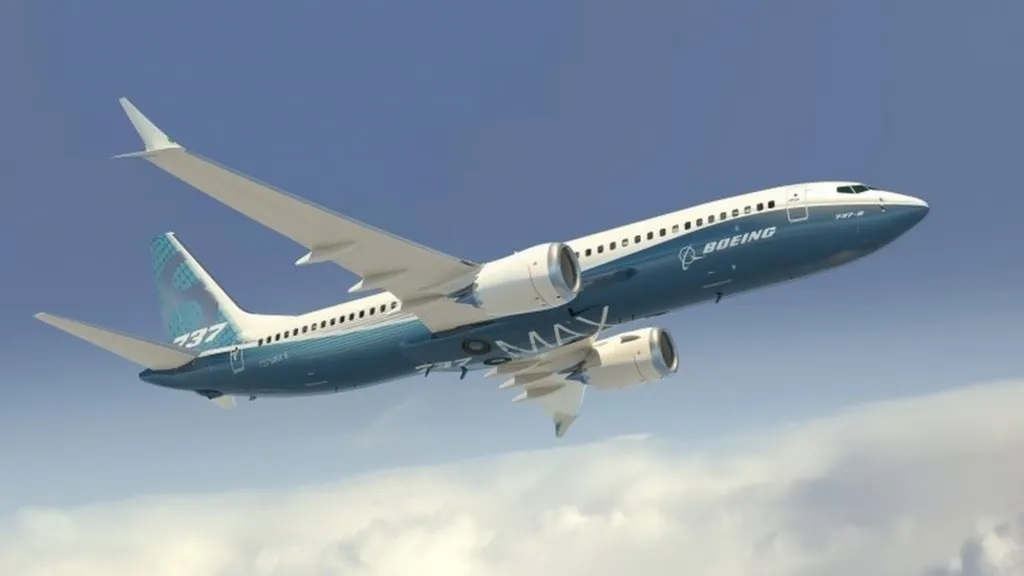
This could affect future demand for aircraft manufactured by Boeing, Airbus and China's domestic manufacturer COMAC.
The potential impact is particularly relevant given China's ambitious aircraft procurement and domestic aviation development plans. The South China Morning Post specifically reported that the consolidation discussions could influence airline purchasing decisions.
The reported consolidation discussions also coincide with China's broader civil aviation development strategy for 2026–2030.
In August 2026, the CAAC, National Development and Reform Commission and Ministry of Transport jointly issued the 15th Five-Year Plan for Civil Aviation Development.
The strategy emphasises:
The plan aims to develop a more competitive, efficient and sustainable aviation industry by 2030. The reported airline consolidation initiative could complement these wider objectives.
The proposed consolidation programme remains at an early stage, with no confirmed list of airlines targeted for mergers, restructuring or potential market exit.
Reuters reported on November 25 that it could not independently verify the South China Morning Post's findings. The CAAC had also not immediately responded to a request for comment.
It remains unclear whether the regulator will introduce a formal limit on the number of domestic airlines or rely primarily on stricter financial, licensing and operational requirements.
If implemented, the initiative could gradually reshape China's domestic aviation landscape between 2027 and 2030.
For China's airline industry, the central challenge will be balancing market competition and network expansion with financial sustainability.
For aircraft manufacturers, lessors, investors and airline operators, the coming years could bring significant changes in fleet planning, aircraft procurement and the competitive structure of the world's second-largest aviation market.