
Norwegian long-haul low-cost carrier Norse Atlantic Airways is facing one of the most challenging periods since its launch in 2022, warning that its financial position has become “critical” and that it urgently needs additional short-term financing to maintain operations.
The airline issued the warning on November 25, 2026, acknowledging that its immediate liquidity requirements have become a serious concern. The announcement sent its shares tumbling by as much as 76% during trading, reflecting growing investor concerns about the company's ability to secure sufficient funding and sustain its business.
Norse Atlantic said it is exploring several options to address its financial difficulties, including short-term financing, potential strategic partnerships and a possible takeover. However, the airline cautioned that there is no certainty that these discussions will result in a successful outcome.
Despite the severity of the warning, Norse has not announced the suspension of its scheduled passenger operations, bankruptcy or liquidation.
The latest warning follows a prolonged period of financial difficulties, with the airline struggling to translate its low-cost long-haul business model into sustainable profitability.
Norse Atlantic reported a net loss of approximately US$94.6 million for the first half of 2026, compared with a loss of approximately US$20.8 million during the corresponding period in 2025.
In August 2026, the airline secured approximately US$52 million in secured financing, carrying a fixed interest rate of 15% and maturing in May 2027. It also undertook a capital increase of approximately US$110 million.
However, these financing measures have not resolved its underlying financial challenges. Rising operating expenses, fuel-price volatility, reduced aircraft utilisation and operational disruptions have continued to affect its financial performance.
The November 25 announcement indicates that Norse requires further liquidity in the short term to meet its financial obligations and continue operating.
The airline's October operating figures reveal the difficulties it faces in balancing revenue performance with network scale.
Norse reported a 19% year-on-year increase in revenue per available seat kilometre (RASK) across its scheduled network in October. However, scheduled flights declined from 355 in October 2025 to just 199 in October 2026.
Although the improvement in RASK suggests stronger revenue generation per unit of capacity, the reduction in scheduled operations highlights the contraction of its scheduled network.
The airline is increasingly seeking to diversify its business through aircraft, crew, maintenance and insurance (ACMI) arrangements, under which it supplies aircraft and operating services to other carriers.
Aircraft utilisation has become a particularly important issue for Norse.
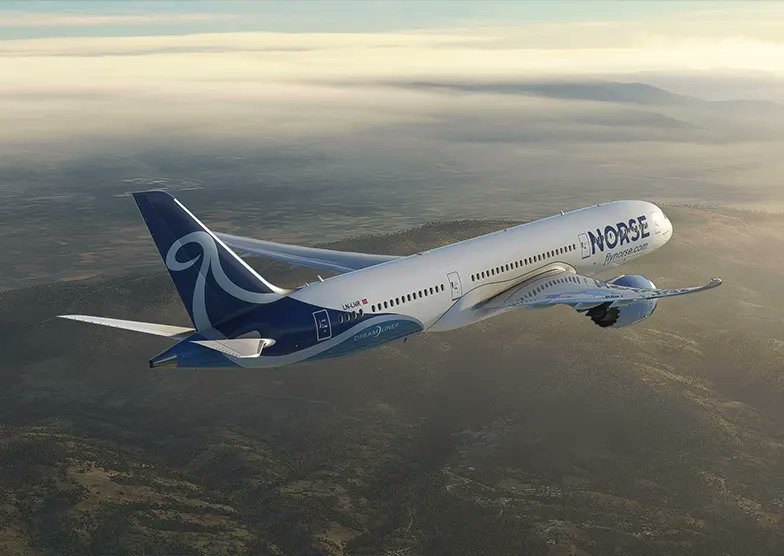
The airline previously deployed six of its 12 Boeing 787-9 Dreamliners under an agreement with India's IndiGo. That arrangement ended on November 1, 2026, creating an additional challenge in finding alternative employment for the aircraft.
To address this situation, Norse has been pursuing new ACMI opportunities.
One important development is its agreement with Pakistan International Airlines (PIA), under which two Boeing 787-9 aircraft are being deployed for operations between the United Kingdom and Pakistan.
These arrangements provide an alternative revenue stream and potentially improve aircraft utilisation, although their financial contribution will depend on contract economics and operating costs.
Alongside its efforts to secure emergency financing, Norse Atlantic is exploring potential strategic alternatives, including a possible takeover, merger or partnership.
The company has been considering strategic options since July 2026, as mounting financial pressure has raised questions about the long-term viability of its independent operations.
Its growing reliance on ACMI operations also suggests a possible shift in business strategy, moving away from an exclusive focus on operating its own low-cost scheduled long-haul network.
However, the airline has acknowledged that there is no guarantee that financing negotiations or strategic discussions will produce a successful outcome.
Founded by Bjørn Tore Larsen, Norse Atlantic Airways began commercial operations in June 2022, seeking to establish a new generation of affordable long-haul air travel.
The airline was created following Norwegian Air Shuttle's withdrawal from long-haul operations and adopted a business model centred on the Boeing 787 Dreamliner, aiming to connect Europe with North America and other international markets at competitive fares.
Its fleet of Boeing 787-9 aircraft offered modern cabin configurations, fuel efficiency and the potential for lower operating costs compared with older widebody aircraft.
However, the airline's experience highlights the structural difficulties of operating a low-cost long-haul business. High fuel expenses, substantial aircraft ownership and leasing costs, seasonal demand, intense competition and the need to maintain consistently high aircraft utilisation can quickly undermine profitability.
Norse's latest financial warning therefore represents more than a temporary liquidity challenge. It raises fundamental questions about the sustainability of its business model and whether the carrier can secure a viable long-term future.
For now, the airline continues to operate while searching for emergency financing and potential strategic partners. The coming weeks could prove decisive in determining whether Norse Atlantic can stabilise its finances or will be forced into a major restructuring.
You may like to read......