
Key Highlights – U.S. ADS-B In Mandate
Proposed legislation would require civilian aircraft operating in ADS-B Out-mandated airspace to receive traffic-position signals, strengthening cockpit awareness and collision-prevention capabilities.
U.S. congressional negotiators have reached a bipartisan, bicameral agreement in principle to mandate Automatic Dependent Surveillance–Broadcast In (ADS-B In) technology for civilian aircraft, marking a significant development in aviation safety reforms following the January 2025 midair collision near Ronald Reagan Washington National Airport.
The agreement was announced on November 17 by Senate Commerce Committee Chairman Ted Cruz (Republican, Texas) and Ranking Member Maria Cantwell (Democrat, Washington), alongside House Transportation and Infrastructure Committee leaders Sam Graves and Rick Larsen.
Under the proposed framework, aircraft already required to transmit their positions using ADS-B Out would also have to receive corresponding signals from nearby aircraft through ADS-B In.
However, this is not yet a law or a final congressional mandate. The agreement covers the civil aviation provisions, while negotiations over requirements for military aircraft operating in civilian airspace remain unresolved. Lawmakers are still working on the final legislative text, with the goal of passing comprehensive legislation before the end of the 119th Congress.
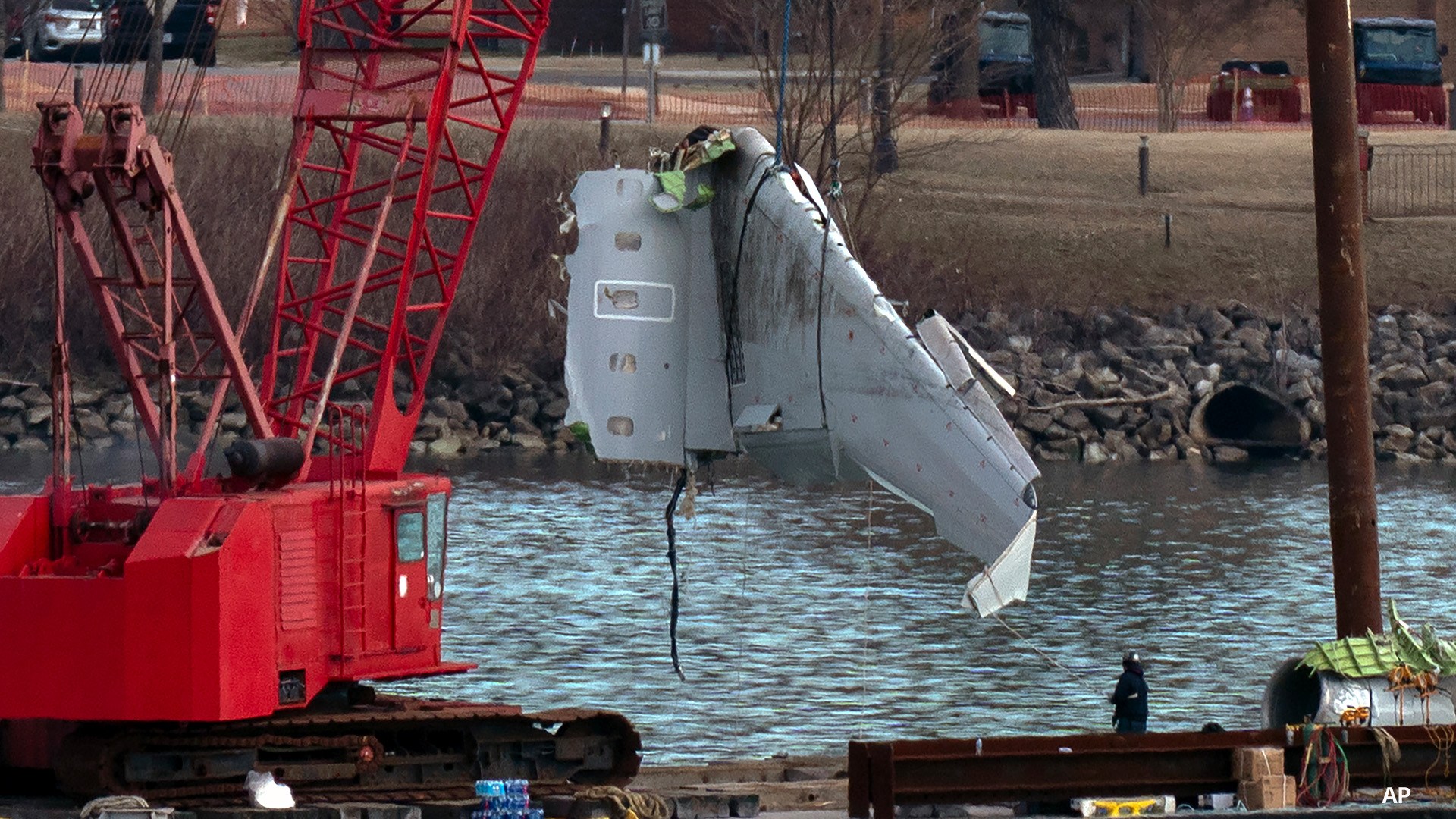
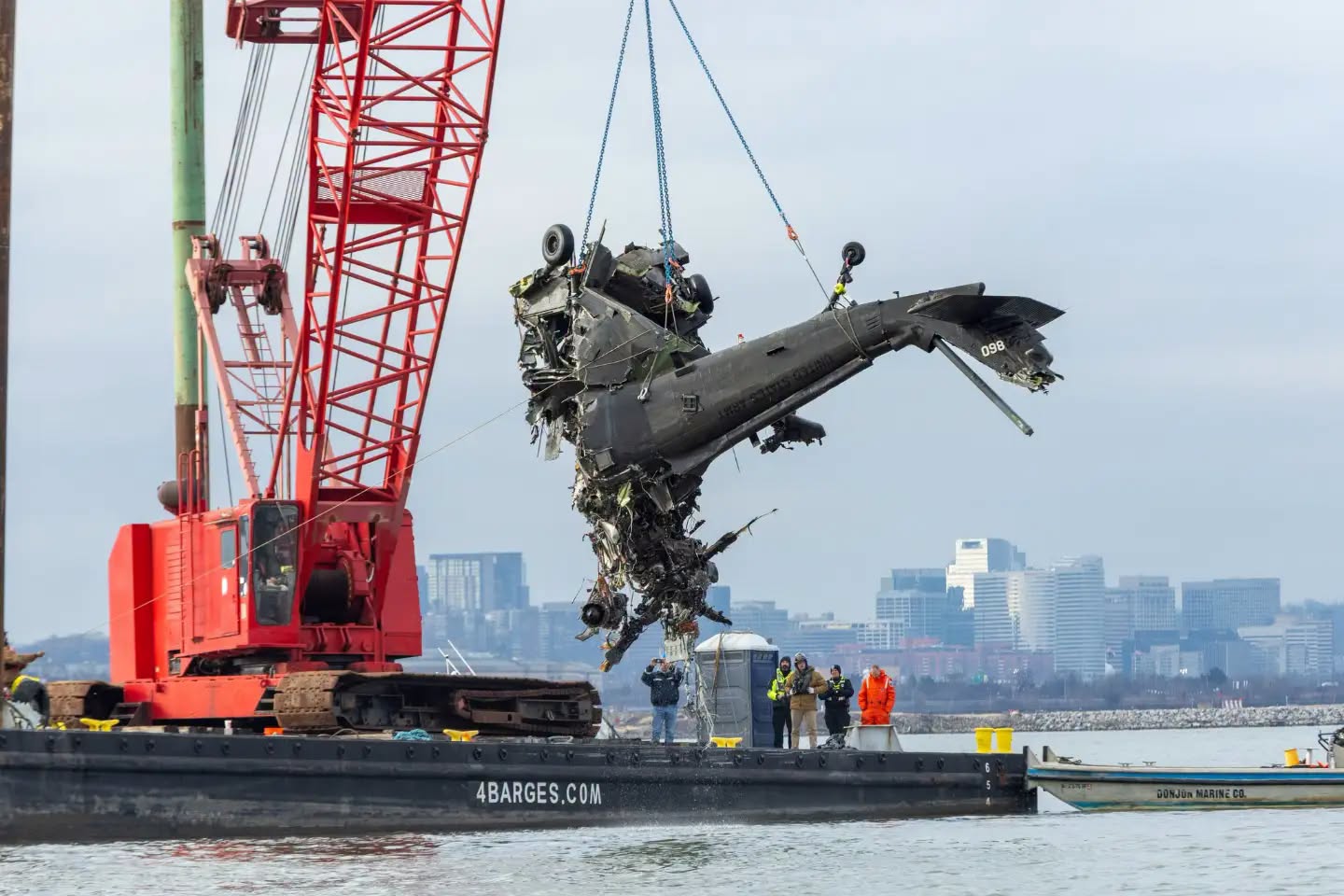
The legislative push follows the catastrophic collision on January 29, 2025, when American Airlines Flight 5342, operated by PSA Airlines using a Bombardier CRJ700, collided with a U.S. Army Sikorsky UH-60L Black Hawk helicopter near Washington's Reagan National Airport.
The regional jet was arriving from Wichita, Kansas, while the helicopter was conducting a military training flight.
The collision occurred at approximately 8:48 p.m. local time over the Potomac River, claiming all 67 lives aboard both aircraft:
64 people aboard the American Airlines regional jet, including passengers and crew.
Three U.S. Army crew members aboard the Black Hawk.
The accident became the deadliest aviation disaster in the United States since November 2001.
The proposed legislation focuses on making aircraft capable of both transmitting and receiving real-time traffic information.
ADS-B Out – Broadcasting aircraft position
ADS-B Out continuously broadcasts an aircraft's GPS-derived position, altitude, ground speed and other flight information to ground stations and suitably equipped aircraft.
In the United States, ADS-B Out has been mandatory in specified controlled airspace since January 1, 2020.
ADS-B In – Receiving nearby aircraft information
ADS-B In allows suitably equipped aircraft to receive traffic-position information from surrounding aircraft and display it in the cockpit.
Depending on the equipment and configuration, pilots can receive visual traffic indications and audible alerts that help identify potentially conflicting aircraft.
The distinction is important: ADS-B Out tells others where an aircraft is, while ADS-B In allows its pilots to see where other participating aircraft are operating.
The National Transportation Safety Board (NTSB) completed its investigation and presented its final findings on January 27, 2026, identifying systemic failures involving airspace design, FAA oversight, military flight operations and collision-avoidance procedures.
The investigation produced 74 findings and 50 safety recommendations.
One of the most significant findings concerned the potential contribution of ADS-B In technology.
According to NTSB simulations, had American Airlines Flight 5342 been equipped with an appropriate ADS-B In traffic display and alerting system, its pilots could have received:
First warning: 59 seconds before impact – traffic at the 12 o'clock position, three miles away, below and descending.
Second warning: 35 seconds before impact – traffic at the 12 o'clock position, two miles away.
These alerts could have provided the crew with additional time and directional information to identify the approaching helicopter.
The helicopter crew also had access to tablets capable of displaying ADS-B traffic information. However, the NTSB found that the pilots did not typically monitor those displays during low-level operations on Washington helicopter routes, and their helmets were not equipped to deliver audible traffic alerts from the tablets.
An important technical distinction: the accident helicopter was not broadcasting ADS-B Out. The NTSB identified incorrectly configured transponder settings, including the ADS-B squitter being off, as a reason for the lack of transmission. Separately, investigators identified broader Army procedures restricting ADS-B Out use when aircraft were not required to transmit for operational-security reasons. The NTSB recommended changes to those procedures.
The November 17 announcement is the culmination of nearly two years of legislative efforts and disagreements over how to improve aircraft tracking and collision prevention.
January 29, 2025 – The Washington midair collision
The fatal collision between American Airlines Flight 5342 and the Army Black Hawk triggered widespread scrutiny of helicopter routes, ADS-B technology, military aircraft visibility and FAA oversight.
October 16, 2025 – Cruz-Cantwell bipartisan agreement
Senators Ted Cruz and Maria Cantwell announced an agreement on aviation safety reforms, including an ADS-B In requirement with a proposed December 31, 2031 compliance deadline. The proposal also addressed ADS-B Out exemptions, FAA-Department of Defense coordination and airport safety reviews.
December 17, 2025 – Senate passes the ROTOR Act
The Senate unanimously passed the Rotorcraft Operations Transparency and Oversight Reform (ROTOR) Act, S.2503, incorporating measures to improve aircraft tracking and military aviation oversight.
January 27–28, 2026 – NTSB releases final findings
The NTSB issued its comprehensive investigation findings, identifying 50 safety recommendations covering collision-avoidance technology, helicopter routes, air traffic control and military aviation procedures.
February 24, 2026 – ROTOR Act fails in the House
The legislation received 264 votes in favour and 133 against, but failed to secure the required two-thirds majority under the suspension-of-rules procedure.
February 20–April 14, 2026 – House advances the ALERT Act
House lawmakers introduced the Airspace Location and Enhanced Risk Transparency (ALERT) Act, H.R. 7613, as a separate aviation safety package. The House passed it on April 14 by 396 votes to 10.
November 17, 2026 – Bipartisan agreement in principle
House and Senate transportation committee leaders announced agreement on the civilian aviation provisions, including ADS-B In requirements. Military aviation provisions remain under negotiation as lawmakers work towards a comprehensive final bill.
Despite bipartisan support for aviation safety reforms, the two chambers initially disagreed over the extent of military aviation requirements.
The Senate's ROTOR Act sought stronger ADS-B requirements and greater transparency for military aircraft operating in civilian airspace.
The House's ALERT Act proposed a broader package addressing collision-prevention technology, helicopter route safety, air traffic control procedures and Department of Defense oversight.
The NTSB also raised concerns about an earlier version of the House legislation in February 2026, arguing that it did not fully implement the recommendation to require ADS-B In across airspace where ADS-B Out is mandatory.
The November agreement represents an effort to reconcile the competing legislative approaches.
The November 17 agreement is an important milestone, but several steps remain:
House and Senate negotiators must finalize the complete legislative text.
Military aviation provisions must be resolved with the respective Armed Services Committees.
Both chambers must complete the necessary legislative approval process.
The legislation must be presented for presidential approval before becoming law.
The previously proposed December 31, 2031 ADS-B In compliance deadline appeared in the October 2025 agreement. It should not automatically be treated as the final deadline under the November 2026 framework until the final legislation confirms it.
If enacted, the proposed requirement could bring a significant change to the way civilian aircraft detect and respond to potential traffic conflicts.
Improved cockpit awareness: Pilots will have additional information about nearby aircraft.
Earlier conflict detection: Traffic displays and audible warnings can help crews identify approaching aircraft sooner.
Stronger safety in congested airspace: Particularly relevant around major airports where commercial aircraft, helicopters and other operators share airspace.
Reduced dependence on visual acquisition: Pilots will have an additional source of traffic information, particularly during night operations and periods of high workload.
Greater importance of military coordination: Aircraft must be visible to other airspace users whenever operational-security requirements permit.
ADS-B In is not a replacement for TCAS, air traffic control separation or established see-and-avoid procedures. It is an additional safety layer, and its effectiveness depends on compatible equipment, reliable position broadcasts and appropriate cockpit alerting.
The November 17 agreement represents a major development in the U.S. aviation safety reform process following the loss of 67 lives over Washington.
Perhaps the most compelling evidence supporting the proposed technology comes from the NTSB's own accident simulation: an appropriately equipped American Airlines flight crew could have received its first directional traffic warning 59 seconds before the collision.
However, the wider challenge remains ensuring that civilian and military aircraft operating in shared airspace have compatible collision-awareness capabilities.
The tragedy has demonstrated that modern aircraft surveillance must go beyond simply allowing air traffic controllers to track aircraft. Flight crews also need timely, actionable information inside the cockpit.
Because pilots cannot avoid traffic they cannot see.
U.S. House Transportation Committee – Bipartisan aviation safety framework.
NTSB – Final findings on the January 2025 Potomac collision.
FL360aero note: The central announcement is confirmed by official Senate and House committee statements. The important qualification is that Congress has agreed in principle to the civilian provisions, not yet enacted a final law. The military provisions and final legislative approval remain outstanding.