
A 36-year-old male passenger is under investigation in Spain following allegations of sexual assaults against four female flight attendants aboard a commercial flight from Amsterdam, Netherlands, to Málaga, Spain.
The incident, which occurred on Monday, 9 November 2026, reportedly escalated during the flight after the passenger, who allegedly showed signs of heavy alcohol consumption, repeatedly ignored cabin crew instructions and engaged in aggressive and sexually inappropriate behavior towards members of the flight crew.
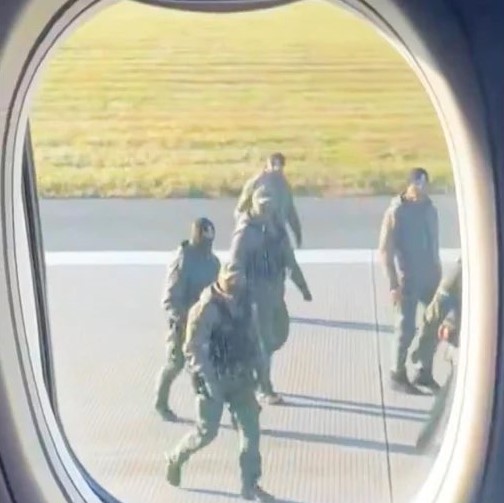
According to reporting by Spanish newspaper Diario SUR, the situation became sufficiently serious that the airline coordinated with air traffic control to facilitate an expedited arrival at Málaga-Costa del Sol Airport, where Guardia Civil officers were arranged to meet the aircraft.
The passenger was arrested immediately after landing.
An important legal distinction: The man has been released while remaining under investigation. The allegations have not been established in court, and he should not be described as convicted.
The incident raises renewed concerns about the safety, security, and protection of cabin crew members, particularly when dealing with disruptive passengers whose behavior escalates into alleged physical or sexual violence.
According to the accounts provided by the four affected flight attendants, the disturbance began while the aircraft was cruising towards southern Spain.
The passenger allegedly left his seat despite illuminated seatbelt signs instructing passengers to remain seated because of turbulence.
He reportedly moved towards the forward section of the aircraft, opened the curtains separating the cabin areas and aggressively demanded that the crew serve him beer. He allegedly threatened to cause trouble if they attempted to make him return to his seat.
The situation subsequently deteriorated.
The four crew members alleged that the passenger repeatedly:
The reported behavior continued despite repeated interventions by crew members. Other passengers and members of the cabin crew also reportedly became involved in attempts to control the situation.
The allegations form the basis of the four suspected sexual assault offences currently being investigated.
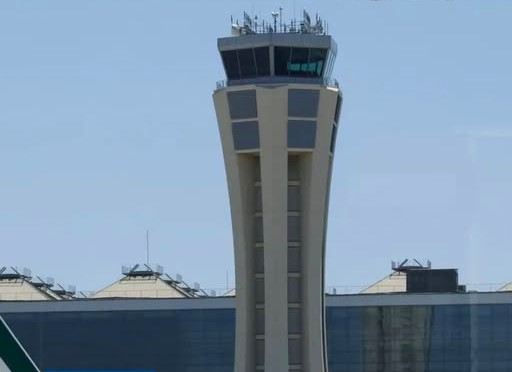
As the situation escalated, the flight crew coordinated with ENAIRE's air traffic control center in Seville and Málaga Airport's control tower.
The objective was to minimize the time the aircraft remained airborne while ensuring that law enforcement officers were ready to intervene immediately after landing.
According to the Spanish air traffic controllers' account on X, the aircraft was provided with:
The aircraft landed at approximately 10:50 p.m. local time, according to the originally scheduled arrival time reported by Spanish media.
The Guardia Civil subsequently boarded the aircraft and arrested the suspect.
He allegedly resisted arrest and seriously disobeyed officers. Due to his highly agitated condition, he was later transferred to a hospital.
Importantly, the reported expedited approach should not automatically be characterized as an emergency landing or a formal declaration of emergency. Available reporting describes a priority arrival arranged to reduce the time spent airborne.
The case has been divided between two judicial bodies in Málaga:
The 36-year-old man has been released while remaining under investigation for four alleged sexual assault offences and an additional offence of assaulting or attacking a public authority officer.
The proceedings remain open as investigators seek to establish the full circumstances of the incident.
No conviction has been reported.
The Málaga incident is not an isolated example of alleged sexual misconduct, physical violence, or intoxication-related aggression aboard commercial aircraft. Several previous cases illustrate the operational and legal consequences of such behavior.
2015 – Drunk passenger sexually assaulted flight attendant, UK
A passenger aboard a Thomas Cook flight from Glasgow to Turkey sexually assaulted a flight attendant and became aggressive towards crew and other passengers. The aircraft was diverted to London Gatwick.
The passenger, Andrew Tosh, later admitted sexual assault and other offences. He received a nine-month prison sentence and was placed on the sex offenders register.
A British passenger sexually assaulted a female cabin crew member aboard a Jet2 flight travelling from Leeds to Alicante on 12 November 2022.
The aircraft landed in Nantes, France, following the incident. In October 2023, the passenger received a 10-month suspended prison sentence from a French court.
A Jet2 passenger travelling from London Stansted to Dalaman, Turkey, caused a serious onboard disturbance, allegedly attempting to enter the cockpit and open aircraft doors.
The aircraft returned to Stansted under RAF Typhoon escort. The passenger subsequently admitted endangering aircraft safety and assaulting a cabin crew member.
Jet2 issued an £85,000 bill and imposed a lifetime flying ban.
A Jet2 flight travelling from Edinburgh to Dalaman was diverted to Cologne in October 2024 following disruptive behavior by two passengers.
One passenger spat at another traveler while being removed by German police. The incident resulted in court proceedings in Scotland in September 2025 and substantial disruption, including accommodation costs and flight delays.
These cases demonstrate that disruptive passenger behavior can extend beyond verbal confrontations, potentially involving physical assaults, sexual misconduct, interference with cabin crew duties and threats to aircraft safety.
There is an additional operational dimension to this case.
According to SUR in English, the Amsterdam–Málaga incident was part of a series of disruptive passenger events handled by Málaga Airport within a short period.
On Saturday, 7 November 2026, a separate international flight travelling from Bucharest to Gran Canaria was diverted to Málaga after a passenger reportedly displayed extremely disruptive behavior and was suspected of being under the influence of psychoactive substances.
The captain requested an immediate diversion because of concerns about cabin safety.
ENAIRE's control center in Seville coordinated the diversion, cleared the aircraft's route and facilitated a direct approach to Runway 12. Guardia Civil officers were waiting when the aircraft landed.
The two incidents illustrate how Málaga's air traffic controllers and airport security services had to coordinate responses to multiple disruptive passenger situations within days.
Disruptive passenger behavior remains an international aviation safety and security concern.
The International Civil Aviation Organization (ICAO) and the International Air Transport Association (IATA) have highlighted several consequences of unruly passenger incidents:
An ICAO/IATA presentation published in February 2020 reported approximately one unruly passenger incident for every 1,053 flights in 2016, compared with one for every 1,424 flights in 2015. These are historical figures, not current incident rates.
The organizations have advocated stronger legal enforcement, improved crew training in de-escalation and restraint procedures, responsible alcohol-service practices and better international cooperation.
The Tokyo Convention of 1963 established an international framework addressing offences and other acts committed aboard aircraft.
The Montreal Protocol of 2014 strengthened this framework by expanding the jurisdictional basis for dealing with unruly passengers, including the state of landing and the state of the airline operator, subject to the relevant states' participation and applicable law.
Sexual assault, physical violence, and interference with crew duties may also be prosecuted under applicable national criminal legislation.
The Málaga case highlights why cabin crew protection must be treated as an integral part of aviation safety rather than simply an issue of passenger conduct.
Flight attendants are responsible for passenger safety, emergency procedures, and cabin security. They must be able to perform these duties without being subjected to intimidation, unwanted physical contact or violence.
The alleged assaults aboard the Amsterdam–Málaga flight are a serious reminder that aviation safety extends well beyond the cockpit.
The cabin crew's responsibility includes maintaining order, responding to emergencies, and protecting passengers. When crew members themselves become targets of alleged violence or sexual assault, their ability to carry out these critical responsibilities can be compromised.
The rapid coordination between the flight crew, ENAIRE, Málaga's control tower and the Guardia Civil demonstrates the importance of effective cooperation between airlines, air traffic services and law enforcement.
The judicial investigation remains ongoing, and the allegations against the passenger must be determined through the legal process.
Sources