
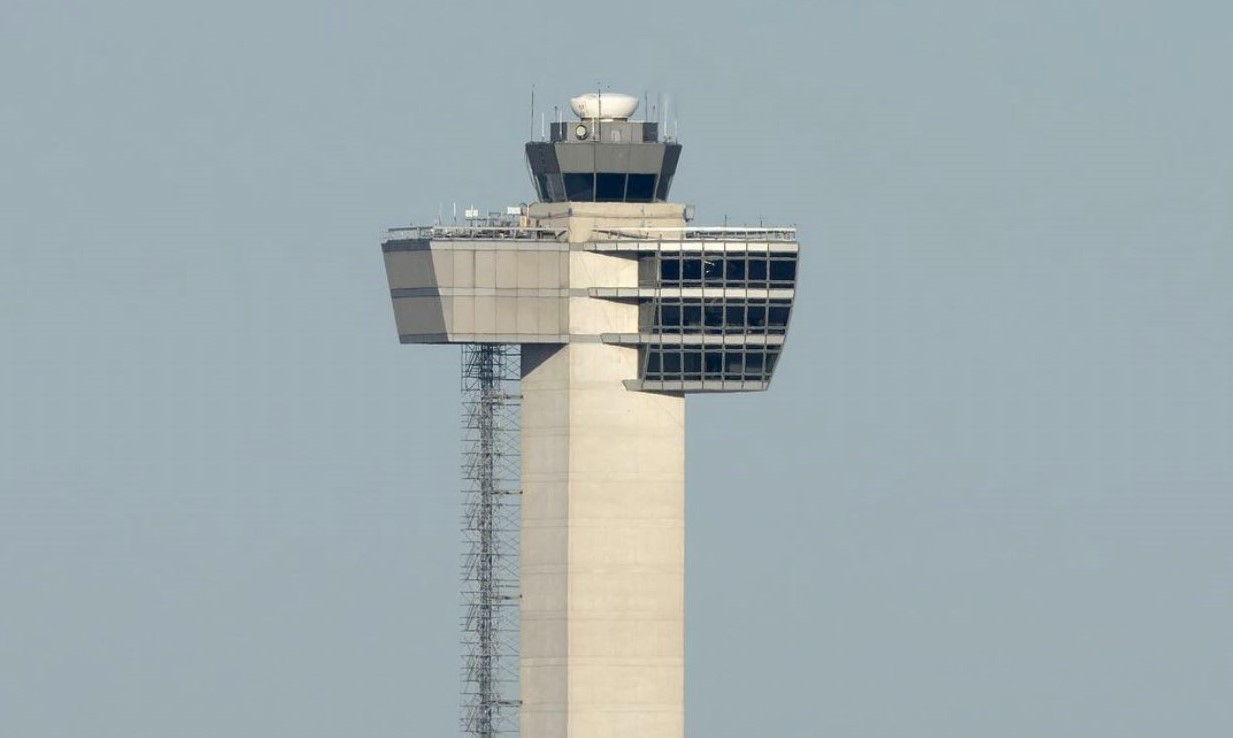
The United States experienced one of the rarest disruptions in modern aviation history on November 13, 2026, when the Federal Aviation Administration (FAA) ordered a nationwide ground stop for all departing flights, citing extraordinary circumstances and safety concerns.
The sweeping directive temporarily brought departures across the American National Airspace System (NAS) to a halt, affecting commercial airlines, cargo operators and other aircraft movements.
The decision was prompted by a serious communications failure affecting the country's 22 Air Route Traffic Control Centers (ARTCCs), the facilities responsible for managing aircraft travelling between different regions of the United States.
Transportation Secretary Sean Duffy confirmed that the communications problem was affecting the nationwide air traffic control network, with FAA technicians investigating the disruption.
Aircraft already airborne were permitted to land safely, while international arrivals were assessed on a case-by-case basis. International departures were also subject to specific operational handling.
The incident was particularly significant because nationwide grounding orders are exceptionally rare in American aviation. The previous comparable nationwide grounding occurred in January 2023, following the failure of the FAA's NOTAM computer system.
The emergency ground stop was imposed at approximately 3:54 p.m. Eastern Time (20:54 UTC).
The FAA's decision followed earlier operational restrictions involving Chicago O'Hare International Airport and Chicago Midway International Airport, where communications and equipment problems had already affected flight operations.
The situation subsequently escalated into a nationwide restriction.
The 22 ARTCCs are critical components of America's air traffic management infrastructure. They provide en-route control services, coordinate aircraft movements between regions and maintain separation between aircraft operating at different altitudes and speeds.
A failure affecting communications across this network creates an operational challenge far greater than a technical problem at an individual airport.
Rather than risk operating without reliable communication and coordination capabilities, the FAA chose to restrict departures until the situation could be assessed.
The important distinction: This was a nationwide ground stop on departures, not an order requiring every aircraft already airborne to land immediately.
The United States operates one of the world's most complex air traffic management systems.
Its 22 ARTCC facilities divide the country's airspace into geographical sectors, managing aircraft during the en-route phase of flight, generally after departure and before arrival at terminal airspace.
Their responsibilities include:
Monitoring aircraft positions and flight progress.
Maintaining safe separation between aircraft.
Coordinating handovers between neighbouring control centres.
Managing traffic flows during congestion and adverse weather.
Communicating clearances and instructions to pilots.
Coordinating with terminal radar approach control facilities and airport towers.
These facilities rely on interconnected voice communication systems, surveillance infrastructure, data networks and other operational technologies.
When communication infrastructure becomes unreliable, controllers may be unable to coordinate aircraft movements with the required level of confidence.
This explains why a technical communications failure can become a nationwide aviation safety issue.
The November 2026 incident is best understood against two major events in American aviation history: the September 11 attacks in 2001 and the FAA NOTAM outage in January 2023.
Following the terrorist attacks, the FAA issued the first nationwide ground stop in American aviation history. It subsequently ordered aircraft to land at the nearest suitable airports and suspended operations across the national airspace.
More than 4,500 aircraft were airborne when the attacks unfolded. By 12:16 p.m. Eastern Time, the national airspace had been cleared of commercial and private aircraft.
U.S. airspace remained closed to normal civil aviation operations until September 13, when a controlled reopening began.
An overnight outage of the FAA's Notice to Air Missions (NOTAM) system prevented critical flight safety information from being properly distributed to pilots and airline operators.
The FAA ordered a nationwide pause on departing flights shortly before 7:30 a.m. Eastern Time. The restriction was lifted at approximately 9:00 a.m.
The outage disrupted thousands of flights, with more than 1,300 cancellations and thousands of delays reported.
A preliminary investigation identified a damaged database file as the cause, with no evidence of a cyberattack reported in the initial investigation.
The FAA grounded all departing flights nationwide after communications problems affected all 22 ARTCCs.
Unlike 2023, when the problem involved the NOTAM information-distribution system, the 2026 disruption involved communications infrastructure used by air traffic controllers.
The event highlighted the vulnerability of the communications network supporting America's national airspace.
|
Event |
Trigger |
Nature of shutdown |
|---|---|---|
|
September 11, 2001 |
Terrorist attacks |
National security |
|
January 11, 2023 |
NOTAM system outage |
Flight information technology |
|
November 13, 2026 |
ARTCC communications failure |
Air traffic control infrastructure |
These events demonstrate three very different reasons for imposing an extraordinary nationwide aviation restriction: national security, flight-information availability and air traffic control communications.
Historical clarification: The 1981 PATCO air traffic controllers' strike also caused major disruption to U.S. aviation, but it was not a comparable FAA nationwide emergency ground-stop order.
Beyond the immediate operational disruption, the incident raises a larger question about the reliability of America's air traffic control infrastructure.
The FAA has been under pressure to modernise systems that support a rapidly expanding aviation network.
In 2025, the U.S. government announced a major air traffic control modernisation initiative, including replacement of ageing copper communications infrastructure with fibre-optic technology and upgrades to airport radio systems.
Congress approved approximately $12.5 billion for modernisation efforts.
However, the November 2026 communications failure has brought renewed attention to the scale of the challenge.
Reuters and Associated Press reported that the Department of Transportation and White House were also seeking an additional $30.1 billion for aviation infrastructure improvements.
The issue is not simply about replacing outdated equipment. A modern air traffic control network must provide redundancy, reliable communications, rapid recovery capabilities and interoperability across multiple facilities.
A failure affecting 22 regional control centres simultaneously raises questions about whether sufficient backup arrangements exist to maintain operations when critical communications infrastructure becomes unavailable.
The United States handles tens of thousands of flights daily. A nationwide departure restriction can quickly create a chain reaction throughout the global aviation network.
The consequences extend beyond the initial period of the ground stop:
Airline operations: Aircraft and crews become displaced from their planned schedules.
Airport congestion: Aircraft remain at gates or departure holding areas, reducing operational capacity.
Connecting passengers: Missed connections can affect domestic and international itineraries.
Air cargo: Time-sensitive shipments, express parcels and pharmaceutical consignments face delays.
International networks: Aircraft departing from overseas airports for the United States may require revised departure schedules and arrival coordination.
Operational recovery: Even after restrictions are lifted, airlines need time to reposition aircraft, crews and passengers.
In practical terms, a relatively short nationwide restriction can generate operational disruption lasting well beyond the actual ground-stop period.
The immediate priority for the FAA is to identify the technical cause of the communications failure, restore normal operations and establish whether the disruption exposed vulnerabilities across interconnected air traffic control facilities.
Investigators and aviation authorities will need to examine:
Whether the failure originated in central communications infrastructure or multiple regional systems.
Whether backup communication channels operated as intended.
Why the disruption affected all 22 ARTCCs.
Whether the failure was linked to software, hardware, network infrastructure or an external technical issue.
What additional redundancy is required to prevent a similar nationwide shutdown.
The precise root cause should not be assumed to be a cyberattack or software upgrade without supporting investigative findings.
The November 13 shutdown demonstrates that modern aviation safety depends on much more than aircraft technology, airport infrastructure and pilot training.
Air traffic control communications are equally critical.
The United States has one of the world's largest and most complex aviation networks. A communications failure capable of affecting all 22 ARTCCs demonstrates how interconnected systems can create nationwide operational consequences.
There are three major lessons:
First, redundancy must be genuinely independent. Backup systems should not depend on the same infrastructure that caused the original failure.
Second, modernisation cannot be delayed indefinitely. Ageing communications networks need continuous investment, testing and replacement.
Third, aviation safety must take priority over operational continuity. Grounding departures is economically expensive, but allowing aircraft to operate without dependable air traffic control communications would create unacceptable risks.
The FAA's decision was therefore a reminder of a fundamental principle of aviation: when the systems responsible for maintaining safe aircraft separation and coordination become unreliable, stopping departures is the responsible course of action.
From the unprecedented national airspace shutdown following September 11, 2001, to the NOTAM computer failure in January 2023 and now the nationwide ARTCC communications disruption of November 13, 2026, the United States has experienced three extraordinary aviation emergencies with very different triggers.
The latest incident reinforces an uncomfortable reality: even the world's most advanced aviation system can be vulnerable when the infrastructure supporting it fails.
The biggest question is no longer just how quickly the FAA can restore operations, but whether America's air traffic control infrastructure is sufficiently resilient to prevent another nationwide shutdown.
Reuters – FAA grounds all departing flights nationwide, November 13, 2026.
Associated Press – Communications problems affect 22 regional air traffic control centres.
U.S. National Archives – How the FAA shut down American airspace on September 11.
FAA – Historical chronology of the January 2023 NOTAM outage.
Associated Press – Investigation into the 2023 FAA computer breakdown.
U.S. Department of Transportation – FAA air traffic safety and modernisation measures.