
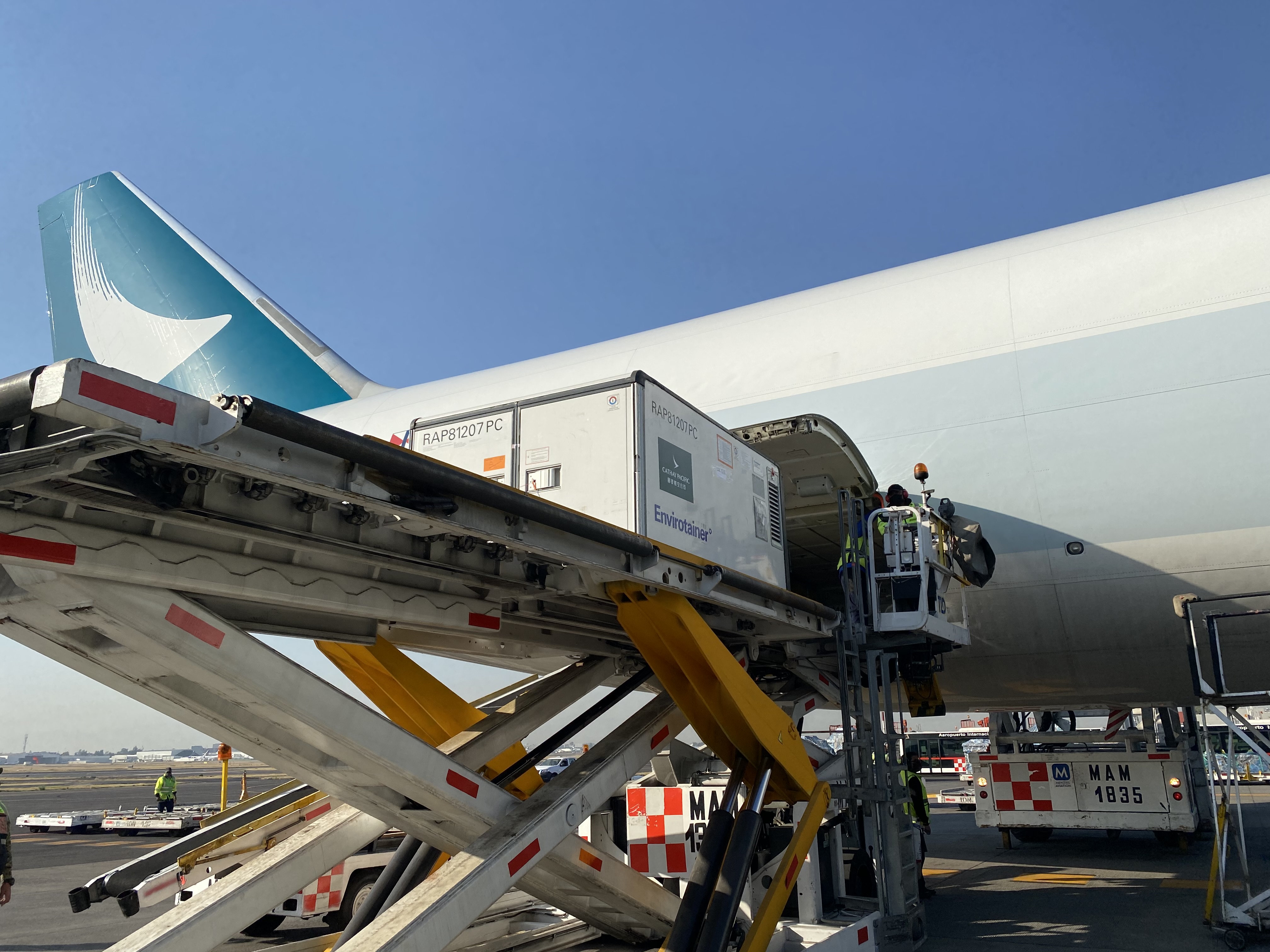
Mexico is moving to reopen Mexico City International Airport (AICM) to dedicated domestic and international cargo flights, potentially reversing a major aviation policy introduced in 2023 that forced all-cargo operators to relocate to other airports. Under the proposed arrangement, airlines would be able to choose between returning to AICM and continuing operations at Felipe Ángeles International Airport (AIFA), provided they can secure airport slots during periods of lower traffic.
The announcement, made by Infrastructure, Communications and Transportation Secretary Jesús Esteva in October 2026, signals a shift in Mexico's approach to air cargo capacity and airport access. However, a significant legal question remains unresolved: the presidential decree that prohibited dedicated cargo operations at AICM is still in force, raising questions about how the government intends to implement the proposed reopening without formally amending or repealing the existing restrictions.
In February 2023, the administration of then-President Andrés Manuel López Obrador published a decree closing AICM to domestic and international scheduled and nonscheduled air transport services dedicated exclusively to cargo. The government justified the decision by citing congestion, operational safety and the need to ensure adequate infrastructure for cargo operators.
The restrictions did not apply to passenger aircraft carrying cargo on the same flight. Airlines operating dedicated freighters, however, were required to move their operations elsewhere.
The transition deadline was subsequently extended from 108 to 148 working days through a further decree published in July 2023. Dedicated cargo operations at AICM ceased on September 1, 2023, while combined passenger-and-cargo services continued to be permitted.
AIFA, located north of Mexico City, became the principal alternative for dedicated cargo operations serving the metropolitan area. The relocation was intended to ease pressure on the capital's established airport while making greater use of the newer facility's infrastructure.
The policy nevertheless represented a substantial operational change for cargo airlines, which had to reorganize their airport arrangements, ground handling and logistics networks to maintain access to the Mexican capital's freight market.
Speaking in October 2026, Esteva said the opportunity to resume cargo operations at AICM would be available to all cargo airlines, rather than being restricted to US carriers. Airlines interested in returning would need to operate during hours when the airport has available capacity.
The proposal would allow operators to assess whether AICM better suits their commercial and logistical requirements or whether remaining at AIFA offers greater operational advantages.
AICM director Juan José Padilla Olmos subsequently identified overnight and early-morning periods as potential operating windows. According to reporting by Mexican aviation and business publications, these included approximately 23:30 to 00:30 and 05:00 to 06:00, although actual operations would depend on available slots and the airport's operational requirements.
Airport officials have also indicated that some adjustments to existing cargo infrastructure may be necessary to accommodate operators' current requirements.
Importantly, the announcement should not be interpreted as confirmation that dedicated cargo flights have already resumed. As of October 21, 2026, authorities reported that no cargo airline had formally expressed an intention to return to AICM. The immediate development is therefore the proposed reopening of access, rather than a confirmed operational migration back to the airport.
The central challenge is reconciling the government's proposed reopening with the legal framework governing AICM.
The February 2023 presidential decree explicitly closed the airport to regular and non-regular domestic and international services dedicated exclusively to cargo. The subsequent July amendment extended the deadline for relocating those operations but did not remove the underlying prohibition. The official text remains available through Mexico's government gazette, the Diario Oficial de la Federación.
Esteva has argued that repealing the decree would not be necessary to facilitate a return during less congested hours. However, the restriction is not limited to peak periods: it prohibits dedicated cargo operations at AICM outright.
Consequently, allocating an available overnight slot would not, by itself, resolve the legal problem. The government would need to establish a legally valid basis for allowing the prohibited operations to resume. Amending or repealing the relevant decree, or adopting another legally sufficient measure, would appear necessary unless the authorities can demonstrate that an existing legal provision permits the proposed arrangement.
As of October 27, 2026, the sources reviewed for this article do not establish that the 2023 prohibition has been formally rescinded. The reopening should therefore be described as an announced policy direction, not as a completed legal or operational change.
The proposed return of dedicated cargo flights is also linked to a wider effort to resolve aviation disputes between Mexico and the United States.
On October 16, 2026, the US Department of Transportation lifted restrictions that had prevented Mexican airlines from expanding services from AICM and AIFA to the United States. The decision followed bilateral consultations and commitments by Mexico to address US concerns about airport slots, cargo access and compliance with the countries' bilateral air transport agreement.
The dispute had developed over several years.
In August 2022, Mexican authorities reduced the number of permitted hourly operations at AICM amid concerns about airport congestion. The subsequent cargo relocation decree added another source of disagreement, particularly for US operators that had previously served the capital with dedicated freighter aircraft.
In 2025, the US Department of Transportation imposed further restrictions after concluding that outstanding concerns about Mexico's aviation policies remained unresolved. These measures affected Mexican airlines' ability to establish, expand or restore certain services to the United States.
The October 2026 decision marked a significant improvement in bilateral relations. Nevertheless, the lifting of US restrictions and the domestic legal status of cargo operations at AICM are separate issues. Washington's decision does not, by itself, repeal Mexico's presidential decree.
The Mexican government has presented the latest development as an opportunity to strengthen connectivity, improve competitiveness and restore opportunities for airlines on both sides of the border.
Allowing cargo airlines to choose between the two airports could reshape the distribution of air freight across the Mexico City metropolitan region.
AICM's principal advantage is its established position within Mexico's largest metropolitan market. Its existing airline network, proximity to major commercial districts and established logistics connections could make it attractive to operators whose customers or onward transport arrangements are concentrated in the capital.
A return could also allow some airlines to reconsider operational arrangements introduced during the 2023 relocation.
However, AICM's capacity constraints remain relevant. Although officials have identified less congested operating windows, airlines would still need to secure suitable slots, coordinate ground handling and ensure that cargo facilities can accommodate their aircraft and shipment requirements.
AIFA has benefited from the relocation of dedicated cargo operations and has developed a more prominent role in Mexico City's air freight network.
For airlines already established there, remaining at AIFA may be commercially preferable to moving operations again. Operators may have invested in facilities, staffing, transport arrangements and distribution networks following the 2023 transition.
The airport's continued role also gives airlines an alternative to AICM during periods when the capital's main airport has limited operational capacity.
The government's proposal would therefore restore a choice rather than necessarily reverse the entire relocation. Some airlines might return to AICM, others could remain at AIFA, and some could potentially divide their operations between the two airports, subject to regulatory approval and commercial considerations.
Even if the legal restrictions are resolved, reopening AICM to dedicated cargo flights would require more than a policy announcement.
Airlines would need clarity on slot allocation, operating windows, cargo-handling capacity and the procedures governing their return. Airport authorities would also need to establish whether existing facilities could accommodate operators' current needs or require modifications.
The choice of operating hours will be particularly important. Overnight and early-morning slots could offer opportunities to accommodate freight movements without adding substantially to pressure during busy passenger periods.
However, cargo airlines operate according to logistics networks that extend beyond the airport itself. Flight schedules must align with connecting services, warehouse operations, customs processing, trucking availability and customer delivery requirements.
A slot that is technically available may not be commercially useful if it disrupts an airline's wider network. For that reason, the government's proposed operating windows will need to be assessed against actual freight demand and individual carriers' requirements.
AICM's broader capacity policy is also relevant. Mexico's aviation authorities previously established a maximum of 43 hourly landing and take-off operations at the airport, effective January 8, 2024. Although officials have recently pointed to additional availability during selected hours, the airport's formal congestion status and slot-management framework remain important considerations.
Three developments will determine whether the proposed reopening becomes a reality.
First, the legal framework must be clarified. The government needs to explain how dedicated cargo flights can resume consistently with the existing decree. A formal amendment or repeal would provide greater legal certainty than relying solely on statements about available airport capacity.
Second, airlines must decide whether returning makes commercial sense. Authorities reported in October that no cargo operator had formally expressed an intention to return to AICM. The government's offer therefore has yet to translate into confirmed airline decisions or a published schedule of returning services.
Third, the airports must demonstrate that the proposed arrangements are operationally viable. Available slots, cargo infrastructure, ground handling and connections to regional distribution networks will all influence the outcome.
These factors will also determine whether the reopening produces a substantial shift in cargo traffic or simply gives airlines greater flexibility to select the airport that best suits their individual operations.
Mexico's proposal to allow dedicated cargo airlines to return to Mexico City International Airport represents a potential reversal of one of the country's most consequential recent aviation policies.
The initiative would give domestic and international cargo operators greater flexibility to choose between AICM and Felipe Ángeles International Airport, while limiting any return to hours when the capital's main airport has available capacity.
The timing is significant. The announcement follows renewed cooperation between Mexico and the United States and the lifting of US restrictions on Mexican airlines' ability to expand services across the border. Reopening AICM to dedicated cargo flights could form part of a broader effort to restore competitiveness and strengthen bilateral air connectivity.
Nevertheless, the legal contradiction remains the decisive issue. The 2023 decree explicitly prohibits the very operations the government now proposes to accommodate. Unless that conflict is resolved through a legally valid mechanism, available slots and political commitments alone will not guarantee that cargo airlines can resume operations.
The key distinction is between permission announced in principle and permission established in law. Until the government clarifies the decree's status and airlines confirm their intentions, the return of dedicated cargo flights to AICM remains a prospective development rather than an accomplished change.
The article incorporates the latest developments located as of October 27, 2026. The most important sources for editorial verification are: