
1. Restrictions lifted: The U.S. Department of Transportation (DOT) has eased restrictions on Mexican airlines’ ability to introduce new routes from Mexico City International Airport (AICM) and Felipe Ángeles International Airport (AIFA).
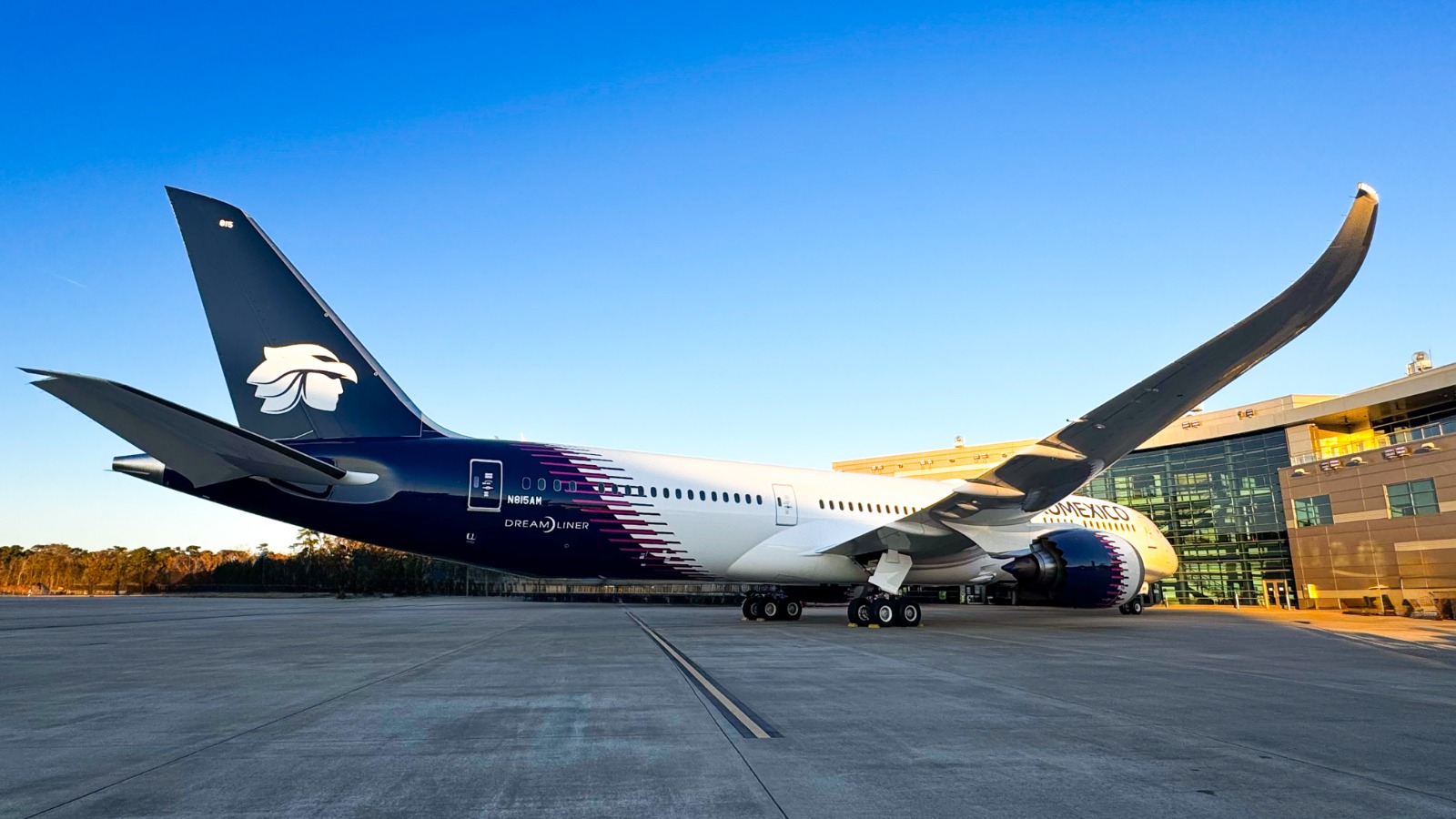
2. Major airlines could benefit: Aeroméxico, Volaris and Viva Aerobus may gain greater flexibility to expand their U.S. networks, subject to applicable regulatory approvals.
3. Dispute dates back to 2022: Tensions arose over Mexico’s airport capacity reductions, slot allocation at AICM and the relocation of cargo operations to AIFA.
4. Thirteen routes previously affected: In October 2025, the DOT cancelled approval for 13 existing or planned Mexican-carrier routes involving AICM and AIFA.
5. Bilateral agreement paved the way: A preliminary understanding reached on May 5, 2026, committed Mexico to improving transparent and fair airport-slot allocation and addressing U.S. concerns.
6. Regulatory oversight remains: Mexican airlines must continue complying with applicable schedule-filing and approval requirements. Some U.S. measures remain in force, with Washington monitoring Mexico’s implementation of its commitments.
7. Passengers could see more options: The decision may eventually lead to additional nonstop destinations, increased flight frequencies and improved connectivity between Mexico and the United States, although no automatic launch of new routes has been confirmed.
8. FAA safety rating is a separate issue: Mexico regained its FAA Category 1 aviation safety rating in September 2023. The October 2026 decision concerns market access and airport operations, not a new safety-rating restoration.
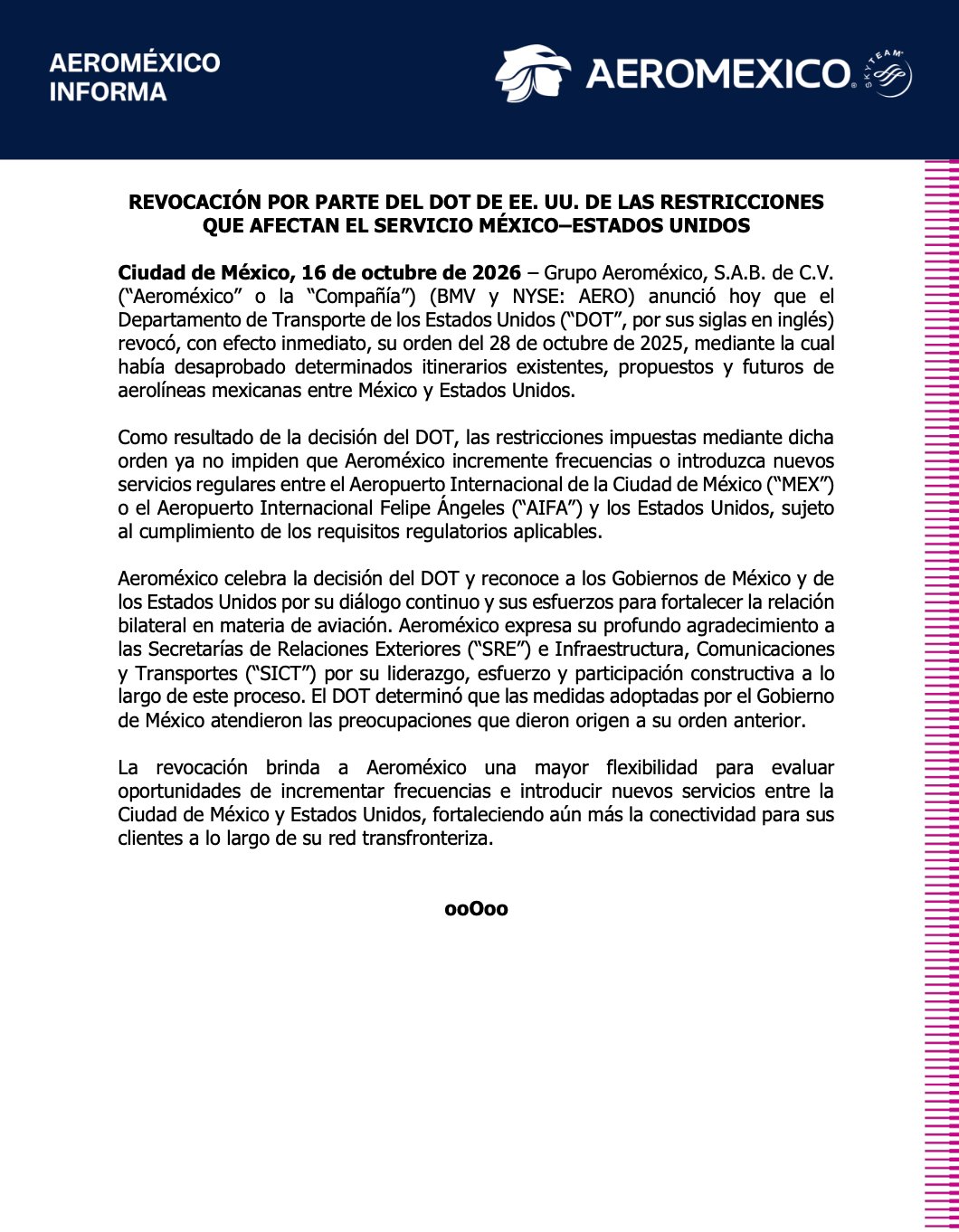
The United States has lifted key restrictions that had limited Mexican airlines’ ability to expand services to the country from Mexico City’s two major airports, marking a significant step toward resolving a long-running aviation dispute between Washington and Mexico City.
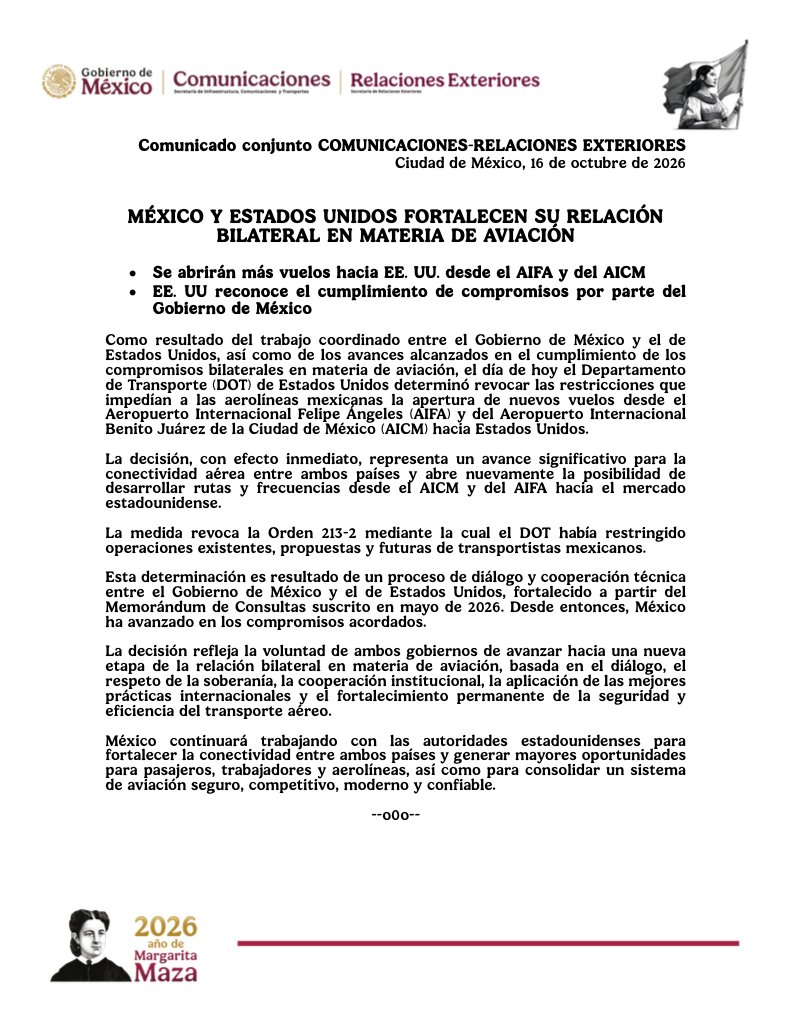
According to a report published by Reuters on October 16, 2026, the U.S. Department of Transportation (DOT) has reversed restrictions affecting flights from Mexico City International Airport (AICM), officially Benito Juárez International Airport, and Felipe Ángeles International Airport (AIFA). The decision allows Mexican carriers to pursue new U.S. routes from both airports, although regulatory requirements for operating flights remain in place.
The development follows months of negotiations over airport slot allocation, access for U.S. airlines at Mexico City’s main airport and Mexico’s decision to relocate cargo operations away from AICM. The dispute had escalated into regulatory action affecting passenger and cargo services between the two countries.
The restrictions were the culmination of a disagreement that had been building since 2022.
Mexico reduced flight operations at AICM, citing congestion and the need to improve airport conditions. It also directed cargo operators to move their operations away from the airport to AIFA. The U.S. government subsequently argued that these changes affected the rights of American airlines under the 2015 bilateral air transport agreement.
Mexico was downgraded by the Federal Aviation Administration (FAA) in May 2021 after the regulator found deficiencies in the country’s aviation safety oversight. The FAA restored Mexico’s highest safety rating in September 2023, enabling Mexican airlines to expand U.S. services and introduce new routes.
This was a separate regulatory issue from the later dispute over airport access and cargo relocation. The October 2026 decision does not itself constitute a new restoration of Mexico’s safety rating.
On July 19, 2025, the U.S. DOT announced measures intended to enforce the bilateral agreement. These included requirements for Mexican airlines to file flight schedules and obtain advance approval for certain large-aircraft charter operations. Washington also signalled further action over what it described as unfair restrictions on U.S. carriers.
On October 28, 2025, the U.S. DOT cancelled approval for 13 current or planned Mexican-carrier routes involving AIFA and AICM. The order blocked combination passenger-and-cargo services between the United States and AIFA and froze growth in such services between the United States and AICM.
The affected services included proposed Viva Aerobus routes from AIFA to several U.S. cities, as well as services involving Aeroméxico and Volaris. Washington also proposed prohibiting Mexican passenger airlines from carrying belly cargo between AICM and the United States.
After further negotiations, Mexico and the United States reached a preliminary understanding on May 5, 2026. Mexico committed to improving transparent and fair access to airport slots at AICM, reviewing slot-allocation policies and working with U.S. authorities on implementation.
At the time, the U.S. DOT stressed that commitments alone were insufficient: the restrictions would remain until Mexico made progress in implementing the agreed reforms. Mexico also reaffirmed its commitment to a competitive bilateral aviation market, while both governments agreed to maintain dialogue.
The October 16 decision represents the latest step in the negotiations. The U.S. government said Mexico had taken steps to address concerns about compliance with the bilateral agreement, allowing Mexican airlines to pursue new U.S. routes from both Mexico City airports. Mexican authorities described the decision as the result of continued dialogue and progress on commitments made in May.
However, the change is not an unconditional return to the previous regulatory environment. Mexican airlines must continue filing schedules for U.S. services and obtaining the required approvals for operations involving large aircraft. A U.S. official also indicated that two other orders connected to the dispute remain in force and that Washington will monitor Mexico’s compliance with its commitments.
The lifting of the restrictions could give Aeroméxico, Volaris and Viva Aerobus greater flexibility to plan new transborder services and increase frequencies from AICM and AIFA, subject to the applicable regulatory processes.
For passengers, the potential benefits include more nonstop destinations, additional flight options and improved connectivity for business and leisure travel. Airlines could also gain greater scope to adjust their networks in response to demand. These are potential outcomes rather than confirmed new routes: no automatic resumption of every previously affected service has been announced.
The decision also matters for competition between the two countries. AICM remains Mexico City’s principal international airport, while AIFA has been developed as an additional gateway intended to relieve pressure on the capital’s aviation system. Resolving disagreements over access to both airports is therefore important to the future growth of Mexico–U.S. air travel.
The latest decision marks a significant easing of aviation tensions between the United States and Mexico after several years of disputes over airport slots, cargo operations and bilateral market access.
The immediate question is how quickly Mexican airlines will translate the regulatory change into new or expanded services. Further progress will depend on airline planning, approvals and continued implementation of the commitments agreed by both governments.
For now, the restrictions on route expansion have been eased, opening a new chapter for transborder aviation. But with some regulatory measures still in place, the longer-term outcome will depend on whether both countries can maintain a workable framework for fair airport access and continued airline growth.