
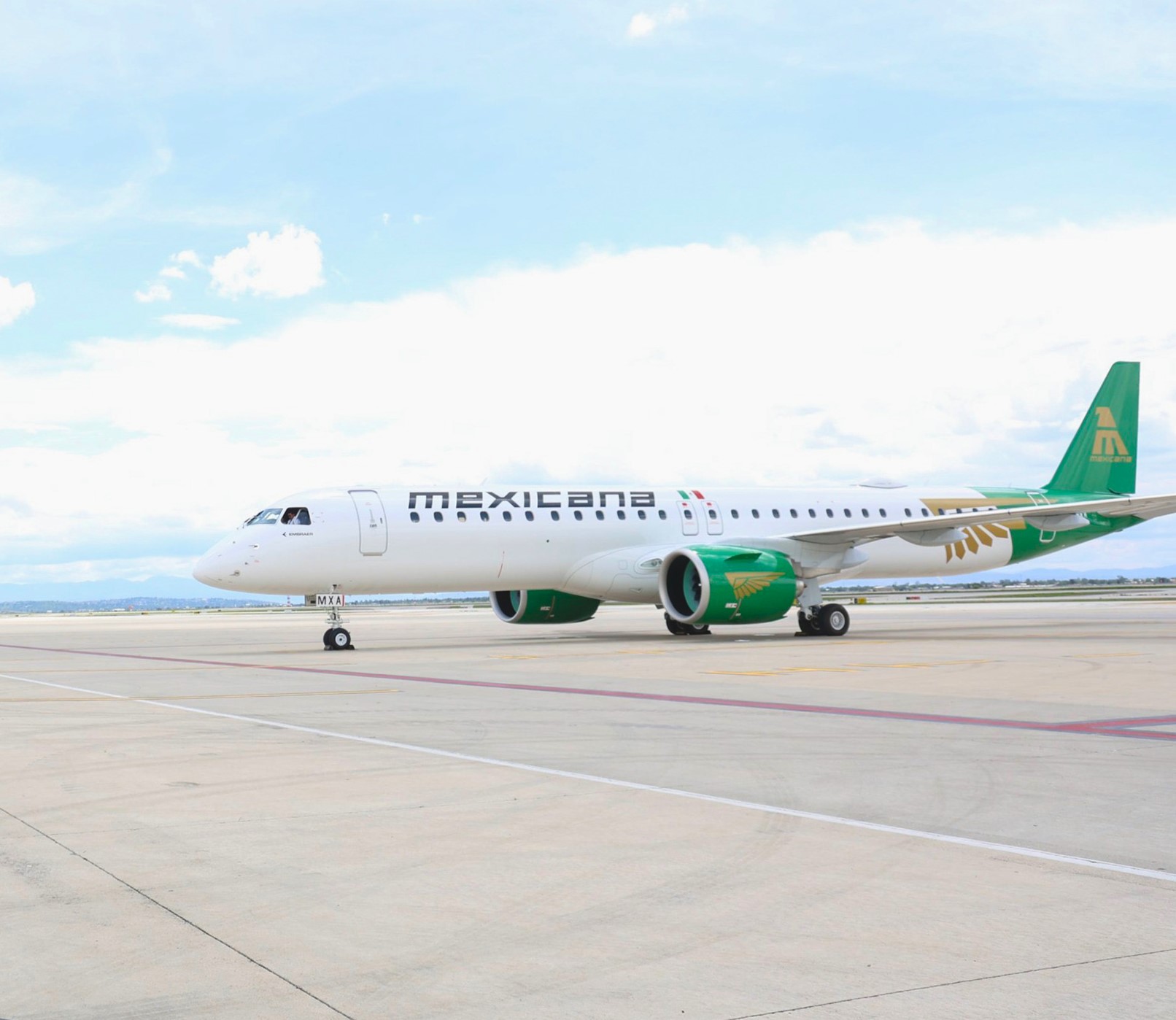
Mexico's aviation regulator says Mexicana de Aviación's aircraft hold the necessary certifications and operating authorizations, following controversy over an aircraft reportedly used to transport passengers after an emergency diversion involving flight MXA1291.
Mexico's Federal Civil Aviation Agency (AFAC) has rejected allegations that state-owned airline Mexicana de Aviación operated an aircraft without the required certifications and regulatory approvals.
In a statement issued on November 3, 2026, AFAC said the airline's aircraft are duly certified and possess the authorizations necessary to conduct commercial operations in accordance with applicable aviation regulations.
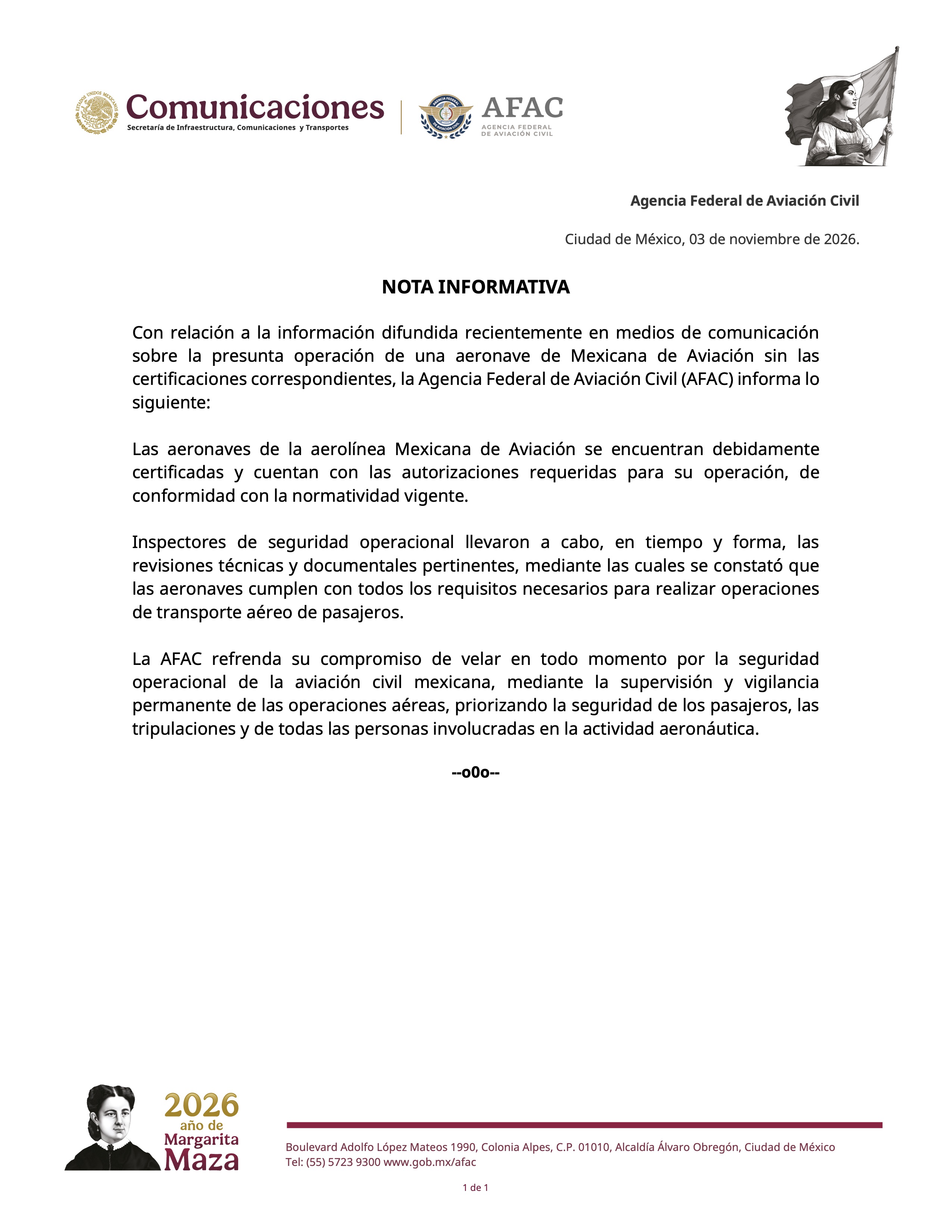
The agency's clarification followed reports questioning the regulatory status of an aircraft reportedly arranged to transport passengers after an operational disruption involving one of Mexicana's scheduled services.
AFAC maintained that its operational safety inspectors had carried out the necessary technical and documentary inspections, verifying that the aircraft met the applicable requirements for passenger transportation.
The statement was intended to address concerns about regulatory compliance and passenger safety, although questions surrounding the specific aircraft and the circumstances of its authorization have attracted attention.
The controversy originated on October 22, 2026, when Mexicana flight MXA1291, operating from Hermosillo, Sonora, to Felipe Ángeles International Airport (AIFA), encountered smoke in the cabin.
The crew declared an emergency and diverted to Del Bajío International Airport in Guanajuato, where the aircraft landed safely at approximately 13:40 local time.
The incident left passengers stranded at the diversion airport while the airline arranged alternative transportation to complete their journey.
According to an investigation published by Mexican financial newspaper El Financiero on November 2, Mexicana subsequently dispatched another aircraft to transport the affected passengers.
However, the replacement aircraft reportedly had not completed its regular certification and authorization process for commercial passenger operations in Mexico.
The newspaper's sources alleged that the aircraft was issued a provisional certificate of airworthiness and a temporary registration to facilitate the operation.
The report also cited an unnamed source who claimed that the expedited authorization followed a direct instruction from the head of AFAC.
These allegations raised questions about the procedures followed when an airline needs to deploy an aircraft urgently to accommodate passengers affected by an operational disruption.
On November 3, AFAC issued an official statement addressing the allegations.
The regulator said Mexicana de Aviación's aircraft were properly certified and possessed the authorizations required to operate under applicable aviation regulations.
It further stated that operational safety inspectors had conducted the relevant technical and documentary examinations to verify compliance with requirements for passenger air transportation.
AFAC reiterated that it maintains continuous supervision and monitoring of civil aviation operations, with passenger and crew safety remaining its priority.
However, the statement did not publicly identify the specific replacement aircraft involved in the October 22 operation or provide its provisional certification and registration documents.
This distinction is important: the regulator's general assurance regarding Mexicana's fleet does not, by itself, provide a detailed explanation of the individual aircraft's authorization status at the time of the reported passenger flight.
One of the central issues in the controversy is the difference between an aircraft operating without authorization and an aircraft operating under provisional regulatory documentation.
An aircraft awaiting completion of its normal registration or certification process may, depending on the applicable regulations and the specific authorization issued, be permitted to conduct certain operations under temporary documentation.
Such an authorization does not automatically mean that an aircraft is unsafe or that it has operated illegally.
However, the relevant documents must establish that the aircraft was authorized for the specific operation, including passenger transportation, and that all applicable airworthiness and operational requirements were satisfied.
In this case, the reported provisional certificate and temporary registration have not been independently examined in the publicly available material reviewed.
Although AFAC has rejected the broader allegations of uncertified aircraft operations, several details would help establish exactly what happened:
What was the registration and aircraft type of the replacement aircraft used to transport the stranded passengers?
When were its provisional certificate of airworthiness and temporary registration issued?
Did the authorization explicitly permit commercial passenger transportation on the relevant domestic route?
Was the operation conducted under a special or temporary authorization?
What technical and documentary inspections were completed before the aircraft departed?
Providing the relevant documents would help resolve the discrepancy between the newspaper's reporting and the regulator's public clarification.
The incident highlights an important operational challenge for airlines: maintaining continuity of service when an aircraft becomes unavailable unexpectedly.
Airlines must have procedures for passenger recovery, aircraft substitution and operational disruptions. However, the urgency of transporting stranded passengers does not remove the requirement to comply with applicable airworthiness, registration and operating authorization rules.
For regulators, transparent communication is equally important. When questions arise about an aircraft's certification status, publishing specific information about the aircraft and its authorization can help establish whether all regulatory requirements were met.
AFAC has defended Mexicana de Aviación's compliance with aviation regulations, stating that the airline's aircraft possess the necessary certifications and authorizations.
Nevertheless, the controversy surrounding the replacement aircraft used after flight MXA1291's emergency diversion remains a separate issue that requires aircraft-specific documentation and clarification.
The central question is not simply whether Mexicana's fleet is certified, but whether the particular replacement aircraft held all the necessary approvals for the passenger operation it reportedly performed on October 22.
The publication of the relevant provisional certification and authorization records would provide greater clarity and help bring the debate to a factual conclusion.
Sources
El Financiero – AFAC responds to the certification controversy
EnElAire – Report on the alleged passenger-operation authorization issue
FL360aero note:
The allegations about the replacement aircraft are attributed to media reporting and have not been independently established through the underlying aircraft documents. AFAC's response is presented separately rather than treated as proof of every detail of the disputed operation.