
Key Highlights: Taiwan Seeks to Retain Experienced Air Force Pilots
The proposed extension of military service for selected Air Force pilots highlights Taiwan’s struggle to preserve operational expertise, the growing competition from commercial airlines, and a worldwide debate over how long experienced aviators should remain in the cockpit.
Taiwan is considering a significant change to its military personnel policy that could allow selected experienced Air Force pilots to continue serving until the age of 58, as the island seeks to address a shortage of senior aviators and retain the expertise required to sustain its air defence capabilities.
Taiwan’s Ministry of National Defense (MND) submitted the proposal to the Executive Yuan, the island’s Cabinet, in September. The plan remains under review and would remove existing maximum-service limits for a selected group of experienced lieutenant colonels and colonels, allowing them to continue serving beyond the limits imposed by current legislation. focustaiwan.tw+1
The proposal reflects a problem confronting military aviation organisations worldwide: the considerable time and expense required to train military pilots, combined with competition from civilian airlines offering attractive salaries and opportunities for longer careers.
For Taiwan, the challenge has added significance. Experienced pilots are essential not only for operating advanced fighter aircraft but also for training younger aviators, maintaining operational proficiency and preparing units for increasingly demanding missions.
Rather than relying exclusively on recruiting and training additional personnel, the proposed policy would allow the Taiwanese military to retain some of its most experienced pilots for longer.
Under Taiwan’s current military service legislation, lieutenant colonels can serve a maximum of 26 years, while colonels face a 30-year limit. These restrictions generally require officers in the two ranks to leave active service at around 48 and 52 years of age, respectively. The law also establishes separate retirement-age provisions for military officers.
The proposed scheme would create a more flexible arrangement for selected senior pilots, allowing eligible officers to continue serving until age 58, subject to the programme's conditions and their willingness to remain in uniform.
There is a small discrepancy in the initial reporting on the programme's size. Taiwan's Central News Agency, in its English-language report, cited 74 pilots, while the Ministry of National Defense's detailed report and Taiwan's Military News Agency described a plan to retain 72 officers. The official military account specifies that the selected personnel would have at least 14 years of service and substantial professional experience. The final number may therefore depend on the approved programme's precise scope.
The selected officers would retain their existing ranks and could continue undertaking operational readiness and training responsibilities. The scheme is not simply an effort to keep more pilots on the payroll; it is designed to preserve a pool of experienced personnel who can contribute immediately to frontline units and the development of less-experienced aviators.
That distinction matters because producing a military pilot involves considerably more than teaching someone to fly. Fighter pilots must master their aircraft's systems, tactical procedures, weapons employment, mission planning and coordination with other aircraft and units. Experienced pilots also develop the judgement needed to manage complex situations under pressure.
Replacing an experienced fighter pilot can therefore take considerably longer than filling an ordinary vacancy. Even when new pilots are available, they cannot immediately replicate the operational knowledge of personnel who have accumulated years of experience in a combat squadron.
Taiwan's current challenge has developed alongside a wider programme to modernise its Air Force.
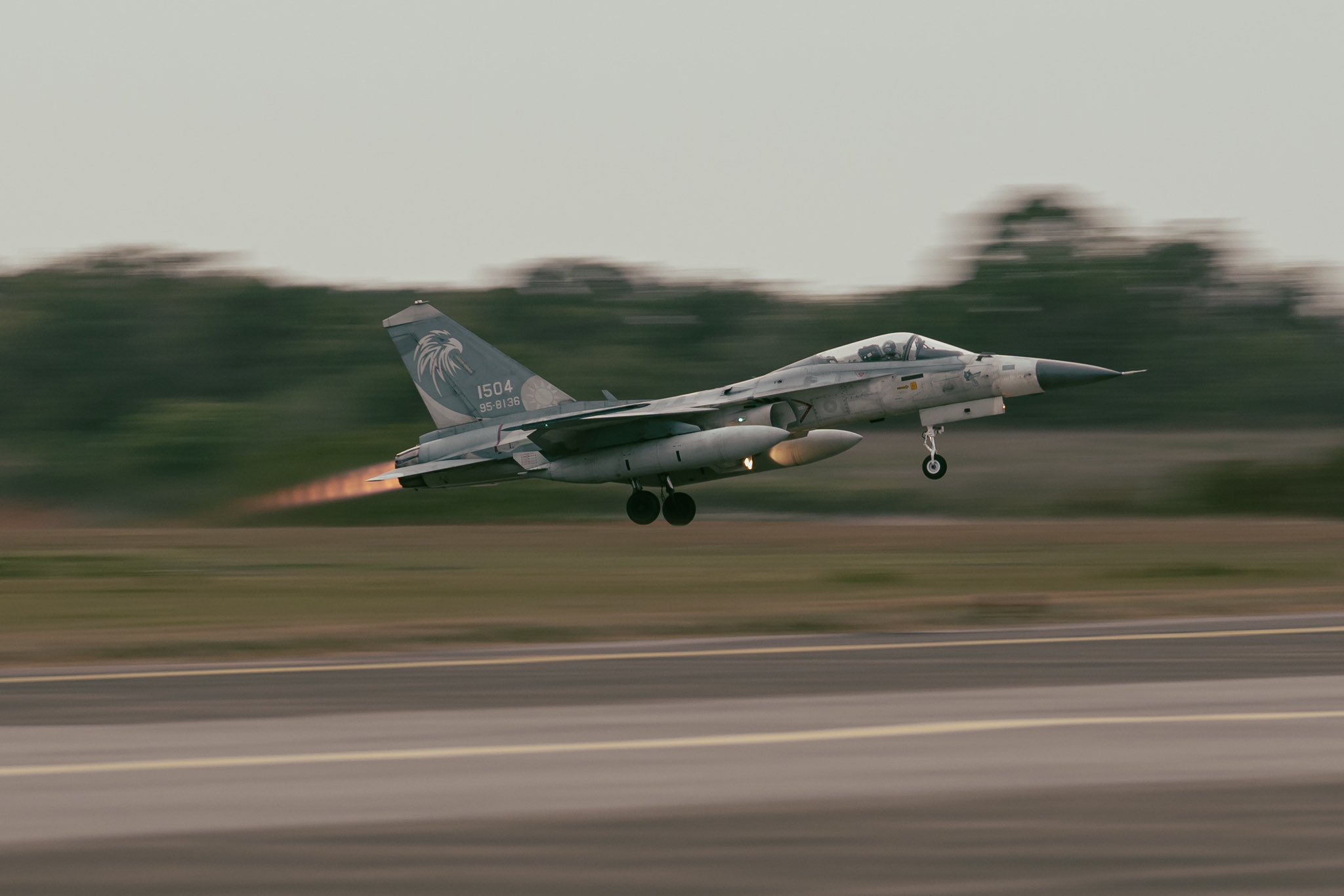
The island has been preparing to introduce 66 new F-16 Block 70 fighters purchased from the United States. These aircraft will expand its advanced fighter capabilities, but introducing new equipment also creates personnel requirements, including qualified pilots, instructors and other specialists.
Taiwan has been building its pilot pipeline in anticipation of the new aircraft. Its defence authorities have said that planned increases in training capacity and pilot numbers began in 2021 to support the F-16 programme.
However, the supply of newly trained pilots does not automatically solve the problem of retaining experienced aviators. Training new entrants and keeping senior personnel are two separate challenges, and both affect the number of operationally useful pilots available at any given time.
In May 2024, Taiwan's Air Force said its fighter-pilot staffing ratios were above 90% and that preparations for the new F-16s were progressing. It also defended its existing retention arrangements, following concerns in local media about the possibility of pilots leaving as retention-bonus contracts expired.
In March 2024, the Ministry of National Defense similarly said its revised continuation-of-service bonus programme, introduced in 2020, had not produced an abnormal pattern of departures. It maintained that recruitment and personnel replenishment were meeting operational requirements at that time.
The latest figures, however, indicate that the problem has become more pronounced in the senior ranks. In its October 12, 2026, report to lawmakers, Taiwan's Ministry of National Defense put the Air Force's overall pilot staffing ratio at 87.8%. Officials attributed retention difficulties partly to pilots leaving after completing their minimum service commitments or reaching 20 years of service, as well as to increased recruitment by commercial airlines.
The figures illustrate the difference between maintaining a pipeline of new pilots and retaining the experience necessary to operate and train personnel for an increasingly sophisticated air force.
The transition from military to civilian aviation is an established career path in many countries. Military pilots possess valuable experience in aircraft operations, decision-making, crew coordination and aviation safety, making qualified personnel attractive to commercial operators.
For Taiwanese military pilots, the financial and career incentives can be particularly compelling. Under the current arrangements, some experienced officers may have to leave military service in their late forties or early fifties, while civilian airline pilots can generally continue flying until age 65, subject to applicable licensing and medical requirements.
This creates a difficult choice for personnel who have already completed many years of demanding military service.
The military invests heavily in their training, but airlines can offer a longer potential flying career and, in many cases, substantially higher compensation. When an experienced pilot leaves, the Air Force loses not only an aircraft operator but also someone who may have served as an instructor, evaluated other pilots or accumulated specialised knowledge of particular aircraft and missions.
Taiwan has already attempted to address this through financial incentives. Eligible pilots who have completed the required service period can receive continuation-of-service bonuses, while flying personnel receive aviation-related allowances. The ministry has also reported an additional monthly allowance of NT$12,000 for personnel in designated combat units, effective July 2026.
The proposed extension would complement these financial measures by addressing a structural issue: the rules governing how long selected officers may remain in active service.
Rather than attempting to match every commercial airline salary, Taiwan would be seeking to make a longer military career possible for personnel whose experience remains valuable to national defence.
Taiwan's proposal is part of a broader international effort to retain experienced aviation personnel. However, countries have adopted different approaches depending on their military personnel systems, operational requirements and competition with commercial airlines.
Some offer financial bonuses in exchange for additional years of military service. Others provide targeted retention payments, extend careers where necessary or create pathways for experienced personnel to remain in specialist roles.
Taiwan's approach is notable because it proposes relaxing an existing statutory service limit for a selected group of officers rather than relying exclusively on financial incentives.
The United States Air Force has long used aviation bonuses and service commitments to retain experienced pilots and other rated personnel.
In April 2026, the service announced its fiscal year 2026 aviation bonus programme, offering eligible personnel additional compensation in exchange for commitments to remain on active duty. Depending on the individual's career field and experience, the programme offered contracts ranging from three to 12 years, with bonuses of up to US$50,000 per year. The programme covers eligible lieutenant colonels and below.
The US approach illustrates how military organisations can use targeted financial incentives to compete for specialist personnel without fundamentally changing their career structures.
The service has also used programmes specifically designed to retain experienced aviators and address personnel requirements in critical communities.
However, financial incentives cannot always overcome the appeal of civilian employment. Military service involves operational commitments, potential deployments and responsibilities that differ significantly from airline flying. For some pilots, the opportunity to move to commercial aviation remains attractive even when retention bonuses are available.
Taiwan's proposal addresses a different part of the equation: it would give selected senior officers the option of remaining in military service beyond their normal maximum service periods.
The Royal Air Force has also used targeted financial incentives to retain personnel in occupations where shortages could affect operational capability.
The UK's Ministry of Defence describes its financial retention incentives as targeted measures for addressing current or anticipated workforce shortfalls. These payments can complement other recruitment, retention and career-management measures. Eligibility and payment levels depend on the specific scheme and service requirements.
The RAF's approach reflects a broader principle: not every specialist occupation requires the same retention policy. Where particular skills are difficult to replace, military authorities can direct incentives towards the personnel whose continued service is most important.
This is relevant to Taiwan because the proposed programme is deliberately limited in scope. Rather than extending service for every officer who reaches the existing maximum, the MND wants to retain a selected group of experienced pilots.
The UK experience also highlights the importance of combining financial measures with career planning. Pay may encourage personnel to stay, but opportunities for professional development, predictable assignments and a sustainable work-life balance can also influence retention decisions.
Japan provides another relevant comparison, although its response has focused on a broader military recruitment and retention challenge rather than an identical policy for senior pilots.
In August 2024, Japan's Ministry of Defense outlined measures to address recruitment difficulties affecting its Self-Defense Forces. These included improving personnel conditions, offering financial incentives, increasing automation and using civilian contractors or former service members for selected support functions.
The reforms reflected the difficulty of maintaining military staffing levels amid a shrinking working-age population and competition from private-sector employers.
For aviation organisations, the underlying lesson is that retaining personnel and reducing unnecessary demands on scarce specialists can be as important as recruiting new people.
Where experienced personnel can be retained in operational or instructional roles, a military may preserve valuable expertise while reducing some of the pressure on its training pipeline.
Taiwan's proposal follows a similar logic, but applies it directly to experienced Air Force officers who would otherwise face compulsory departure under existing service limits.
The debate over Taiwan's proposal also needs to be distinguished from the international discussion about the maximum age for commercial airline pilots.
Military service limits determine how long an officer may remain in the armed forces. They can be based on rank, years of service, age, promotion opportunities and organisational requirements.
Commercial aviation rules, by contrast, govern the circumstances under which a pilot may exercise the privileges of a licence. They focus heavily on medical fitness and operational safety.
Consequently, extending a military officer's service to age 58 does not mean that the officer would automatically be authorised to perform every flying duty. Military aviation authorities would still need to apply their own medical, qualification, currency and operational requirements.
Nevertheless, commercial airline retirement rules help explain why military pilots may view civilian aviation as an attractive second career.
The International Civil Aviation Organization (ICAO) historically used age 60 as the upper limit for pilots conducting international commercial air transport operations. In 2006, the limit was increased to 65 for operations involving multiple pilots, following developments in medical evidence and operational safety considerations.
Under the current international standard, pilots may not act as pilots on international commercial air transport operations after age 60 in single-pilot operations or age 65 in multi-pilot operations.
The rules reflect the need to balance the value of experienced personnel against the risks associated with age-related medical conditions and potential incapacitation.
The question of whether the international limit should increase again has continued to generate debate.
In 2025, the International Air Transport Association (IATA) backed a proposal to raise the international commercial pilot retirement age from 65 to 67, subject to conditions including requiring a pilot under 65 to be part of the crew when another pilot is older. Supporters argued that the change could help airlines retain experienced personnel amid growing demand for air travel.
However, the proposal faced opposition from pilot unions concerned about the potential safety implications and the adequacy of supporting evidence. The United States had also rejected a domestic proposal to raise its airline pilot retirement age to 67 in 2024.
The international debate demonstrates that retaining older pilots is not simply a question of extending careers. Any change must account for the type of flying involved, medical standards, operational safeguards and the relevant regulatory framework.
For Taiwan, the immediate proposal is narrower: allowing selected military pilots to remain in service longer, while continuing to apply the standards governing their military duties.
Taiwan's pilot-retention proposal comes as the island continues to modernise its military aviation capabilities in response to the security challenges it faces across the Taiwan Strait.
Its acquisition of 66 F-16 Block 70 fighters is an important part of that modernisation effort. However, aircraft procurement alone cannot deliver operational capability.
New fighters require trained pilots, instructors, maintenance personnel, mission planners and other specialists. They also require a sustained training programme to ensure that personnel can operate the aircraft safely and effectively.
Experienced pilots play an important role in this system.
They can help train junior aviators, supervise complex missions, maintain squadron standards and transfer knowledge acquired through years of operational experience. Their contribution can extend well beyond the number of sorties they personally fly.
Keeping selected senior pilots in service could therefore help Taiwan preserve institutional knowledge while continuing to develop its next generation of aviators.
The proposed extension would not, on its own, resolve the Air Force's personnel challenges. Taiwan would still need to recruit new pilots, maintain training capacity, retain mid-career personnel and ensure that compensation remains competitive.
It would, however, give the military another way to preserve experience that would otherwise be lost when officers reach their maximum service limits.
As of October 12, 2026, Taiwan's proposal remains with the Executive Yuan awaiting approval.
The Ministry of National Defense has outlined a plan to retain selected experienced officers until age 58, remove the existing maximum-service restrictions for those covered by the scheme and maintain relevant allowances and continuation-of-service incentives.
Several details will be important as the proposal progresses:
The reported difference between the initial figure of 74 pilots and the 72 officers described in the detailed military report also needs to be resolved through the final programme documentation.
Ultimately, the policy's success will depend on whether it can retain the personnel Taiwan most needs without undermining the recruitment, promotion and training of younger officers.
Taiwan's proposal highlights an increasingly important challenge for military aviation: maintaining a sustainable supply of experienced pilots in a labour market where commercial airlines compete aggressively for the same skills.
The United States and United Kingdom demonstrate how targeted financial incentives can encourage experienced aviators to remain in military service. Japan's wider personnel reforms illustrate the need to address recruitment and retention challenges through a combination of financial, organisational and technological measures.
Taiwan's approach goes a step further by proposing greater flexibility in the maximum length of military service for a selected group of senior pilots.
The underlying issue is straightforward. Modern fighter aircraft are sophisticated systems, but their effectiveness ultimately depends on the people who operate them, train others to operate them and maintain the standards required for combat readiness.
Extending the careers of selected experienced pilots will not eliminate Taiwan's personnel shortage. It could, however, help bridge the gap between training new aviators and preserving the expertise needed today.
For Taiwan, the objective is not simply to keep pilots in uniform for longer. It is to ensure that the Air Force retains the experience, instructional capacity and operational knowledge needed to turn its growing fleet of advanced fighters into a sustainable combat capability.