
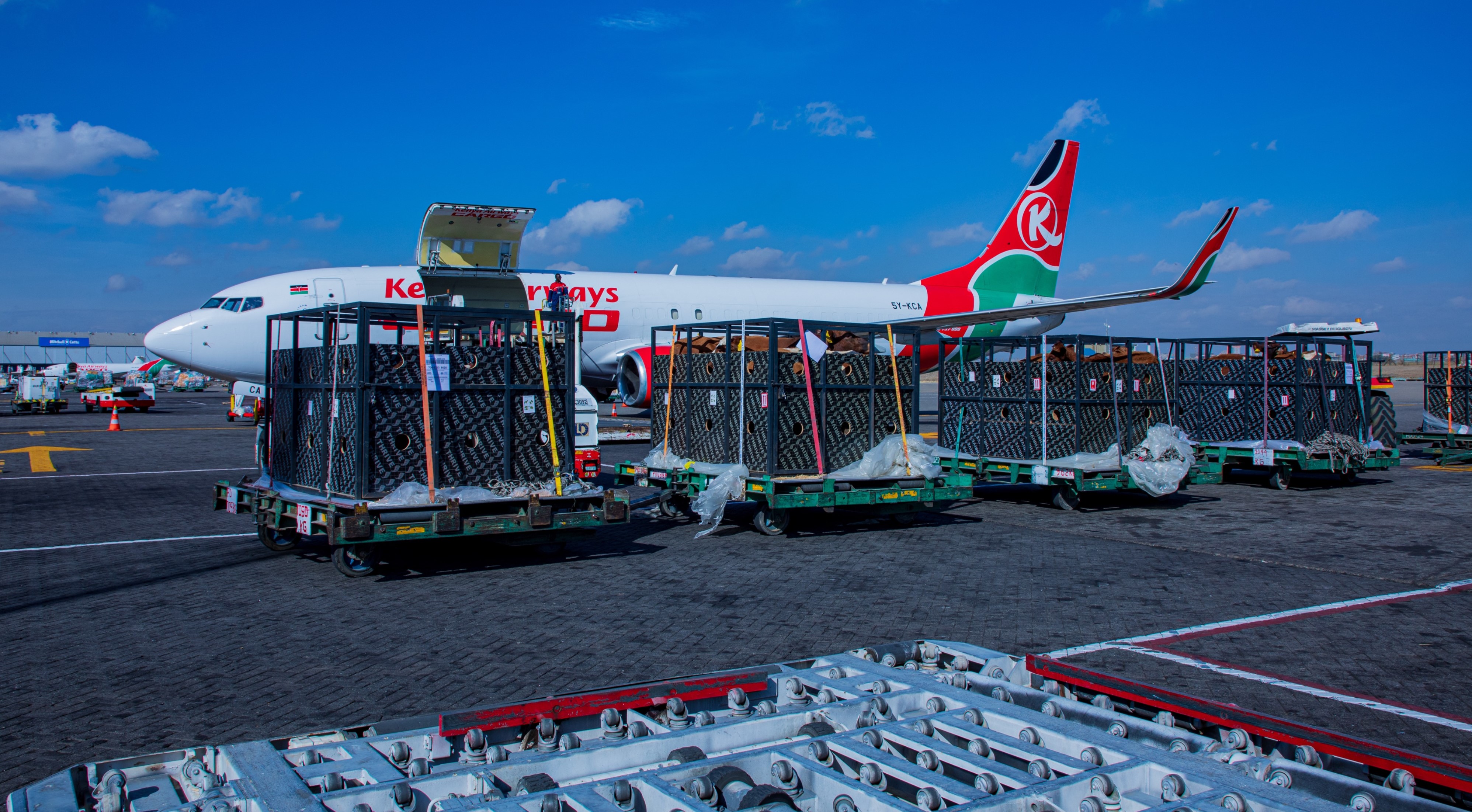
Kenya Airways Cargo has given aviation enthusiasts an unusual story to talk about after transporting more than 50 cows from Nairobi, Kenya, to Lagos, Nigeria, on a customer-chartered flight. The airline announced the shipment on October 27, 2026, joking that its “VIP cattle” were flying in search of greener pastures.
While the shipment may sound extraordinary, transporting livestock and other live animals by air has been part of the aviation industry for decades. From cattle and racehorses to elephants, endangered species and rescue animals, aircraft have played a vital role in moving living cargo across continents.
The Nairobi–Lagos operation is a reminder that air cargo is about much more than packages, machinery and commercial goods. It is also a specialised logistics business requiring careful planning, appropriate facilities and attention to animal welfare.
One of the closest historical comparisons to the Kenya Airways shipment took place in 2007, when a Boeing 747 freighter was chartered to transport 155 pregnant heifers from Frankfurt-Hahn, Germany, to Yakutsk, Siberia.
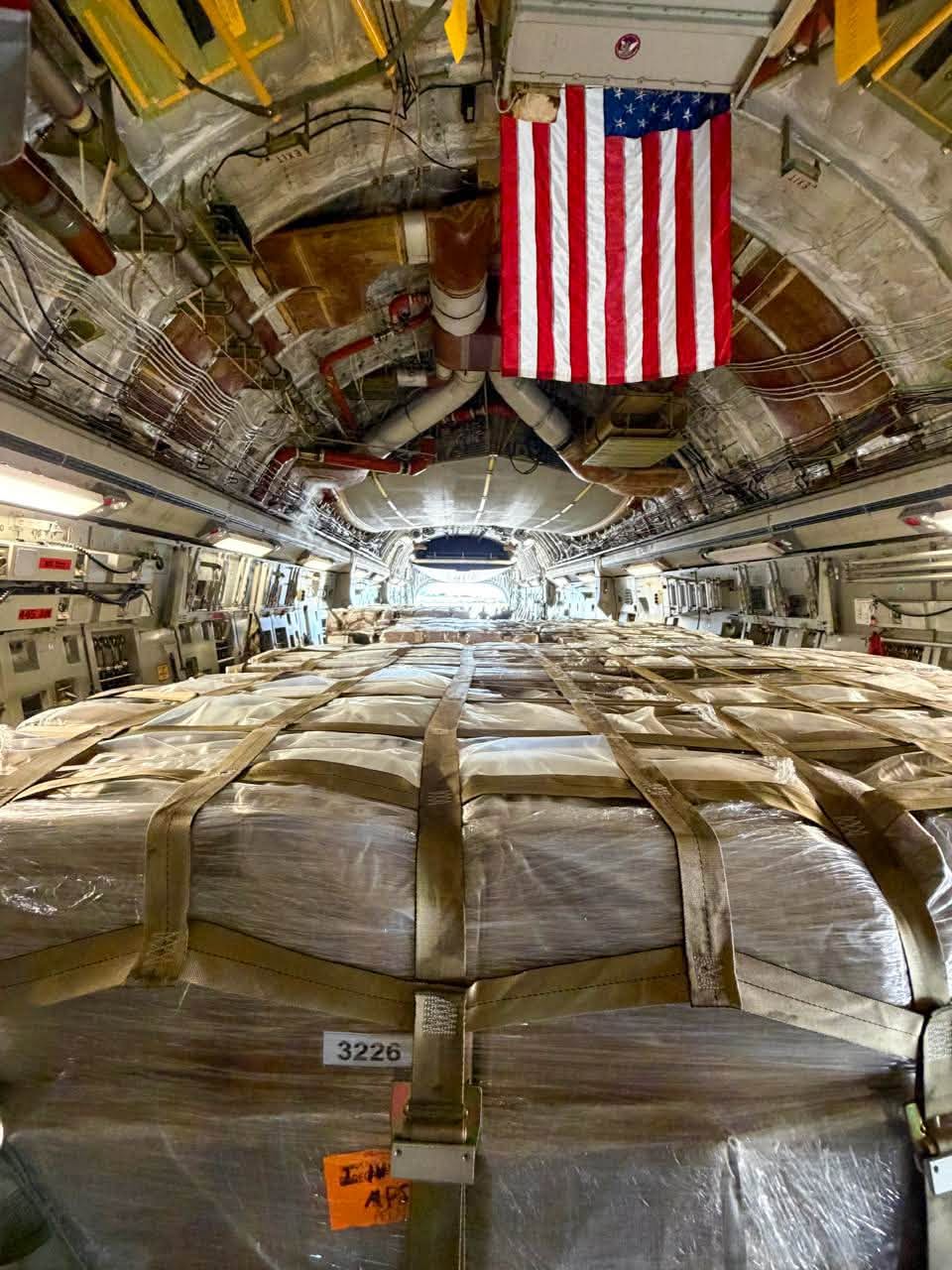
The cattle originated in Austria and were transported by road to the German airport. Under veterinary supervision, they were placed in specially constructed wooden cattle pens mounted on 31 airline pallets before being loaded onto the aircraft.
The flight took approximately eight hours. At Yakutsk, the cattle were unloaded and transported onward by road to their destination about 70 kilometres away.
The operation, organised with specialist charter operator Coyne Airways and logistics partners, was reported as the first full-freighter flight carrying live cattle into Siberia. It demonstrated how aircraft could move large livestock consignments to remote destinations where conventional transport could be less practical.
Transporting animals by air is not a new development. In the years following the Second World War, cargo airlines were already moving livestock, exotic animals and valuable horses internationally.
Historical records from Seaboard & Western and Seaboard World Airlines document the transportation of cows, racehorses, cheetahs, lions and elephants aboard cargo aircraft. In 1956, the airline even flew a baby elephant and an Andalusian donkey from London to New York. The donkey was a gift from the Spanish government to David Eisenhower, the grandson of U.S. President Dwight D.
An especially remarkable journey took place in February 1949, when a Seaboard DC-4 named Singapore Trader began a long-distance animal charter. The westbound operation carried 133 animals weighing approximately 13,000 pounds from Singapore and Bangkok to New York. The shipment included 116 Java monkeys, four gibbons, four leopards, two Asiatic golden cats and six baby elephants.
The entire round trip lasted 17 days and covered 23,880 miles across 24 flight legs, illustrating the logistical complexity of international animal transportation even in aviation's early cargo era.
Horses are among the most familiar examples of high-value live-animal air freight. They are transported internationally for racing, breeding, equestrian competitions and major sporting events.
In a 1988 report, the Los Angeles Times described plans to fly approximately 260 horses to Seoul for the Olympic Games. The report also noted that Air France's Boeing 747 freighters regularly carried polo horses between Europe and North America.
More recently, ANA Cargo transported two horses aboard a Boeing 777F from Tokyo Narita to Hong Kong in April 2024, as part of a larger journey to Melbourne for breeding. The airline used a purpose-designed horse transport unit and coordinated arrangements for the animals' care, with grooms and staff accompanying the shipment.
These movements highlight an important distinction: live-animal freight requires more than simply finding space in an aircraft's cargo hold. The shipment must be planned around the animals' needs, handling requirements and destination regulations.
Modern air cargo operators also transport animals for conservation, rescue, breeding programmes and relocation.
According to IAG Cargo, its live-animal service has handled a wide range of species over the years, including:
90 alpacas: Transported from Chile to Spain in January 2020.
50 rescue dogs and cats: Flown from London Heathrow to Larnaca, Cyprus, in 2020 on a cargo-only charter that also carried food, perishables and essential medical supplies.
Loren the orangutan: A young Bornean orangutan transported from Moscow to London in 2017 to join a specialist care programme at Monkey World in Dorset.
Kiara the cheetah: Moved from Johannesburg to an organisation in Cornwall to support a conservation breeding programme.
Quvam the lion: Transferred from Moscow Zoo to Madrid Zoo in 2018 after a potential breeding partner was identified.
These examples show that animal air transport serves a variety of purposes, from commercial livestock movements to wildlife conservation and animal welfare initiatives.
Moving living animals by air requires specialised planning before an aircraft even arrives at the airport.
Kenya Airways Cargo operates its KQ Live service for transporting animals, with procedures covering safety, comfort, hygiene, trained handling staff and suitable transport containers. Its published requirements also address the documentation needed for different species and destinations.
Depending on the shipment, the arrangements may involve:
Veterinary health certificates and import permits.
Purpose-built containers or livestock pens secured for flight.
Appropriate ventilation, temperature management and hygiene.
Coordination among cargo handlers, veterinarians, ground transport providers and recipients.
Arrangements for feeding, watering and animal care appropriate to the species and journey duration.
The exact requirements depend on the animals, the aircraft, the route and the regulations of the countries involved.
The transportation of more than 50 cows from Nairobi to Lagos is unusual in its immediate context, but it belongs to a well-established part of the global aviation industry.
The historical examples demonstrate that aircraft can move livestock and other animals across long distances for agricultural development, breeding, sporting events, conservation and rescue operations. They also show why these shipments often require charter flights or carefully coordinated cargo arrangements rather than ordinary passenger services.
For Kenya Airways, the reported operation offers a memorable illustration of the range of cargo its business can handle. For the wider aviation industry, it reinforces the role of air freight in connecting agricultural markets and specialised animal-care organisations across borders.
From 155 cattle flying to Siberia to elephants travelling aboard post-war cargo aircraft, aviation history is full of journeys that would sound improbable if they were not documented.
The bottom line: Cargo aviation does not just connect markets and move merchandise. Sometimes, it gives an entire herd a lift.

.jpg)