
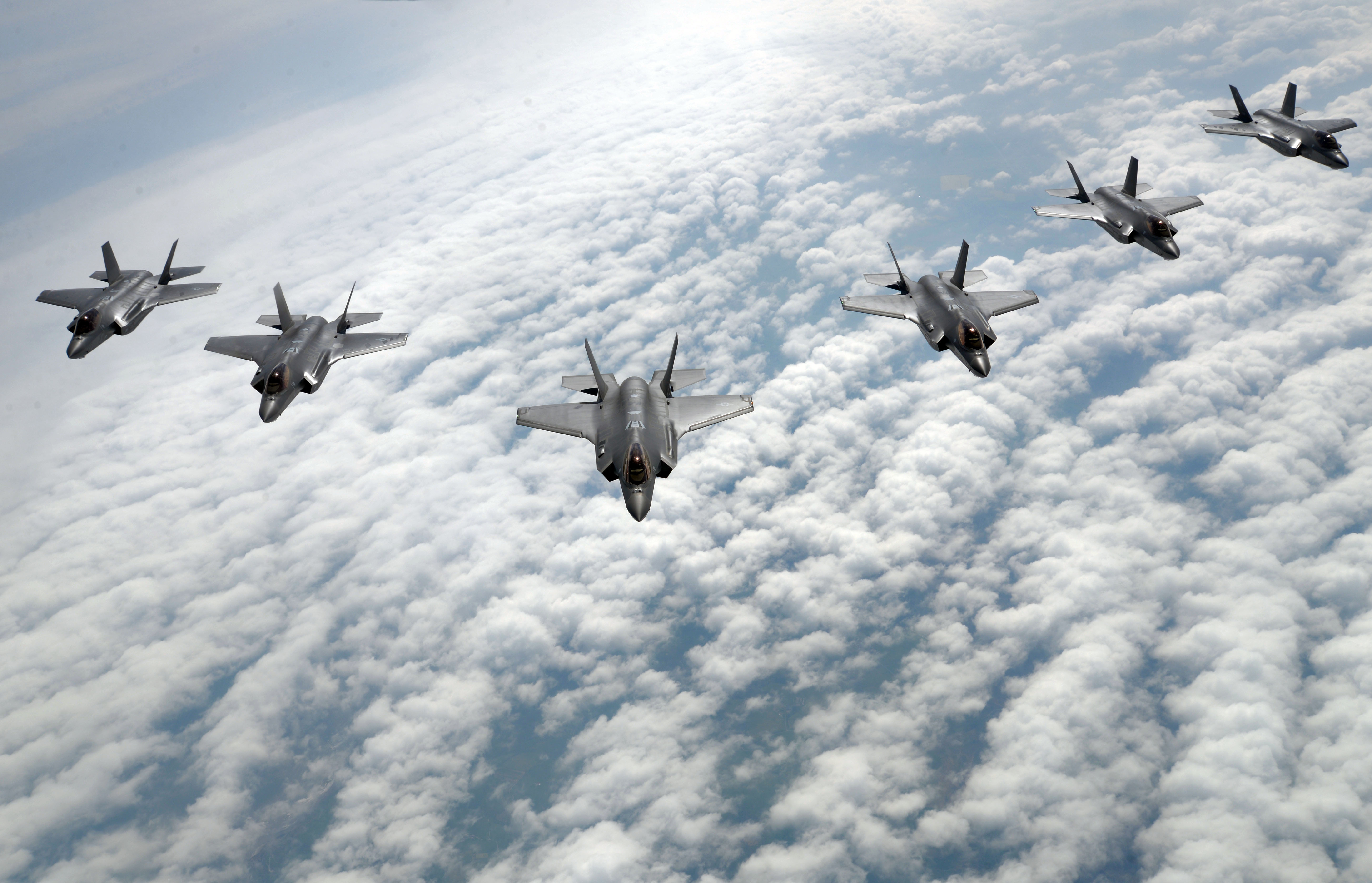
The United States Department of War and Lockheed Martin announced a landmark 10-year framework agreement on 22 October 2026 aimed at expanding production, strengthening supply chains and improving the operational readiness of the F-35 Lightning II fleet.
Under the framework, Lockheed Martin will independently fund at least $7 billion in initiatives supporting the F-35 programme, in exchange for greater long-term procurement certainty. The agreement establishes a minimum commitment of 850 aircraft for the US military over the decade, alongside spare parts, modification kits and sustainment support for the wider international fleet.
However, despite the announcement describing the agreement as finalised, it is not yet a fully executed, funded 10-year aircraft procurement contract. Implementation remains subject to congressional authorisation and appropriations, with detailed pricing, schedules and contractual terms still to be settled.
The framework covers production Lots 21 through 30, spanning ten annual production lots. Lockheed Martin plans to maintain an output rate of 156 F-35 aircraft per year, equivalent to a potential 1,560 aircraft over ten years if that rate is sustained. Of these, at least 850 aircraft are earmarked for the US military, while the framework also encompasses aircraft for international customers.
Fighter production depends on a complex network of suppliers producing engines, radar systems, avionics, electronic components and airframe structures. A decade-long procurement framework gives Lockheed Martin and its suppliers greater visibility into future demand, potentially encouraging investment in tooling, facilities and manufacturing capacity.
The planned $7 billion or more in company-funded initiatives is intended to support that industrial expansion and strengthen supply-chain resilience.
Multiyear procurement allows governments to plan purchases over an extended period rather than negotiating separate annual arrangements. Larger, more predictable orders can help manufacturers secure volume discounts, plan production efficiently and reduce certain recurring costs.
Lockheed Martin expects the framework to save taxpayers billions of dollars over the programme's lifecycle. However, the companies and the Pentagon have not yet disclosed a total agreement value or a final price per aircraft. The anticipated savings therefore remain projections rather than confirmed results.
The framework extends beyond manufacturing new fighters. It includes initial spare parts, ten years of modification kits and sustainment support for the global F-35 fleet.
These provisions matter because aircraft availability depends on more than the number delivered. Timely access to replacement components, repairs and upgrades is essential to keeping operational fleets ready for missions. The agreement aims to improve logistics and shorten repair turnaround times.
The F-35 is operated by the United States and numerous allied nations. Its international programme relies on a shared industrial and sustainment network, although individual countries have their own procurement arrangements and requirements.
Coordinating production and support across US and international orders could increase purchasing power, improve component availability and reinforce interoperability between allied forces. The benefits will depend on implementation, production performance and the ability of suppliers to meet demand.
The F-35 Lightning II is a fifth-generation combat aircraft family developed by Lockheed Martin for the US armed forces and international partners. It combines low-observable stealth characteristics with advanced sensors, electronic warfare systems, data sharing and precision-strike capabilities.
The programme comprises three principal variants:
F-35A: Conventional take-off and landing aircraft used primarily by the US Air Force and several international air forces.
F-35B: Short take-off and vertical landing variant operated by the US Marine Corps and selected international customers.
F-35C: Carrier-capable variant designed for US Navy aircraft carrier operations.
By October 2026, Lockheed Martin reported that more than 1,375 F-35s had been fielded worldwide and that the fleet had accumulated more than one million flight hours. The aircraft has become a central component of US and allied tactical aviation, while its acquisition and long-term operating costs remain major considerations for governments.
Despite the headline announcement, several important steps remain before the framework becomes a fully implemented procurement programme.
Congressional authorisation: Lawmakers must provide the legal authority required for a multiyear procurement commitment.
Appropriations: Funding must be approved to finance the planned purchases.
Formal contract award: The F-35 Joint Program Office and Lockheed Martin must finalise pricing, terms and schedules.
Industrial execution: Lockheed Martin and its suppliers must demonstrate that the investment improves output, supply-chain reliability and fleet support.
As Defense News and Reuters reported on 22 October, the framework itself is not a formal order for all 850 aircraft. The final financial commitments and delivery arrangements remain dependent on subsequent government action.
The agreement represents a strategic effort to give the F-35 programme a more predictable manufacturing and sustainment structure at a time when the United States and its allies continue to prioritise advanced combat-aircraft capability.
If Congress authorises and funds the arrangement, the framework could support sustained production, encourage investment across the supplier network and improve access to spare parts for existing operators. It could also establish a model for other major defence programmes seeking to combine long-term government procurement with upfront industry investment.
The bottom line:
The October 22 announcement is a significant step towards securing the F-35 production pipeline for the next decade. Its ultimate success, however, will be measured by whether the promised investment delivers affordable aircraft, reliable supply chains and improved fleet readiness—not simply by the size of the headline figures.
Display PHOTO BY: Senior Airman Christine Groening

.jpg)