


NASA Unveils X-70 Fractal: NASA Administrator Jared Isaacman announced the new crewed experimental aircraft on November 4, 2026, at the UP.Summit at Kennedy Space Center, introducing a new platform for advanced aviation research.
Advanced Flight-Control Technology: The X-70 is designed to investigate unprecedented manoeuvrability capabilities in crewed flight through rapidly reconfigurable flight-control systems.
Modular Research Platform: Its architecture will allow researchers to exchange experimental equipment and conduct multiple research projects using the same aircraft, potentially reducing development costs and testing time.
Impressive Proposed Specifications: The aircraft is designed for a cruise speed of Mach 0.75, an altitude of 45,000 feet, a range exceeding 1,500 nautical miles and an experimental payload capacity of 2,000 pounds.
First Flight Expected Within Two Years: NASA expects the X-70 to fly within two years. However, its manufacturer, propulsion system, detailed configuration and actual aircraft design remain undisclosed.
NASA's latest X-plane programme introduces a crewed, modular research aircraft designed to explore advanced flight-control technologies, unprecedented manoeuvrability and next-generation aviation capabilities
NASA has officially unveiled its newest experimental aircraft, the X-70 Fractal, marking an important development in the agency's renewed ambitions to expand its experimental aviation programme.
Announced by NASA Administrator Jared Isaacman on November 4 during the UP.Summit at Kennedy Space Center, Florida, the X-70 is a crewed, high-performance research platform designed to accelerate the development and testing of advanced aviation technologies.
Unlike conventional experimental aircraft developed around a single research objective, the X-70 is being designed as a highly adaptable platform. Its rapidly reconfigurable flight-control systems and modular architecture will allow researchers to investigate advanced aircraft manoeuvrability and test different experimental technologies without requiring an entirely new aircraft for each research project.
NASA expects the aircraft to make its first flight under the agency's banner within the next two years.
The announcement represents another step in NASA's effort to rebuild a portfolio of experimental aircraft capable of addressing some of the most challenging questions in aeronautical research.
According to NASA, the X-70 is designed around a combination of high-performance flight characteristics, adaptable flight controls and flexible experimental payload arrangements.
Its publicly disclosed specifications include:
| Specification | X-70 Fractal |
|---|---|
| Aircraft designation | X-70 |
| Name | Fractal |
| Configuration | Crewed experimental aircraft |
| Takeoff weight | 10,000 lb (4,536 kg) |
| Cruise speed | Mach 0.75 |
| Maximum operating altitude | 45,000 ft (13,716 m) |
| Operational range | More than 1,500 nautical miles |
| Experimental payload capacity | Up to 2,000 lb (907 kg) |
| Payload arrangement | Internal and external |
| Expected first flight | Within two years |
These figures position the X-70 as a high-altitude, subsonic experimental research aircraft rather than a conventional operational fighter or commercial aircraft.
One of the most significant aspects of the programme is its rapidly reconfigurable flight-control technology.
NASA intends to use the aircraft to investigate manoeuvrability capabilities that have not previously been demonstrated in crewed flight.
This could provide researchers with an opportunity to evaluate different flight-control architectures, aircraft responses and control strategies under real-world flight conditions.
Modern aircraft increasingly rely on sophisticated digital flight-control systems to maintain stability, manage aerodynamic forces and optimise aircraft performance.
The X-70 is intended to take this research further by providing a platform where experimental control technologies can be changed and evaluated more rapidly.
The programme could contribute to future developments in:
However, NASA has not yet disclosed the detailed flight-control architecture or specific manoeuvres planned for the aircraft. These remain areas of future research rather than confirmed capabilities.
A particularly interesting feature of the X-70 is its ability to accommodate experimental equipment in both internal and external payload locations.
NASA says the aircraft can carry up to 2,000 pounds of research equipment. This flexibility could allow engineers to conduct different experiments using the same airframe.
The modular concept offers several potential advantages:
Reduced research costs: Researchers could reuse the aircraft for multiple experiments instead of developing separate platforms for every technology.
Faster testing cycles: Interchangeable payloads and reconfigurable systems could reduce the time required to prepare the aircraft for successive research missions.
Greater experimental flexibility: Different sensors, avionics packages and research equipment could be integrated to investigate emerging technologies.
Real-world flight validation: Technologies initially evaluated in laboratories and ground-based simulators could be tested under actual flight conditions.
This approach could make the X-70 an important research asset for NASA and its industry partners.
The X-70 is entering a research tradition that has produced some of the most influential experimental aircraft in aviation history.
NASA and its predecessor, the National Advisory Committee for Aeronautics (NACA), have participated in numerous programmes exploring technologies that eventually influenced military and commercial aviation.
Some particularly important developments include:
The Bell X-1 made aviation history in 1947 when Chuck Yeager became the first pilot to break the sound barrier in level flight.
The programme provided important information about transonic and supersonic aerodynamics, helping engineers understand the challenges of high-speed flight.
North American X-15 remains one of the most remarkable experimental aircraft ever developed.
The rocket-powered research aircraft reached approximately Mach 6.7 and an altitude of 354,200 feet during its flight-test programme.
Its research contributed significantly to understanding aerodynamic heating, high-speed flight controls, materials and the physiological challenges associated with extreme flight environments.
The Grumman X-29 explored an unconventional forward-swept wing configuration.
Its development demonstrated how advanced aerodynamic design, composite materials and computer-controlled flight systems could work together to manage an inherently unstable aircraft.
The programme provided valuable lessons for future aerodynamic and flight-control research.
The Rockwell-MBB X-31 investigated enhanced manoeuvrability through thrust-vectoring technology.
It demonstrated the potential for aircraft to maintain controlled flight at extremely high angles of attack, including manoeuvres beyond the conventional aerodynamic limits of traditional fighter designs.
Its research helped advance understanding of super-manoeuvrability and advanced flight-control technologies.
Another important development in experimental aviation is the U.S. Air Force's X-62A VISTA.
The X-62A VISTA is a heavily modified F-16D used as an airborne research platform for evaluating advanced flight controls, autonomy and artificial intelligence.
In 2024, the aircraft attracted international attention after participating in DARPA's Air Combat Evolution programme, which demonstrated an AI-controlled aircraft engaging in an airborne dogfight against a human-piloted F-16.
In December 2025, the U.S. Air Force announced a major mission-systems upgrade for the X-62A, intended to expand its capabilities in testing autonomy and artificial intelligence in increasingly complex flight environments.
Although the X-62A and X-70 have different programme objectives, both demonstrate the importance of dedicated experimental aircraft in developing future flight-control technologies.
The distinction is that the X-70 is being introduced as a new modular research platform, while the X-62A uses an existing fighter airframe to evaluate advanced control systems and autonomous technologies.
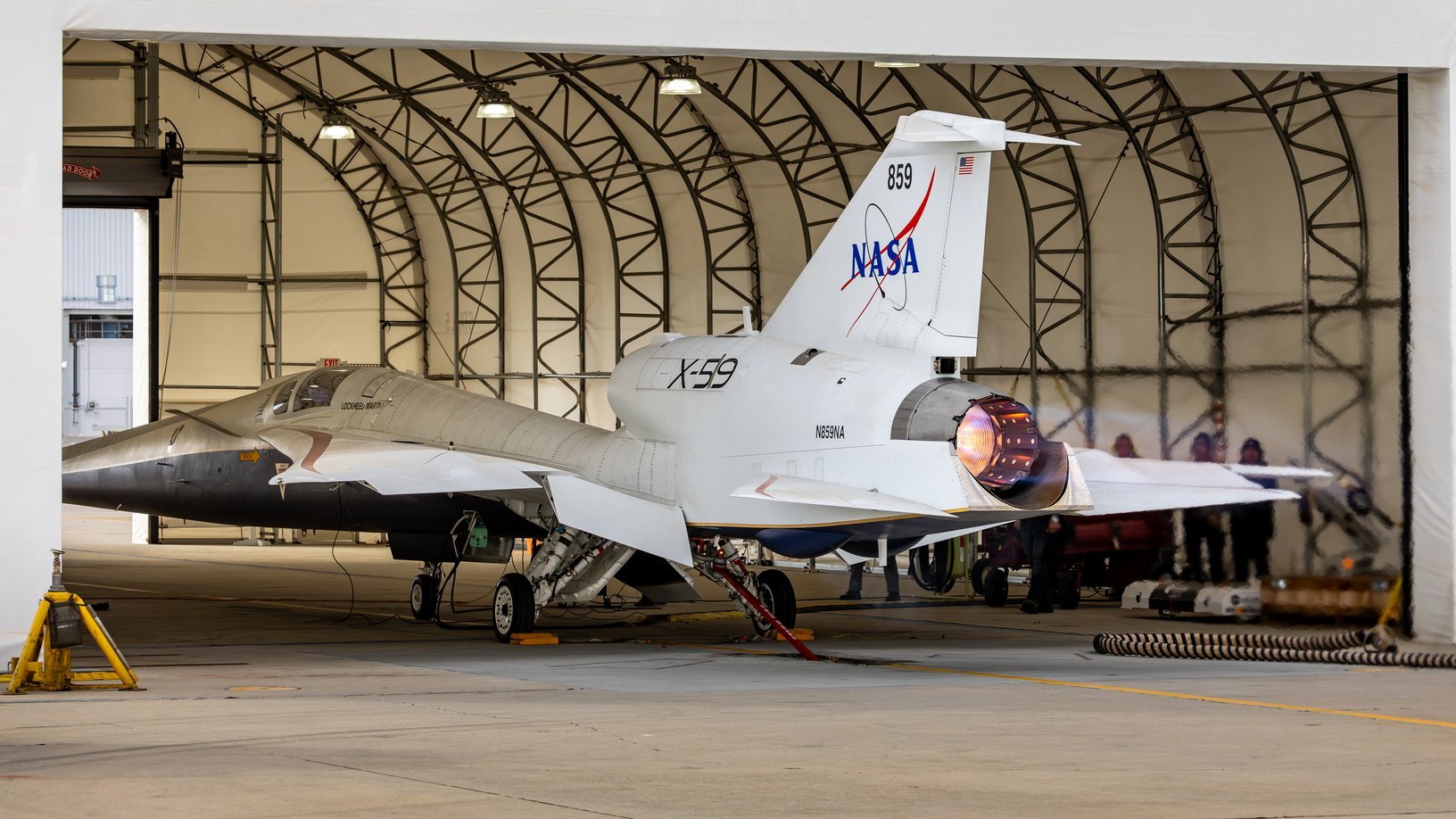
NASA's experimental aviation ambitions are also being demonstrated through its ongoing X-59 Quesst programme.
Developed with Lockheed Martin, the NASA X-59 is designed to demonstrate supersonic flight with a significantly reduced sonic boom.
The aircraft completed its first flight on October 28, 2025, before progressing into an expanded flight-test programme.
On June 5, 2026, the X-59 achieved its first supersonic flight, reaching approximately Mach 1.1 at 43,400 feet during an 81-minute mission.
By October 28, 2026, NASA reported that the aircraft had completed 40 additional flights since its first flight, reaching speeds of up to Mach 1.53 and altitudes exceeding 56,000 feet.
The Quesst programme aims to collect scientific data about quieter supersonic flight and how people on the ground perceive the aircraft's reduced sonic signature.
Together, the X-59 and X-70 illustrate two different priorities within NASA's renewed experimental aviation activities: reducing the noise associated with supersonic flight and advancing aircraft manoeuvrability and flight-control technologies.
The X-70 announcement comes amid growing interest in NASA's broader plans to revive high-speed experimental aviation.
One particularly intriguing development concerns the retired Lockheed SR-71 Blackbird, specifically NASA aircraft number 844.
The aircraft, which had been displayed outside NASA's Armstrong Flight Research Center at Edwards Air Force Base in California, was reportedly removed from its public display position earlier in 2026.
This sparked speculation about a possible restoration or return-to-flight project.
NASA Administrator Jared Isaacman has addressed questions about the aircraft but has not confirmed a return-to-flight programme.
In an interview, he jokingly suggested that the aircraft was simply being cleaned.
Meanwhile, Aviation Week reported that NASA had approached several former SR-71 programme personnel about potentially supporting a restoration effort.
However, the agency has not officially confirmed that the aircraft will return to flying condition.
The SR-71 speculation and X-70 announcement have therefore generated considerable interest in NASA's future experimental aircraft portfolio, although there is no confirmed evidence that the two developments are connected.
Despite the official announcement, several important questions remain unanswered.
Aircraft manufacturer: NASA has not publicly identified the company responsible for designing or manufacturing the X-70.
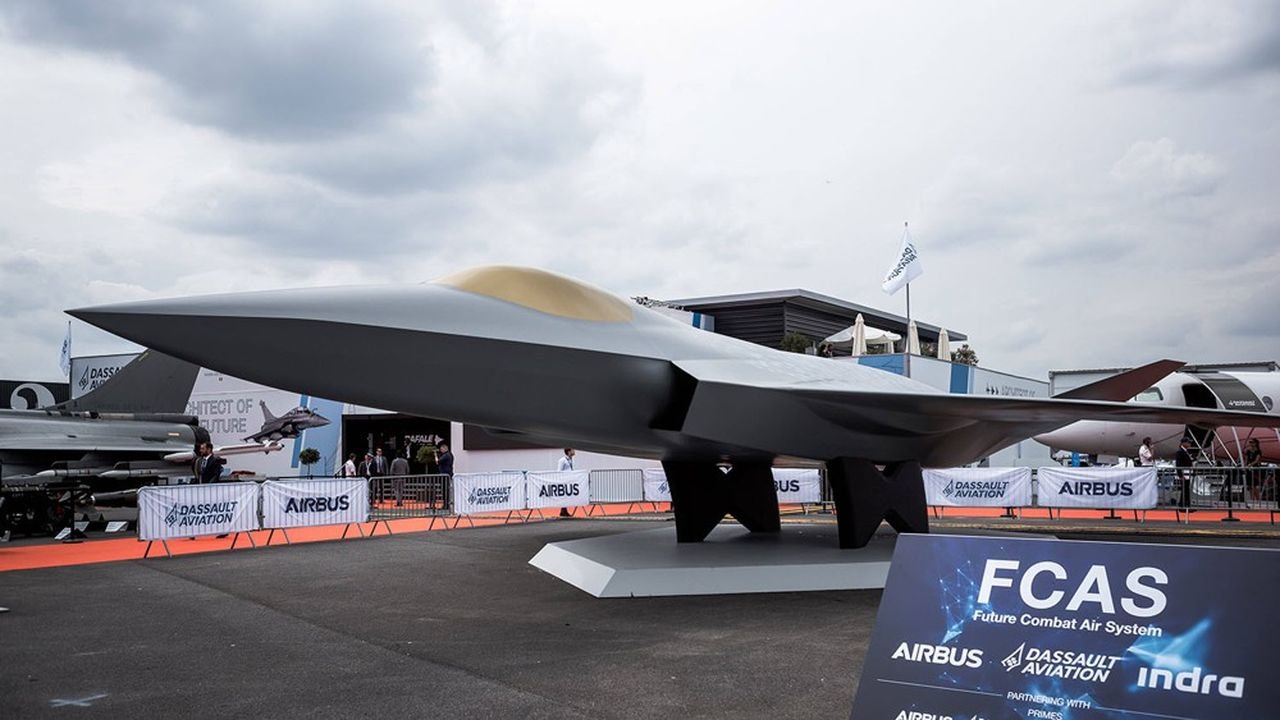
Actual aircraft configuration: The image released by NASA is identified as a generated concept image, not a photograph of a completed aircraft.
Propulsion system: No engine manufacturer, engine type or propulsion configuration has been officially disclosed.
Flight-control architecture: NASA has not released detailed information about the rapidly reconfigurable flight-control system.
Stealth characteristics: No official information establishes that the X-70 incorporates stealth technology. Its limited public disclosure and dark concept artwork should not be interpreted as evidence of a stealth aircraft.
Development and testing schedule: NASA expects the first flight under its banner within two years, but has not provided a detailed development or flight-test timetable.
These unanswered questions make the X-70 particularly intriguing, but the distinction between confirmed programme information and speculation remains important.
The X-70 announcement also coincides with NASA's new MAX POWER aerospace exhibition and airshow, scheduled for November 7–8, 2026, at and around Kennedy Space Center.
The event brings together developments in aviation, space exploration, autonomous vehicles and emerging aerospace technologies.
NASA has identified the X-59 as one of the aircraft to be displayed, alongside other technologies from the agency and its partners.
The event reflects Administrator Jared Isaacman's ambition to establish a stronger platform for American aerospace innovation and revive NASA's tradition of developing experimental aircraft.
Isaacman has indicated that the X-70 is only one part of a broader new beginning for NASA aeronautics, suggesting that additional experimental aircraft programmes could follow.
The significance of the X-70 may ultimately extend beyond the aircraft itself.
Experimental platforms allow engineers to test technologies that would be too risky, expensive or technically challenging to introduce directly into operational aircraft.
Research conducted through the programme could potentially contribute to:
However, these are potential research benefits rather than confirmed operational applications.
Unlike a production aircraft, the X-70 is being developed primarily as a research platform. Its success will therefore be measured by the technologies and scientific knowledge generated through its flight-testing programme.
From the Bell X-1 breaking the sound barrier to the X-15 exploring hypersonic flight and the X-59 investigating quieter supersonic travel, experimental aircraft have repeatedly changed the direction of aerospace engineering.
The X-70 Fractal represents another addition to that legacy.
Its proposed combination of modular architecture, rapidly reconfigurable flight controls and experimental payload flexibility could give NASA a valuable platform for investigating technologies that may influence future aircraft development.
For now, the aircraft remains largely a mystery. Its manufacturer, detailed design, propulsion system and precise technical architecture have yet to be publicly disclosed.
But one thing is clear: NASA wants to return to an era in which experimental aircraft are central to advancing the boundaries of flight.
The biggest question is no longer whether NASA intends to fly the X-70, but what its engineers will discover when this mysterious new research aircraft finally takes to the skies.
FL360aero editorial note: The X-70 Fractal is an officially announced NASA experimental aircraft programme. Its published performance figures and expected first-flight timeline are NASA's stated design objectives, not independently demonstrated results. The released concept image is generated artwork, and the manufacturer and detailed aircraft configuration have not been disclosed.


.jpg)