
Key Highlights
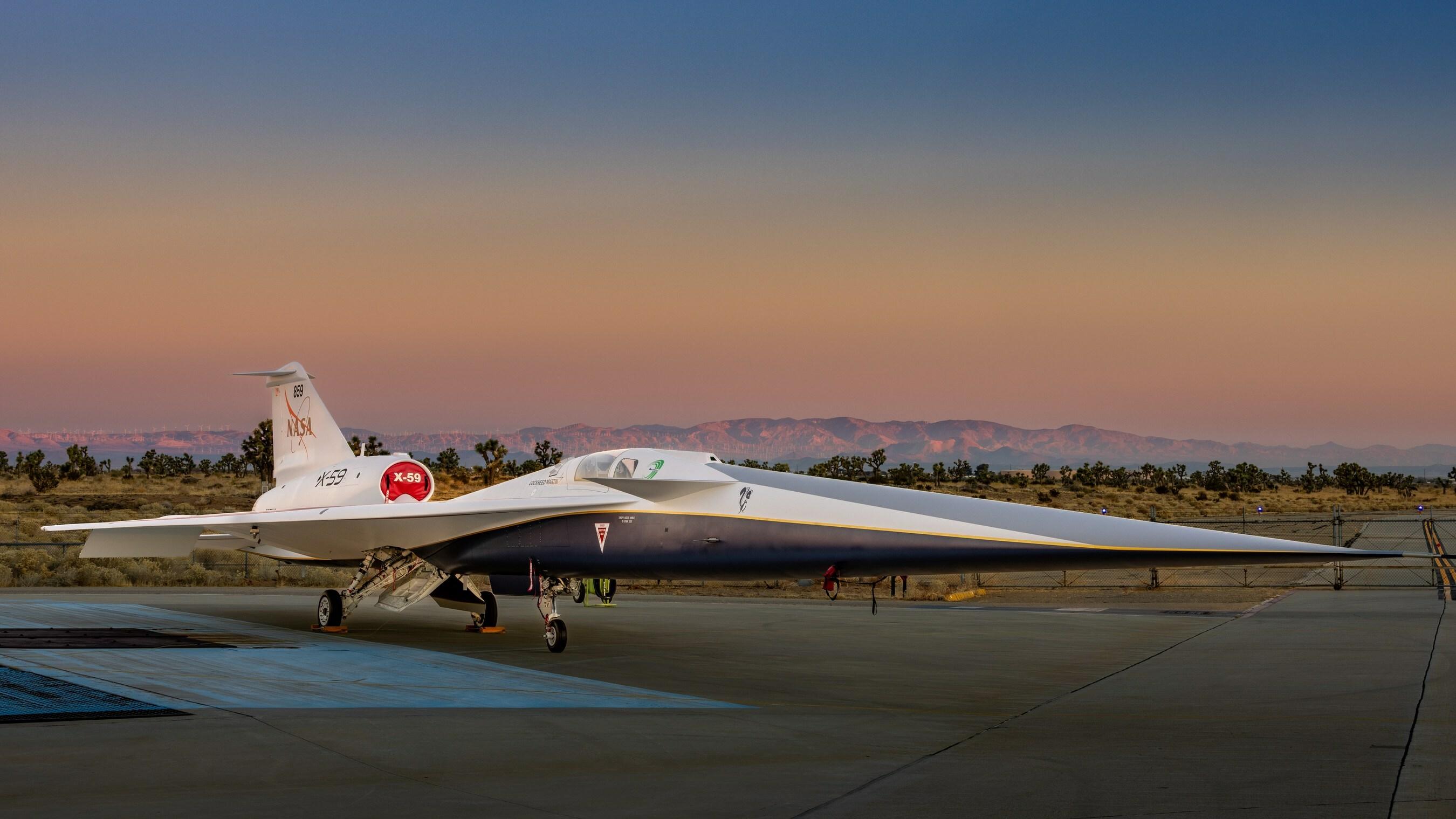
NASA has officially taken ownership of its X-59 quiet supersonic research aircraft from Lockheed Martin Skunk Works, marking a significant milestone in the agency's efforts to make commercial supersonic flights over land a potential reality.
The transfer of ownership took place on November 18, 2026, following the completion of the aircraft acceptance review, a key contractual step between NASA and Lockheed Martin. Announced by NASA on November 23, the development formally moves the experimental aircraft into NASA's ownership as it continues its flight-test programme.
The X-59 is the centrepiece of NASA's Quesst (Quiet SuperSonic Technology) mission, which aims to demonstrate that aircraft can travel faster than the speed of sound without producing the disruptive sonic booms traditionally associated with supersonic flight.
The X-59 programme has its roots in NASA's long-running research into reducing the noise generated by supersonic aircraft. The project was developed in response to one of the biggest obstacles facing commercial supersonic aviation: the loud sonic boom produced when an aircraft flies faster than the speed of sound.
In February 2016, NASA selected a team led by Lockheed Martin to develop the preliminary design for a new experimental low-boom aircraft under the Quiet Supersonic Technology (QueSST) initiative. The programme subsequently progressed into the detailed design and construction phase.
NASA awarded Lockheed Martin a contract in April 2018 to build the Low-Boom Flight Demonstrator, which became known as the X-59. The project brought together NASA's research expertise and Lockheed Martin Skunk Works' experience in developing advanced experimental aircraft.
The aircraft was specifically designed to demonstrate a different approach to managing sonic booms. Rather than eliminating the physical shock waves associated with supersonic flight, its aerodynamic configuration aims to shape and distribute those pressure waves so that they reach the ground as a significantly quieter sound.
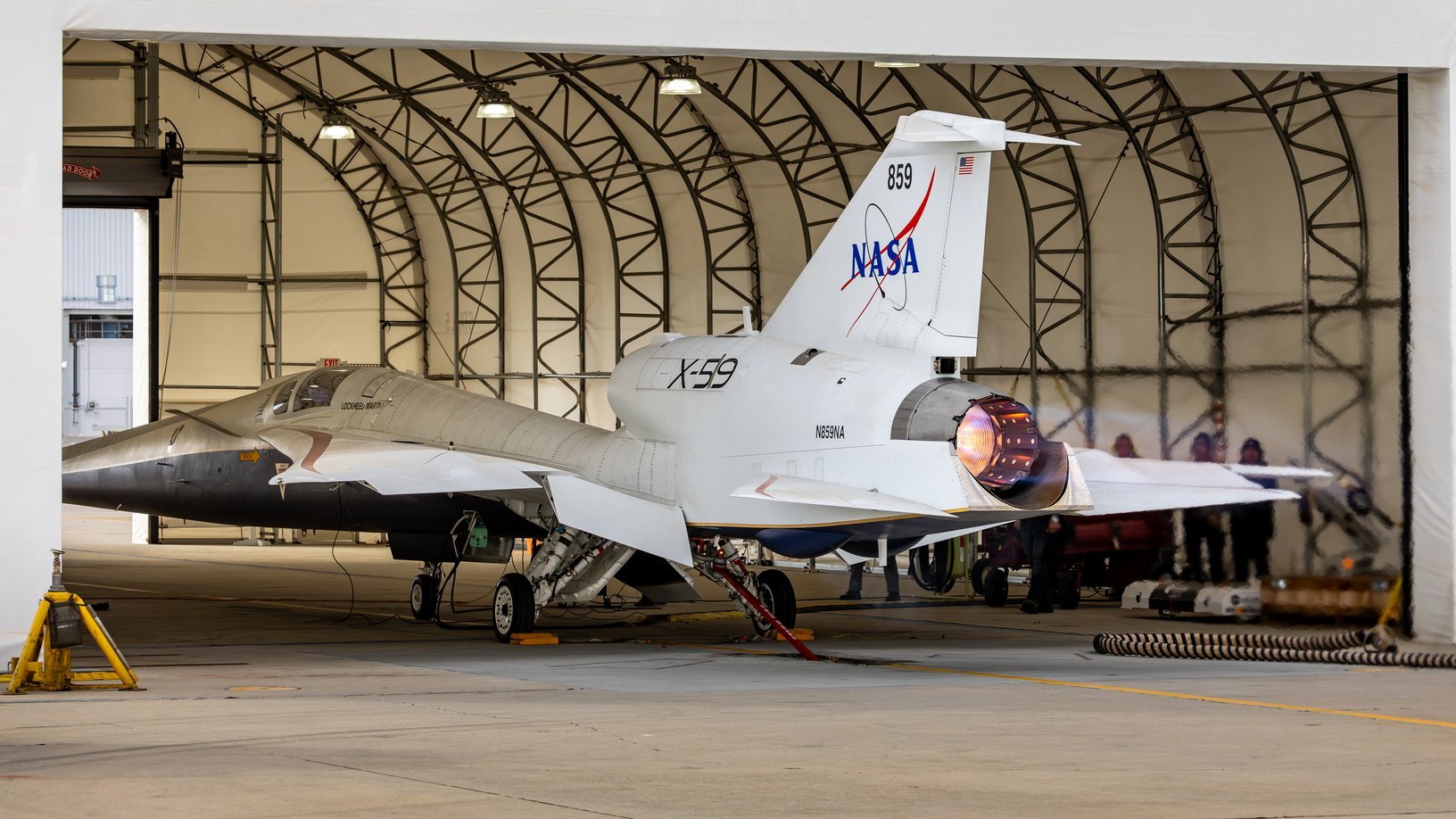
The X-59 features an unusually long, slender nose, carefully shaped wings and a distinctive aerodynamic configuration. Its cockpit is positioned well behind the nose, and the aircraft uses an external vision system to provide the pilot with forward visibility rather than relying on a conventional forward-facing windscreen.
This configuration is intended to minimise the intensity of the pressure waves generated during supersonic flight.
The development programme involved extensive aerodynamic design work, structural fabrication, ground testing, systems integration and preparations for flight testing. After several years of development and construction, the aircraft was rolled out in January 2024, allowing NASA and Lockheed Martin to move towards ground testing and its first flight.
NASA's initial objective was to establish the aircraft's performance and safety before moving into dedicated acoustic testing and, eventually, flights over selected communities.
The X-59 completed its maiden flight on October 28, 2025, departing from Lockheed Martin's Skunk Works facility in Palmdale, California.
Following the successful first flight, the aircraft was transferred to NASA's Armstrong Flight Research Center at Edwards, California, which became its operational home base.
The initial flight marked the beginning of an extensive flight-test campaign designed to evaluate the aircraft's handling characteristics, flight systems, structural performance and overall operational safety.
The programme subsequently expanded the aircraft's flight envelope through progressively more demanding tests involving higher speeds, greater altitudes and different flight conditions.
A major breakthrough came on June 5, 2026, when the X-59 flew faster than the speed of sound for the first time. During an 81-minute flight, the aircraft reached Mach 1.1 at approximately 43,400 feet.
Just one week later, on June 12, it achieved another significant milestone by reaching Mach 1.4 at 55,000 feet — the target speed and altitude planned for its future community-response flights.
These achievements demonstrated that the aircraft was progressing towards the operational conditions required for the main objectives of the Quesst mission.
On November 18, 2026, NASA officially assumed ownership of the X-59 from Lockheed Martin Skunk Works after completing the aircraft acceptance review.
Although the aircraft had already been operating from NASA's Armstrong Flight Research Center and undergoing flight testing, Lockheed Martin had retained legal ownership while the acceptance process was being completed.
The transfer represents an important contractual milestone, marking the completion of a major stage of the contractor's aircraft delivery responsibilities.
Under the new arrangement, NASA will continue managing the X-59's flight-test programme, while Lockheed Martin will provide additional technical and engineering support when required.
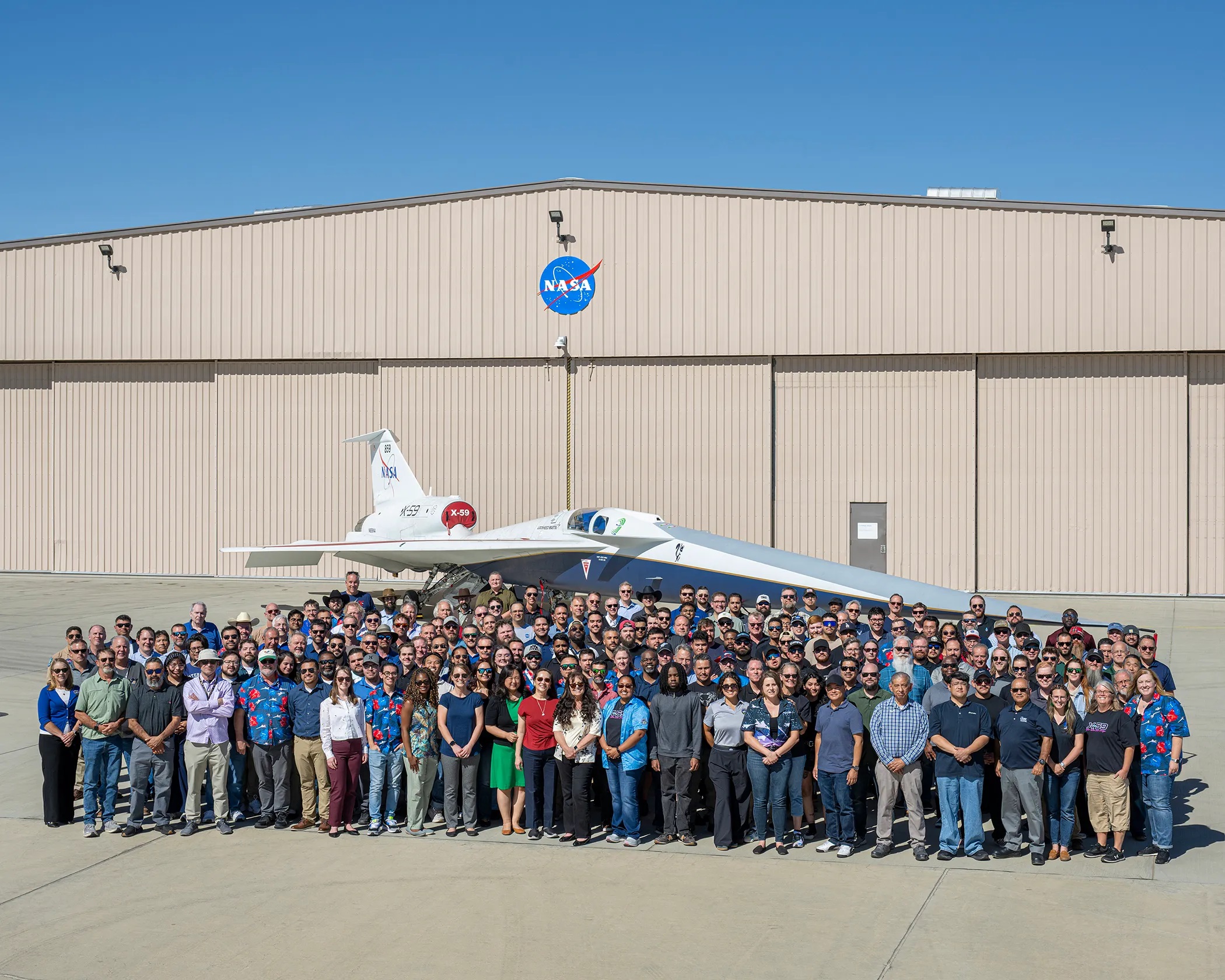
Cathy Bahm, project manager for NASA's Low Boom Flight Demonstrator programme, described the ownership transfer as another significant achievement for the team.
She said:
"To someone outside the flight test, this might seem like a subtle change. But for NASA, this is another big moment for the X-59 showing how far we have come, how much our hard work has paid off, and how much closer we are to providing the data to hopefully make commercial supersonic flight over land a reality."
By October 28, 2026, the X-59 had completed 40 additional flights following its maiden flight one year earlier.
During this period, the aircraft reached speeds of up to Mach 1.53 and altitudes exceeding 56,000 feet, demonstrating substantial progress in its flight-envelope expansion programme.
NASA also reported that the programme was preparing to transition towards acoustic validation testing, which will focus on measuring and analysing the sound produced by the aircraft during supersonic flight.
The next major objective is to establish how effectively the aircraft's aerodynamic design reduces the sonic boom experienced by people on the ground.
NASA's Quesst mission is structured around three principal phases:
Aircraft development and flight testing: Building the X-59, conducting ground tests and progressively expanding its flight envelope.
Acoustic validation: Conducting specialised flights and ground measurements to validate the aircraft's low-boom performance and acoustic predictions.
Community response testing: Flying the X-59 over selected U.S. communities and collecting feedback from residents about the sound they experience.
The information collected will help NASA establish a scientific understanding of how people respond to quieter sonic booms.
The significance of the X-59 extends beyond the development of a new experimental aircraft.
For decades, restrictions on civil supersonic flight over land have been a major barrier to the expansion of commercial supersonic passenger services. The restrictions are largely associated with the disruptive noise generated by sonic booms.
NASA's research aims to provide regulators with reliable scientific data to evaluate whether new noise-based standards could permit quieter supersonic operations over populated areas.
The agency intends to share the findings from its acoustic validation and community-response campaigns with U.S. and international aviation regulators.
If the research demonstrates that supersonic aircraft can operate over land without generating unacceptable noise levels, it could help establish a pathway towards future commercial supersonic passenger and cargo operations.
However, the X-59 is a technology demonstrator, not a commercial passenger-aircraft prototype. Its success alone will not automatically change existing aviation regulations or guarantee the return of supersonic passenger services.
NASA's experimental aviation programme is also expanding beyond the X-59.
On November 4, 2026, the agency announced its new X-70 Fractal experimental aircraft, a crewed research platform designed to investigate advanced flight-control technologies, aircraft manoeuvrability and emerging aviation capabilities.
Unlike the X-59, which focuses on quieter supersonic flight, the X-70 is designed as a rapidly reconfigurable research platform capable of accommodating up to 2,000 pounds of experimental payloads.
NASA expects the X-70 to make its first flight under the agency's banner within the next two years.
The two aircraft represent different research priorities within NASA's expanding experimental aviation portfolio.
NASA's November 18 ownership transfer marks the transition of the X-59 from a contractor-owned development aircraft to a NASA-owned experimental research platform.
With its first supersonic flights completed, its intended operating speed and altitude demonstrated, and its flight-test programme progressing, the aircraft is moving closer to the most important part of the Quesst mission: determining whether a dramatically quieter sonic boom can be acceptable to communities on the ground.
The ultimate objective is not simply to build a faster aircraft, but to generate the scientific evidence that could help reshape the future regulatory environment for commercial supersonic aviation.
|
Milestone |
Date / achievement |
|---|---|
|
Preliminary design selection |
February 2016 |
|
Quesst contract awarded |
April 2018 |
|
Aircraft rollout |
January 2024 |
|
First flight |
October 28, 2025 |
|
First supersonic flight |
June 5, 2026 – Mach 1.1 |
|
Mission-condition speed and altitude |
June 12, 2026 – Mach 1.4 at 55,000 ft |
|
One-year flight-test progress |
40 additional flights; maximum Mach 1.53 |
|
NASA takes official ownership |
November 18, 2026 |
|
Ownership transfer announced |
November 23, 2026 |
FL360aero Assessment: The X-59 is not designed to eliminate sonic booms completely. Its purpose is to reduce their perceived intensity at ground level. Also, the X-70 is a separate experimental aircraft programme, not a successor or supersonic development variant of the X-59.
NASA – Officially Takes Ownership of X-59 Supersonic Aircraft (November 23, 2026).
NASA – Celebrates a Year of Progress Since First X-59 Flight.
You may like to read........

.jpeg)