
The new Airworthiness Directive reduces repetitive functional-check intervals for critical pressure regulator and shut-off valves (PRSOVs), addressing the risk of dormant failures in aircraft ice-protection systems.
The European Union Aviation Safety Agency (EASA) has introduced more stringent maintenance requirements for ATR 42 and ATR 72 turboprop aircraft, reducing the intervals between functional checks of critical components within their pneumatic de-icing systems.
The new Airworthiness Directive, AD 2026-0219, issued on November 16, 2026, and effective November 30, 2026, addresses the risk of dormant failures in Pressure Regulator and Shut-Off Valves (PRSOVs). Such failures could remain undetected during routine operations but become critical when an aircraft encounters icing conditions.
The directive follows further technical analysis by ATR and its component supplier, which identified the need for more frequent inspections to maintain the required safety margins.
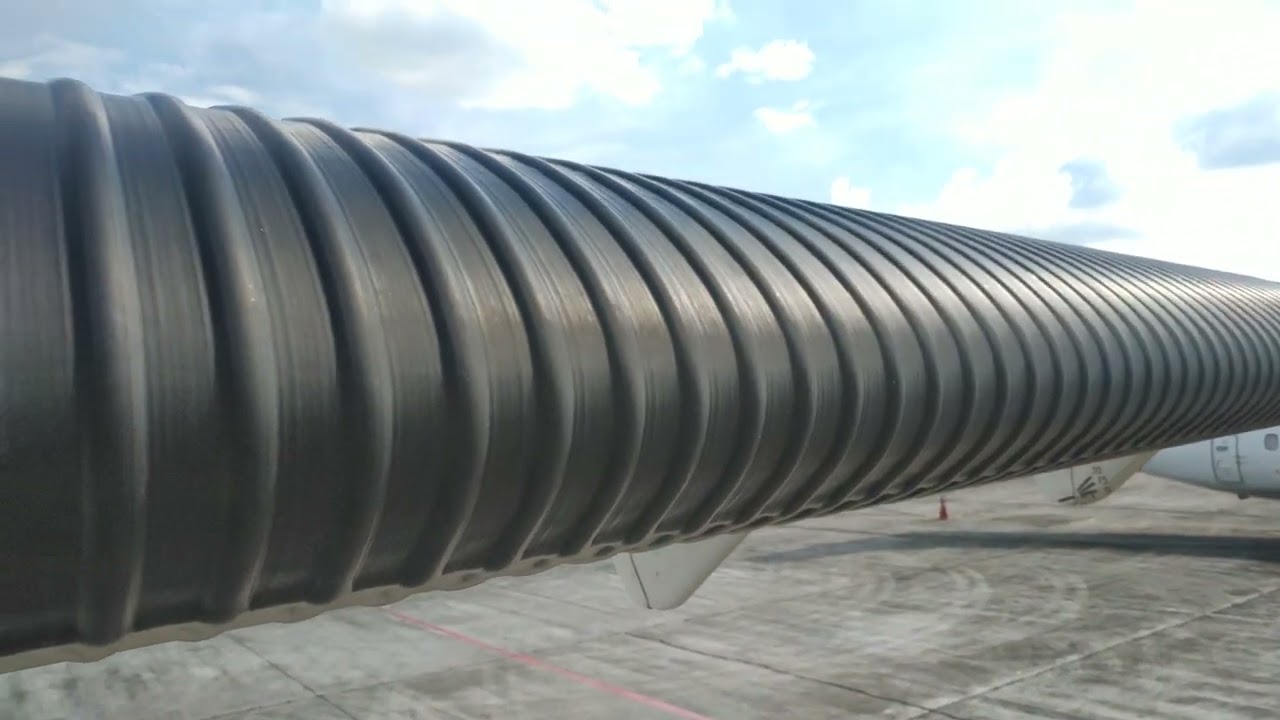
ATR 42 and ATR 72 aircraft use pneumatic de-icing boots installed along the leading edges of their wings and horizontal stabilisers.
These inflatable rubber chambers periodically expand and contract using pressurised air to break accumulated ice from the aircraft's aerodynamic surfaces. Removing ice is essential to preserving airflow, lift and overall aircraft performance during flight in icing conditions.
The system relies on Pressure Regulator and Shut-Off Valves (PRSOVs) to regulate and control the pneumatic supply required for the de-icing cycle.
EASA's safety assessment identified a potential dormant failure condition involving these valves. A valve may develop a fault that remains undetected during normal operations, potentially compromising the effectiveness of the de-icing system when required.
According to EASA, if such a failure is not detected and corrected, and the aircraft subsequently encounters icing conditions, the resulting degradation in ice-protection capability could ultimately lead to a loss of aircraft control.
EASA AD 2026-0219 establishes three aircraft groups based on aircraft variant and the incorporation of specific ATR modifications.
The revised repetitive functional-check intervals are:
| Aircraft Group | Applicable Aircraft | Revised Interval |
|---|---|---|
| Group 1 | ATR 42-200/-300/-320 | 190 flight hours |
| Group 2 | Specified unmodified ATR 42-400/-500 and ATR 72 | 210 flight hours |
| Group 3 | Specified modified ATR 42-400/-500 and ATR 72 | 160 flight hours |
The distinction between modified and unmodified aircraft is important.
Group 2 covers aircraft without ATR modification 06076 incorporated in production or the applicable service bulletin embodied in service.
Group 3 covers aircraft incorporating modification 06076 in production or the applicable service bulletin in service.
An important compliance detail: The directive specifies that the applicable interval is determined by whichever occurs later between the interval since the previous functional check and the transitional requirement of 100 flight hours after the new directive becomes effective, subject to maximum limits of 650, 700 and 1,050 flight hours since the previous check for Groups 1, 2 and 3, respectively.
This means operators must follow the complete compliance table rather than interpreting 190, 210 and 160 flight hours as standalone immediate deadlines.
The directive also establishes clear requirements when discrepancies are identified during functional checks.
If a PRSOV functional check reveals any discrepancy, operators must accomplish the applicable corrective actions before the aircraft's next flight, following ATR's Airworthiness Operators Message (AOM) 2024/12, Issue 6.
If the discrepancy cannot be rectified using the published instructions, the operator must contact ATR for approved corrective instructions and complete the required actions before the next flight.
EASA has also confirmed that there is no terminating action under the new directive, meaning repetitive functional checks will remain necessary.
The strengthened maintenance requirements come against the background of the investigation into the August 9, 2024, crash of Voepass Flight 2283 in Brazil.
The ATR 72-500, operating from Cascavel to São Paulo's Guarulhos International Airport, crashed in Vinhedo, São Paulo State, killing all 62 people aboard.
Brazil's Centre for Research and Prevention of Aeronautical Accidents (CENIPA) released its final investigation findings in July 2026.
Investigators identified severe icing, repeated failures in the aircraft's de-icing system, crew actions and organisational safety deficiencies among the contributing factors.
The investigation highlighted how degraded aircraft performance in severe icing conditions, combined with inadequate responses to warnings and operational challenges, can develop into a catastrophic loss-of-control scenario.
The findings also raised concerns about the management of recurring technical defects and the effectiveness of maintenance oversight.
EASA had already introduced corrective measures through AD 2025-0011, issued on January 10, 2025. The latest directive supersedes that earlier requirement following additional technical analysis and updated failure-mode assessments.
Ice accumulation on aircraft aerodynamic surfaces is a serious flight-safety hazard. Even relatively small amounts of ice can disturb airflow, increase drag, reduce lift and increase stall speed.
For turboprop aircraft operating in environments where atmospheric icing is possible, the reliability of ice-protection systems is particularly important.
The latest EASA directive has direct implications for airline engineering departments, Continuing Airworthiness Management Organisations (CAMOs), Part-145 maintenance organisations and aircraft lessors.
Operators will need to review maintenance programmes, monitor accumulated flight hours, verify aircraft modification status, plan additional maintenance inputs and ensure that all required functional checks and corrective actions are properly documented.
The revised intervals also underline the importance of identifying dormant failures before an aircraft encounters the environmental conditions in which those failures could become operationally critical.
EASA's latest action reinforces a fundamental principle of aviation maintenance: the absence of an apparent malfunction during routine operations does not necessarily mean that a safety-critical component is fully functional.
The ATR PRSOV issue demonstrates why maintenance intervals must evolve when new engineering assessments reveal previously underestimated failure risks.
For the global ATR 42 and ATR 72 fleet, the revised requirements represent an additional layer of preventive maintenance aimed at ensuring that critical ice-protection systems remain reliable when crews need them most.
In aviation, detecting a hidden failure on the ground can make the difference between a routine maintenance intervention and a potentially catastrophic in-flight emergency.

.jpeg)