
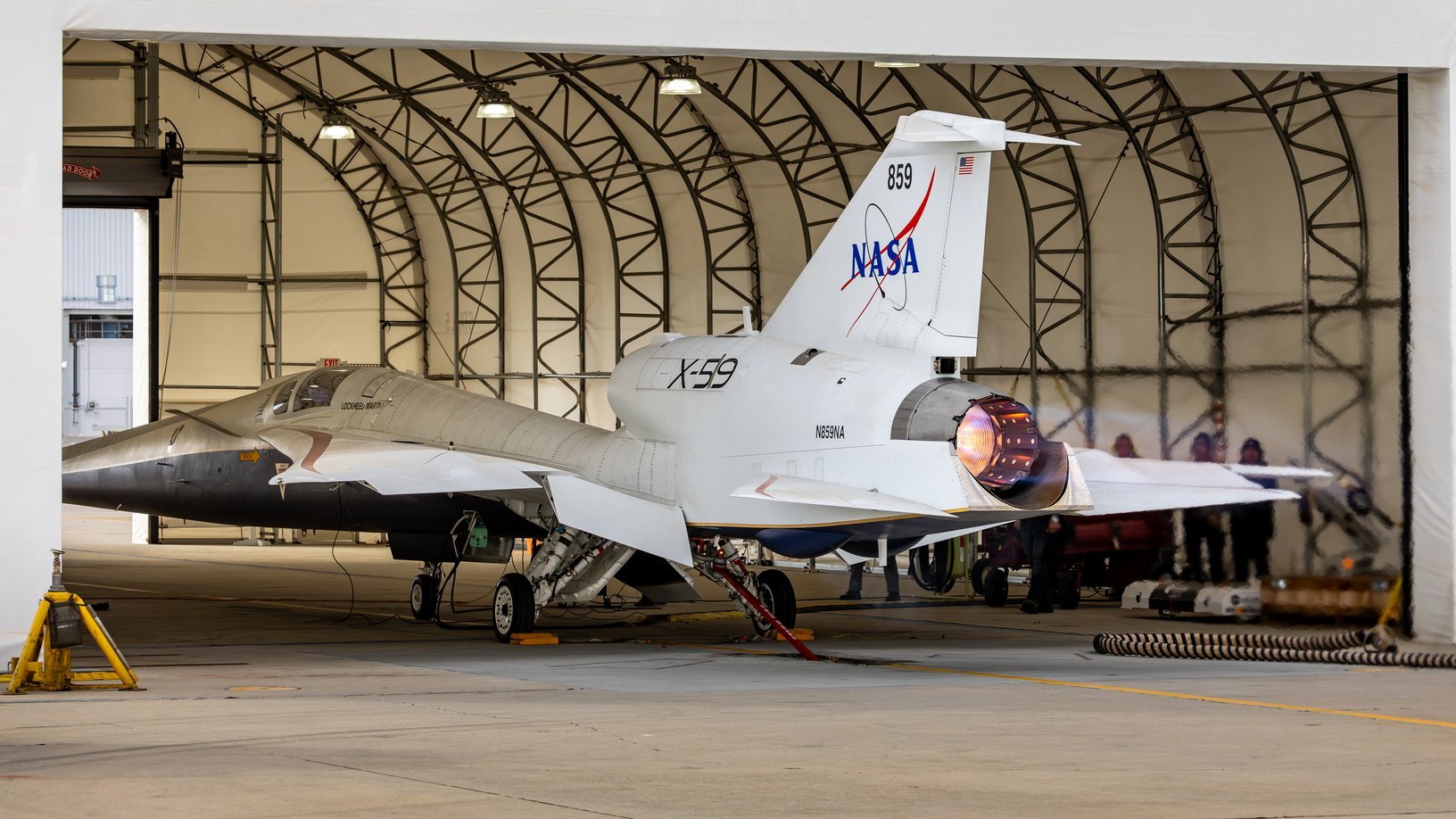
Historic Journey: NASA's X-59 quiet supersonic aircraft completed its first cross-country journey from Edwards Air Force Base, California, to Kennedy Space Center, Florida, with stops in El Paso, Fort Worth and Birmingham.
First Flight Anniversary: The milestone comes shortly after the X-59 celebrated the first anniversary of its maiden flight on October 28, 2025.
Impressive Performance: The aircraft has reportedly achieved a maximum speed of Mach 1.53 (approximately 1,010 mph or 1,625 km/h) and an altitude exceeding 56,000 feet.
Extensive Flight Testing: The X-59 has completed more than 40 additional test flights, progressively expanding its flight-test envelope.
Revolutionary Quiet Supersonic Technology: Developed by Lockheed Martin's Skunk Works for NASA's Quesst mission, the aircraft is designed to replace the traditional disruptive sonic boom with a quieter sonic thump.
Next Major Phase: NASA is progressing towards acoustic validation to measure the aircraft's actual noise signature during supersonic flight.
Future of Commercial Aviation: The programme aims to collect scientific data and public feedback that could help regulators reconsider restrictions on supersonic flights over land, potentially paving the way for a new generation of commercial supersonic aircraft
The aircraft travelled across the United States, making intermediate stops in El Paso and Fort Worth, Texas, and Birmingham, Alabama, before reaching its Florida destination.
The journey comes just days after the X-59 celebrated the first anniversary of its maiden flight on October 28, 2025. Developed by Lockheed Martin's renowned Skunk Works division in partnership with NASA, the aircraft is the centrepiece of the agency's Quesst mission, which aims to demonstrate that commercial supersonic flight over land could become significantly quieter.
The cross-country journey also highlights the progress made during an intensive year of flight testing, as the experimental aircraft continues to expand its performance envelope and approaches the next major stage of its research programme.
Since its maiden flight, the X-59 has accumulated more than 40 additional test flights, demonstrating significant progress in its flight-test programme.
According to reports on the aircraft's latest performance achievements, it has reached:
These achievements represent a major step forward from the aircraft's initial flight on October 28, 2025, when NASA test pilot Nils Larson flew it for 67 minutes, reaching approximately 230 mph and an altitude of 12,000 feet.
On June 5, 2026, the X-59 officially crossed the sound barrier for the first time, reaching approximately Mach 1.1 at 43,400 feet. Subsequent testing progressively expanded its speed and altitude capabilities.
The X-59 is designed to address one of the biggest obstacles that prevented the widespread introduction of commercial supersonic passenger aircraft: the disruptive sonic boom.
When conventional aircraft travel faster than sound, they generate shock waves that combine to produce a powerful sonic boom. Over populated areas, this noise has historically resulted in restrictions on civilian supersonic flight.
NASA's experimental aircraft takes a different approach.
Its distinctive aerodynamic configuration, particularly its elongated nose and carefully shaped fuselage, is designed to manage shock waves and prevent them from combining into the traditional loud sonic boom.
Instead, the aircraft aims to produce a much quieter sound known as a sonic thump.
The X-59 is designed to cruise at approximately Mach 1.4 and 55,000 feet, demonstrating how future aircraft could potentially travel faster than sound without generating the disruptive noise associated with conventional supersonic flight.
With the initial flight-envelope expansion programme demonstrating the aircraft's flying capabilities, NASA is preparing to move towards the next critical stage: acoustic validation.
This phase will determine whether the X-59's innovative aerodynamic design delivers the quieter sonic signature anticipated by engineers.
The programme involves three major stages:
The resulting scientific data and public feedback will be shared with aviation regulators to help establish acceptable noise standards for future commercial supersonic operations over land.
The X-59 represents years of engineering, aerodynamic research and technological development by NASA and Lockheed Martin Skunk Works.
Unlike a conventional commercial aircraft prototype, the X-59 is a purpose-built experimental platform designed specifically to investigate low-boom supersonic flight.
Its successful transition from initial flight testing to supersonic operations demonstrates the progress being made towards overcoming one of aviation's most persistent technological and regulatory challenges.
The aircraft's appearance in Florida also provides an opportunity to showcase the programme's achievements to the wider aerospace community.
The cross-country journey is therefore more than a relocation flight. It represents an important public milestone for a research programme that could influence the future design and regulation of commercial supersonic aircraft.
For decades, the aviation industry has pursued the possibility of bringing back faster-than-sound passenger travel.
The retirement of Concorde in 2003 marked the end of scheduled commercial supersonic passenger services, leaving a major gap in the development of high-speed commercial aviation.
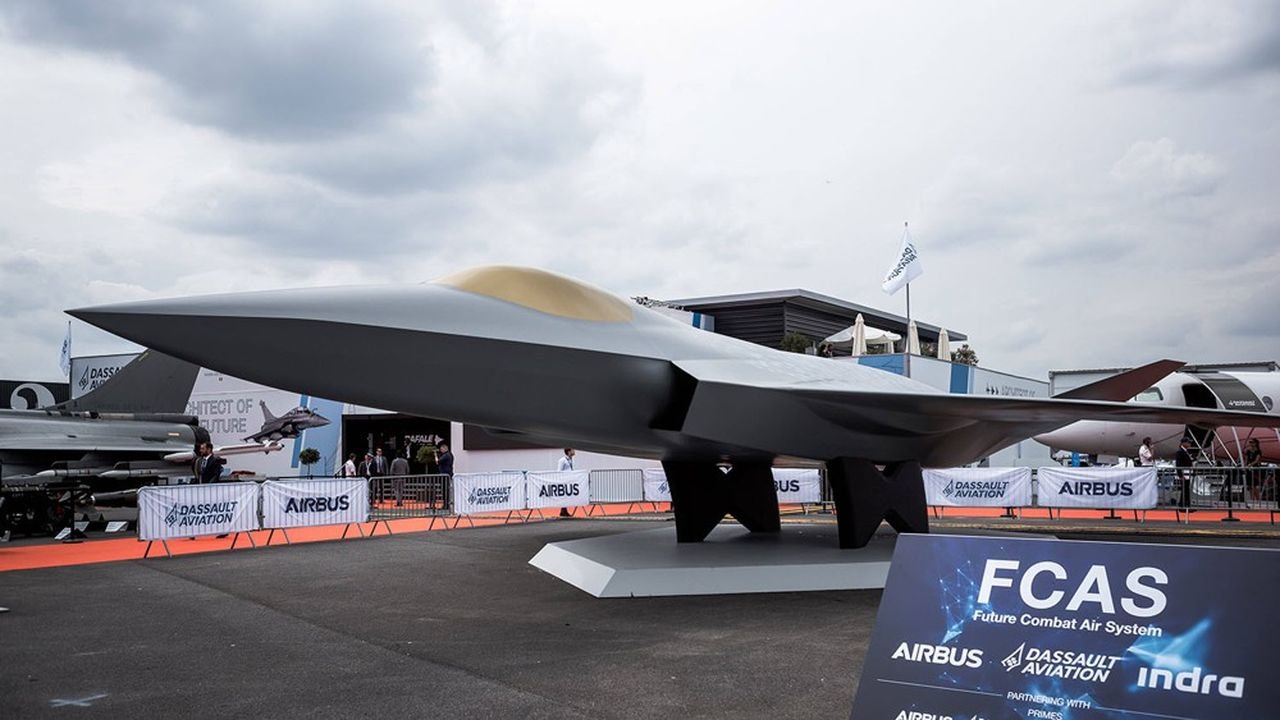
Today, several aerospace companies are exploring new approaches to supersonic transportation, with quieter aircraft designs, improved propulsion technologies and greater environmental efficiency becoming important development priorities.
NASA's X-59 is not a commercial passenger aircraft, nor is it intended to enter airline service. Its primary purpose is to generate the scientific evidence needed to determine whether quieter supersonic flight over land can become commercially viable.
If successful, the research could help regulators reconsider existing restrictions on supersonic operations over populated areas and create opportunities for a new generation of commercial aircraft.
The Bigger Picture: From Concorde's pioneering era to NASA's X-59, aviation's ambition to fly faster than sound has never disappeared. The difference today is that the industry is attempting to solve the noise problem that limited the first generation of supersonic passenger travel.
The X-59's latest achievements bring that ambition another step closer to reality.
The future of supersonic aviation may not simply be about flying faster. It may finally be about flying faster without the noise.
| Specification | Details |
|---|---|
| Aircraft | NASA X-59 |
| Manufacturer | Lockheed Martin Skunk Works |
| Programme | NASA Quesst |
| Maiden flight | October 28, 2025 |
| First supersonic flight | June 5, 2026 |
| Reported maximum speed | Mach 1.53 |
| Reported maximum altitude | More than 56,000 feet |
| Intended operating speed | Approximately Mach 1.4 |
| Intended operating altitude | Approximately 55,000 feet |
| Primary objective | Demonstrate quieter supersonic flight over land |
FL360aero note: The Mach 1.53 maximum speed and altitude above 56,000 feet are reported programme achievements, while Mach 1.4 at 55,000 feet represents the intended mission operating condition. The cross-country journey should not be confused with the aircraft's acoustic validation campaign.

.jpg)