
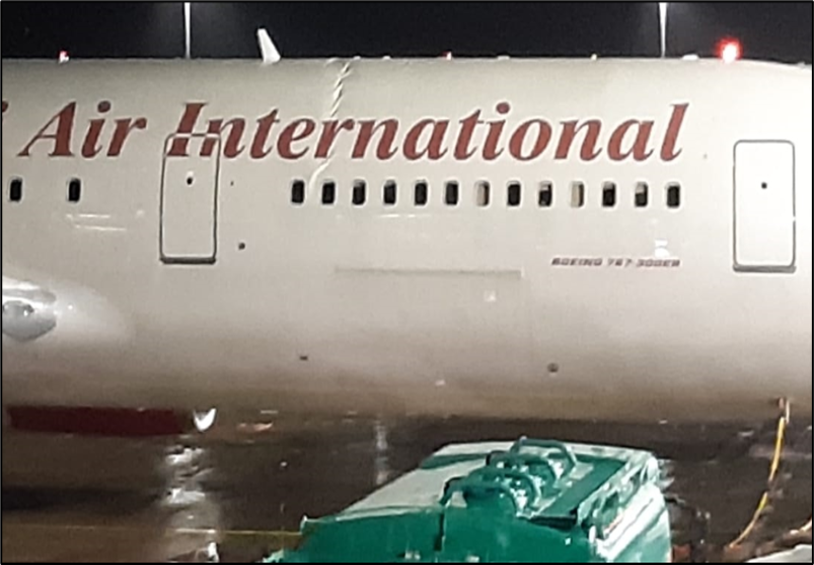
Ireland's Air Accident Investigation Unit (AAIU) has published its final investigation report into a serious landing accident involving an Omni Air International Boeing 767-300ER, registration N477AX, at Shannon Airport on 8 March 2020. The investigation found that a dynamic touchdown sequence in gusty and turbulent conditions caused the aircraft to experience loads exceeding its structural design limits, resulting in substantial damage to the forward upper fuselage.
Remarkably, the aircraft taxied to its parking stand under its own power, and all passengers disembarked normally. However, seven cabin crew members subsequently reported minor injuries.
The investigation identified a combination of factors, including the unavailability of automatic speedbrake deployment, forward control-column inputs during the landing sequence and challenging environmental conditions at the end of an extended flight duty period.
The aircraft was operating a passenger charter service carrying 170 passengers and 11 crew members, including four flight crew and seven cabin crew. The Boeing 767 had departed Bangor International Airport following a five-hour delay associated with passenger clearance requirements.
The aircraft was cleared to land on Runway 24 at Shannon in challenging weather conditions. The reported surface wind was 270 degrees at 20 knots, with recent maximum gusts of 35 knots. The weather service's subsequent analysis estimated gusts of up to 40 knots, with turbulence, wind shear and downdrafts possible in the area.
The runway was wet, and the approach was conducted at night. Although the prevailing crosswind conditions remained within the operator's prescribed limits, the conditions made the landing particularly challenging.
Flight data recorders revealed a complicated sequence immediately after touchdown.
Both main landing gears initially touched down simultaneously at approximately 19:55:04 UTC. However, the aircraft's nose began descending rapidly.
The aircraft's automatic speedbrake deployment system was inoperative, meaning the spoilers did not automatically extend following the initial main-gear touchdown. The crew was therefore required to deploy them manually.
The flight data showed that:
The aircraft's nose landing gear first contacted the runway approximately 1.5 seconds after the main landing gear.
The nose landing gear subsequently lifted off again, followed by the left main landing gear.
The aircraft experienced a rebound, prompting further control-column inputs.
A second nose-gear touchdown occurred at an exceptionally high nose-down rotation rate of 11.3 degrees per second.
The left main landing gear also briefly lifted from the runway during this sequence.
According to the aircraft manufacturer's analysis, the second nose-gear contact generated forces beyond the Boeing 767's structural design limits.
The investigation concluded that the timing of the control-column inputs contributed to the excessive de-rotation rate. The inputs were described as being out of phase with, or slightly behind, the aircraft's movements, potentially resulting in overcorrection during an already unstable touchdown sequence.
One of the important technical circumstances identified by investigators was that the aircraft had departed with two systems inoperative:
The automatic speedbrake deployment function.
The left engine's thrust reverser.
Both defects were recorded in the aircraft's technical logbook and were permitted under the operator's Minimum Equipment List (MEL), subject to the applicable operating procedures.
Consequently, the flight crew had to deploy the speedbrakes manually after landing.
However, the flight data showed that manual deployment took place approximately four to five seconds after the initial main-gear touchdown.
Boeing's Flight Crew Training Manual advises that if speedbrakes do not deploy automatically, pilots should move the speedbrake lever to the UP position without delay.
The AAIU noted that delayed spoiler deployment can reduce initial wheel-braking effectiveness by as much as 60%, because the aircraft's wings continue generating lift and less weight is transferred onto the landing gear.
The investigators considered that the delayed deployment may have been influenced by the sudden and dynamic nature of the landing sequence, potentially involving startle or surprise.
The right engine's thrust reverser was also deployed approximately eight seconds after initial touchdown. However, investigators specifically concluded that this delay was not a contributing factor to the accident.
The investigation also examined the flight crew's experience and duty period.
The commander, who was the pilot flying, had accumulated approximately 7,650 flight hours, including 879 hours on the Boeing 767. He had been upgraded to commander on the aircraft type in November 2019.
The first officer had accumulated 22,583 total flight hours, including 72 hours on the Boeing 767.
Both pilots held valid licences and medical certificates, and investigators found that they were operating in accordance with applicable US regulations.
However, the four-pilot crew was approaching the end of an extended duty period.
Following the five-hour delay at Bangor, the commander and the operator agreed to extend the permitted flight duty period by one hour and one minute. The crew had been on duty for approximately 16 hours and 31 minutes by the time of the accident, placing the landing in the 17th hour of their duty period.
The AAIU identified the extended duty period, combined with the turbulent environmental conditions, as a contributing circumstance.
The consequences of the landing were considerably more serious than initially apparent.
Although the Boeing 767 completed its landing roll and taxied unassisted to its designated parking stand, a subsequent inspection revealed substantial structural damage.
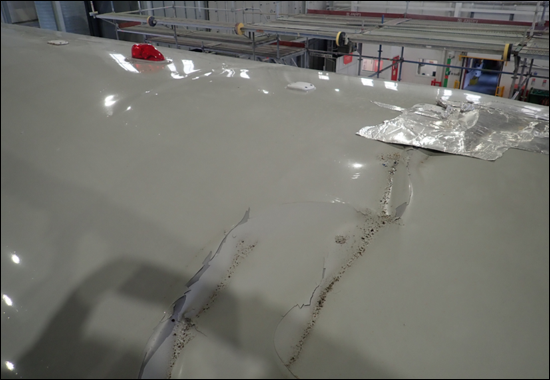
The fuselage skin had buckled forward of the wings, between frame stations 434 and 654. The most significant damage was recorded around frame station 654.
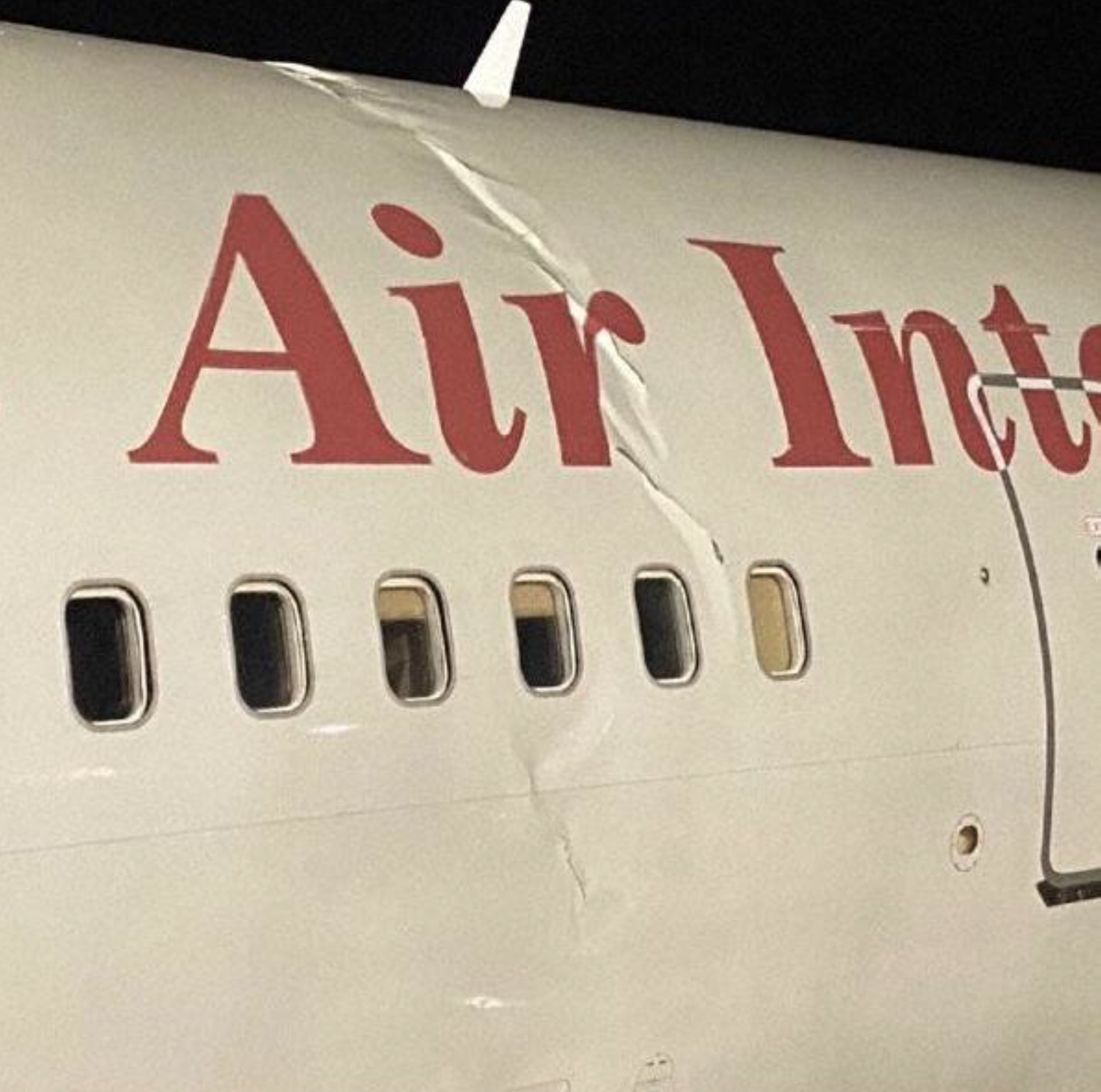
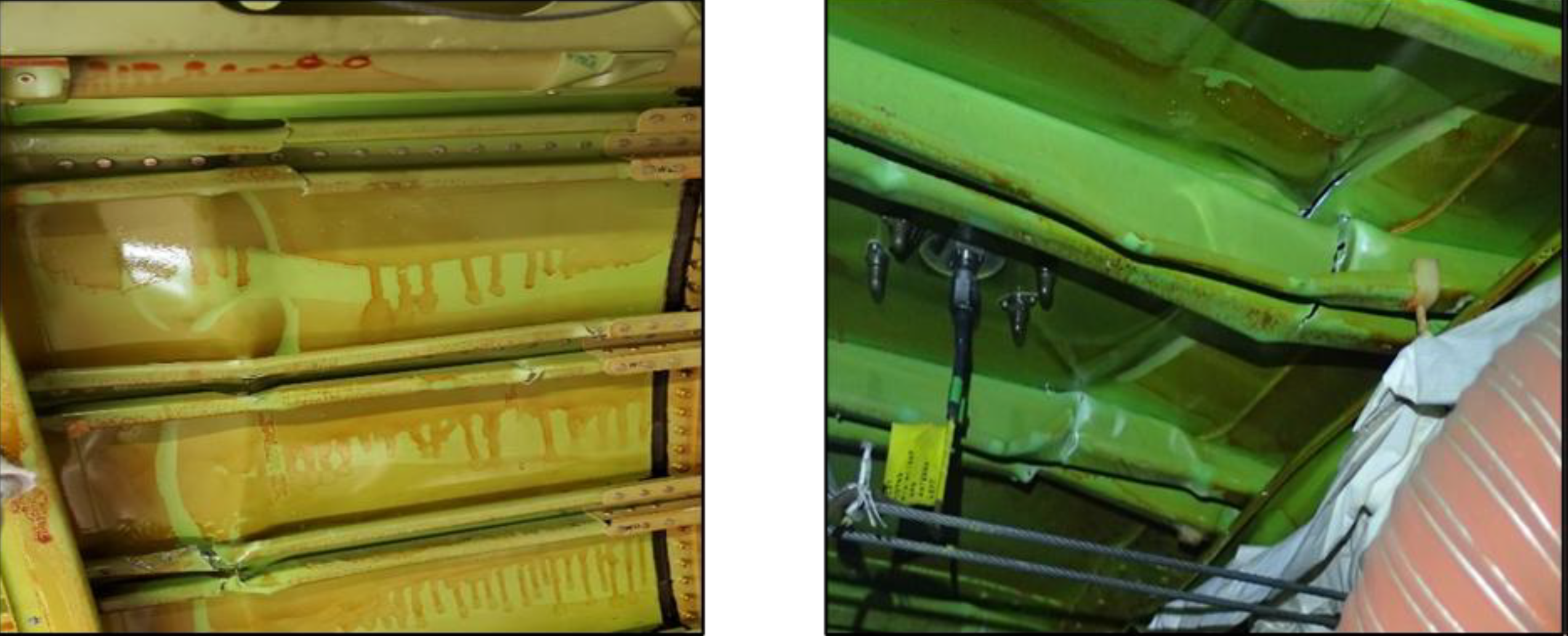
The damage extended across the upper fuselage crown, with a perforation in one area. Investigators also identified corresponding damage to internal structural frames and stringers.
The nose landing gear was removed and replaced, while both main landing gears were inspected and found to be serviceable.
No passengers reported injuries to the investigation. However, seven cabin crew members subsequently reported minor injuries approximately 24 hours after the accident. None required hospitalisation.
The report also places the accident within a longer history of Boeing 767 hard-landing occurrences.
Investigators identified 13 previous accidents involving similar structural damage, dating from 1992 through 2023.
Following earlier accidents, Boeing had introduced several design and operational improvements, including:
Strengthening the forward fuselage upper crown stringers on the Boeing 767-300.
Introducing a modified nose landing gear metering pin to improve energy absorption.
Issuing flight operations guidance warning pilots against excessive forward control-column inputs during landing.
Developing a training video titled Airplane Derotation: A Matter of Seconds to highlight the risks associated with excessive nose-gear touchdown rates.
The accident aircraft, manufactured in 2002, already incorporated the strengthened fuselage structure and modified nose-gear metering pin.
Nevertheless, the Shannon accident demonstrated that excessive nose-down de-rotation rates could still produce substantial structural damage, even on aircraft incorporating these improvements.
1. There were four Flight Crew members on the Flight Deck at the time of the occurrence; their licences and medicals were valid and in date.
2. The Commander, seated in the left seat, was the Pilot Flying at the time of the occurrence.
3. The approach was conducted in turbulent environmental conditions at night and the runway was wet.
4. The Flight Crew carried out a comprehensive approach briefing and demonstrated awareness of the conditions to be expected.
5. The prevailing conditions were within the Operator’s crosswind guidelines.
6. The automatic speedbrake deployment function was not available and therefore speedbrakes were not automatically deployed on initial runway contact.
7. The initial touchdown of both MLG was simultaneous.
8. After the initial touchdown of the NLG, the NLG became airborne again followed by the left MLG becoming airborne.
9. Full forward deflection of the control column was applied during the landing.
10. The dynamic landing sequence and the timing of the forward control column inputs resulted in a second NLG touchdown with a de-rotation rate of
11.3 degrees per second. 11. A period of four to five seconds elapsed after the first runway contact before the speedbrakes were manually deployed.
12. The Aircraft experienced forces in excess of design limits and sustained substantial structural damage in the accident.
13. The Aircraft taxied unassisted to its designated stand.
14. Minor injuries were reported by Cabin Crew members which did not require hospitalisation.
The AAIU determined that the probable cause was:
A nose landing gear contact rate exceeding design limits, resulting in substantial structural damage.
Three contributory factors were identified:
The automatic speedbrake deployment function was unavailable, and manual deployment occurred four to five seconds after touchdown.
Forward control-column inputs during landing contributed to an increased de-rotation rate.
The landing took place in turbulent environmental conditions at the end of an extended flight duty period.
Importantly, the investigation did not issue any safety recommendations in its final report.
AAIU Final Report 2026-009
Published 25 November 2026
Read the complete official investigation report
FL360aero assessment:
The report does not attribute the accident to a single pilot action or to the inoperative speedbrake system alone. Its conclusions identify a combination of aircraft-system limitations, control inputs, and operating conditions. The AAIU investigation is intended to improve aviation safety, not assign blame or liability.

.jpeg)