
1. IAG's warning: CEO Luis Gallego warns that the speed and cost of planned European green aviation charges could “kill European aviation” and undermine the competitiveness of European airlines.
2. SAF supply shortages: Airlines face increasing sustainable aviation fuel (SAF) blending obligations despite limited production capacity and insufficient affordable supplies.
3. Rising operating costs: SAF can cost three to five times more than conventional jet fuel, adding financial pressure to already significant airline fuel expenses.
4. Increasing regulatory burden: European carriers face multiple environmental obligations, including SAF mandates, carbon emissions trading and the gradual removal of free carbon allowances.
5. Competitive disadvantage: European airlines risk losing competitiveness against international carriers operating under less demanding environmental regulations, potentially affecting ticket prices, routes, and hub operations.
6. Environmental effectiveness questioned: IAG argues that accelerating green charges without adequate fuel production and infrastructure could increase airline costs without delivering proportionate environmental benefits.
The chief executive of International Airlines Group (IAG), Luis Gallego, has warned that the pace and cumulative cost of Europe's planned environmental charges on airlines could seriously undermine the competitiveness of the continent's aviation industry, potentially driving up ticket prices without delivering meaningful environmental benefits.
In remarks reported by the Financial Times on 9 November 2026, Gallego argued that European airlines were being required to meet increasingly demanding environmental obligations without sufficient supplies of the sustainable aviation fuel (SAF) needed to comply.
He warned that European carriers could face a substantial cost disadvantage against international competitors operating under less demanding regulatory frameworks.
Gallego's central argument was that environmental regulation must be supported by available technology, sufficient fuel production, and a globally coordinated approach. Otherwise, he cautioned, Europe could damage its own aviation industry without achieving the intended climate benefits.
The comments come amid growing disagreement between European policymakers and airline executives over how quickly aviation should transition towards lower-carbon operations, who should pay for that transition, and whether current regulatory targets are supported by sufficient industrial capacity.
1. What exactly is IAG warning about?
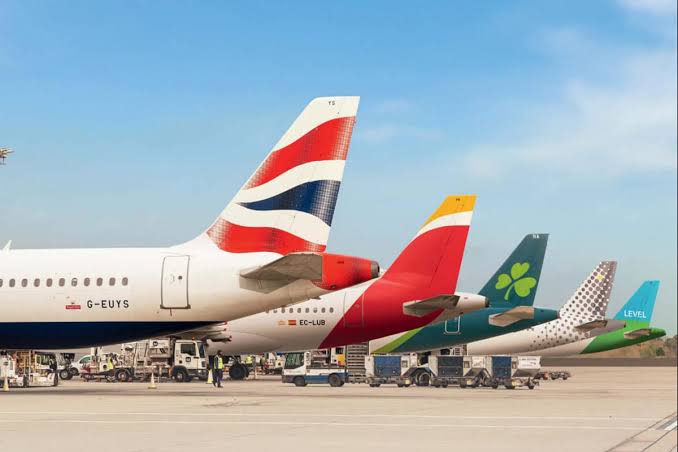
IAG is the parent company of several major airline businesses, including:
The group's concerns are not limited to one environmental measure. They relate to the combined financial impact of several regulatory requirements affecting European aviation.
Three areas are particularly important:
Gallego's criticism is that these measures are developing faster than the fuel supply chain and production infrastructure required to make compliance commercially sustainable.
He told the Financial Times:
"We have mandates for things that do not exist."
He also warned that European airlines could suffer a major cost disadvantage compared with global competitors.
2. Sustainable aviation fuel: the center of the dispute
The most significant element of the dispute concerns sustainable aviation fuel, commonly known as SAF.
SAF is designed to reduce lifecycle greenhouse gas emissions compared with conventional fossil-based jet fuel. Depending on its production pathway, feedstock, and energy source, it can offer substantial emissions reductions, although the actual environmental benefit varies.
Under the EU's ReFuelEU Aviation regulation, airlines have been subject to a minimum SAF blending requirement of 2% from 2025. This rises to:
|
Year |
EU SAF requirement |
|
2025 |
2% |
|
2030 |
6% |
|
2035 |
20% |
|
2040 |
34% |
|
2045 |
42% |
|
2050 |
70% |
These requirements are intended to create predictable demand and encourage investment in SAF production.
The difficulty is that production capacity has not developed at the same pace as regulatory ambition.
Reuters reported in October 2025 that SAF was costing approximately three to five times as much as conventional jet fuel. European airline executives consequently called for stronger financial incentives and greater support for producers to expand manufacturing capacity.
For airlines, the consequences are significant. Fuel is already one of the largest operating expenses, and replacing an increasing proportion of conventional kerosene with a more expensive alternative can add substantial costs to the operation of short-haul and long-haul networks.
The challenge becomes more complicated when airlines are legally required to purchase a particular proportion of SAF regardless of whether adequate volumes are available at competitive prices.
The UK faces an additional challenge
The United Kingdom has introduced its own sustainable aviation fuel mandate, separate from the EU framework.
The UK requirement is currently 3.7%, with the target scheduled to rise to 10% by 2030.
The latest controversy concerns proposals to require airlines to use more expensive second- and third-generation sustainable fuels, including fuels derived from non-food waste and renewable electricity.
According to the Financial Times, the UK aviation industry estimates that the proposed SAF requirements could cost airlines approximately £2 billion by the end of the decade.
Gallego argues that governments are establishing obligations before the necessary industrial production capacity exists.
This creates an important distinction: airlines are not necessarily rejecting the transition to sustainable fuel. Their argument is that the transition must be supported by commercially viable production, investment incentives, and realistic implementation schedules.
3. Carbon emissions trading: another layer of airline costs
SAF mandates are only one part of Europe's environmental regulatory framework.
The EU Emissions Trading System (EU ETS) also places a financial cost on aviation emissions.
Under the system, airlines must surrender emissions allowances corresponding to the carbon dioxide emissions covered by the scheme. As the availability of allowances decreases and carbon prices fluctuate, the financial burden on operators can increase.
The EU has progressively reduced free emissions allowances for aviation, moving towards full auctioning in 2026.
A further question is whether carbon pricing should cover more international flights departing Europe.
In June 2026, Reuters reported that major European airline groups opposed extending the EU ETS to international flights outside the European Economic Area, warning that additional costs could make European carriers less competitive and increase fares.
The European Commission's position is that stronger carbon pricing may be necessary to ensure aviation contributes adequately to Europe's climate objectives.
This is an important policy distinction: the ETS is a carbon-pricing mechanism, whereas SAF mandates require airlines to use specified quantities of lower-carbon fuel. They address emissions through different mechanisms, but both can increase airline expenditure.
4. Why European airlines fear losing competitiveness
One of the most important aspects of Gallego's warning is the competitive relationship between European and non-European airlines.
European carriers operate in a global market in which airlines compete for passengers, cargo, connecting traffic, and access to international hubs.
An airline operating from a European hub may face environmental compliance costs that differ from those incurred by a competitor operating from a hub outside Europe.
This could create several commercial consequences:
These are potential consequences rather than proof that airlines will relocate operations or abandon routes.
The concern is nevertheless relevant because international aviation is highly competitive, and passengers can sometimes choose between different airlines and connecting hubs when travelling between continents.
Aviation regulation therefore must consider not only the environmental performance of individual flights but also the potential impact of regulatory differences between competing markets.
5. Would green charges actually deliver environmental benefits?
This is the most contested part of the debate.
Gallego's suggestion that the measures could damage European aviation without saving the planet reflects the airline industry's concern that poorly designed or geographically uneven environmental charges may shift economic activity rather than eliminate emissions.
There is a legitimate question about carbon leakage: if passengers or airlines move activity towards hubs outside the regulatory area, some emissions could simply be transferred elsewhere.
However, it would be inaccurate to conclude that environmental charges have no climate benefit.
The EU argues that carbon pricing creates an economic incentive to reduce emissions and invest in cleaner technologies.
The Commission also reports that aviation's contribution to climate change is significant. In 2022, direct aviation emissions accounted for approximately 3.8–4% of total EU greenhouse gas emissions. Aviation represented 13.9% of transport-sector emissions.
SAF can also reduce lifecycle emissions, depending on how it is produced. Its potential benefit is real, but its effectiveness depends on sustainable feedstocks, production methods, energy sources, and the availability of sufficient quantities.
The central issue is therefore not simply whether aviation should pay for its environmental impact.
It is whether the regulatory approach achieves measurable emissions reductions at a cost that allows airlines, fuel producers, and airports to remain commercially viable.
There is a distinction between charging airlines for emissions and creating the infrastructure that enables them to reduce those emissions.
Without sufficient SAF production, reliable supply chains and competitive prices, mandates risk becoming primarily a cost burden rather than an effective mechanism for accelerating technological change.
6. The fuel supply problem: regulation cannot manufacture SAF
Aviation's transition to lower-carbon operations requires a substantial expansion of industrial capacity.
There are several technological pathways for producing SAF, including:
However, these pathways have different production costs, scalability limitations, and environmental characteristics.
Synthetic aviation fuel, often referred to as e-SAF or e-kerosene, is particularly challenging because it requires substantial quantities of renewable electricity, hydrogen and captured carbon.
The industry therefore faces a fundamental supply-and-demand problem.
Governments are creating mandatory demand through regulation, but producers must still finance facilities, secure feedstocks, obtain permits and establish reliable distribution networks.
This takes time.
Reuters' October 2025 reporting highlighted the industry's concern that SAF production was insufficient to meet the growing regulatory requirements. Airline executives called for greater government support and incentives to stimulate production.
For airlines, the question is increasingly whether governments should prioritize expanding production capacity before accelerating mandatory consumption requirements.
7. What does this mean for passengers and the aviation industry?
The financial consequences of environmental regulation are unlikely to be limited to airline balance sheets.
If airlines experience sustained increases in fuel and carbon compliance expenses, some of those costs may eventually be reflected in ticket prices.
The impact could be particularly relevant for price-sensitive leisure passengers and travelers using European hubs for connecting journeys.
There are also implications for cargo operators, which compete internationally and must account for operating expenses when pricing freight services.
However, the extent to which passengers ultimately pay will depend on competition, airline profitability, fuel prices, demand, and the ability of airlines to absorb additional costs.
For European aviation, the wider concern is the cumulative effect of regulation.
An individual environmental requirement may appear manageable. Several requirements introduced simultaneously, however, can create a much larger financial burden.
This is why IAG's warning has implications beyond British Airways or its parent company's immediate financial interests. It reflects a broader industry debate about Europe's position in the global aviation market.
8. The wider strategic question: can Europe decarbonize without weakening its airlines?
Europe faces a difficult policy balancing act.
On one side, aviation must contribute to climate objectives. Continuing to rely almost entirely on conventional fossil-based jet fuel is not a credible long-term strategy if the industry is to achieve substantial emissions reductions.
On the other side, European airlines operate internationally and must compete with carriers that may not face equivalent environmental obligations.
A sustainable aviation policy needs to address several issues simultaneously:
The International Civil Aviation Organization's international framework and the EU's own climate policies will remain important in determining how these measures develop.
The challenge is to ensure that environmental regulation stimulates investment and technological progress rather than creating obligations that the industry cannot realistically fulfil.
9. Aviation industry outlook
Gallego's intervention comes at a time when European airlines are increasingly vocal about the financial implications of environmental regulation.
In March 2026, airline executives meeting through Airlines for Europe warned that growing regulatory and cost burdens were threatening the competitiveness of European aviation. The group argued that regulatory costs had tripled since 2014.
The latest comments reinforce that concern.
For IAG, the issue is not simply the cost of SAF or carbon allowances in isolation. It is the combined impact of multiple environmental requirements, particularly when competing international airlines operate under different regulatory conditions.
The coming years will therefore be important in determining whether Europe's decarbonization strategy can deliver both environmental progress and a competitive aviation sector.
The success of the transition will depend heavily on whether fuel producers, governments, airports, and airlines can develop the necessary infrastructure and technology at a pace that matches regulatory ambition.
Conclusion: an increasingly important debate for European aviation
Luis Gallego's warning highlights one of the most significant challenges facing the European aviation industry: how to achieve ambitious environmental targets without undermining the financial sustainability and international competitiveness of its airlines.
The industry's concerns about SAF availability, production costs and cumulative regulatory obligations deserve serious consideration.
Equally, aviation cannot ignore the environmental consequences of continued dependence on fossil fuels.
The real question is whether European policymakers can develop a transition strategy that combines credible emissions reductions, affordable sustainable fuel, sufficient industrial production, and a level competitive environment.
Europe's aviation future may depend not simply on how ambitious its green targets are, but on whether the infrastructure and economics needed to achieve them can keep pace.
Verification and editorial notes
Core story verified
|
Claim |
Verification |
|
Luis Gallego issued the warning |
Confirmed by Financial Times reporting, 9 November 2026 |
|
Warning about killing European aviation |
Confirmed as his attributed position |
|
SAF supply shortages |
Supported by Reuters reporting |
|
SAF costs 3–5 times conventional fuel |
Reported by Reuters in October 2025 |
|
EU SAF mandate of 2% rising to 6% in 2030 |
Confirmed |
|
UK SAF mandate of 3.7%, rising to 10% by 2030 |
Reported by FT |
|
Environmental charges have no environmental benefit |
Not independently established; this remains an industry argument |
|
UK SAF policy could cost airlines £2bn by 2030 |
Industry estimate reported by FT, not an independently established final cost |
Principal sources