
The alleged destruction of a U.S. military transport aircraft at Ireland’s Shannon Airport raises serious questions about airport perimeter security, protection of visiting military aircraft and the vulnerability of parked aircraft to deliberate sabotage.
The key issue is that this was reportedly not a brief act of vandalism: the U.S. Department of Justice alleges the accused researched the aircraft and prepared for months before entering the airport and damaging the C-130. The precise extent of the damage, the aircraft’s identity and the status of the criminal proceedings should be distinguished from allegations that have yet to be tested in court.
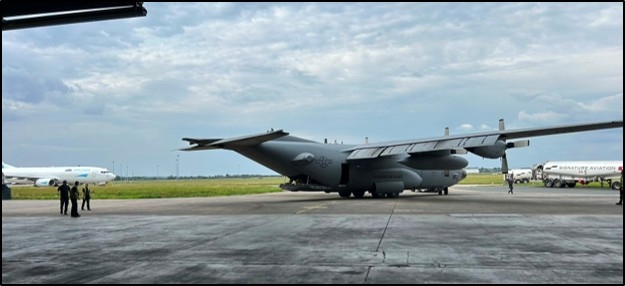
In a press release issued on November 17, 2026, the U.S. Department of Justice (DOJ) announced that a federal grand jury in the Southern District of New York had indicted Daithi O’Corrain, also known as “David Curran,” a 48-year-old Irish national, over the destruction of a U.S. Air National Guard C-130H Hercules at Shannon Airport in County Clare, Ireland.
The aircraft was reportedly worth approximately US$60 million. According to the DOJ, the damage left it inoperable and it will not return to active flight status.
The indictment alleges that O’Corrain spent months researching the C-130H’s construction, monitoring military aircraft movements and identifying a way to breach Shannon Airport’s security perimeter. Investigators say he acquired tools and materials, including gallium, and studied previous incidents involving U.S. military aircraft at the airport.
According to the indictment, the incident unfolded as follows:
04:39 local time, April 11: O’Corrain allegedly breached the airport perimeter and crossed the airfield to reach the military transport aircraft.
He allegedly forced open the rear crew door, entered the aircraft and barricaded himself inside using tools, straps and other equipment.
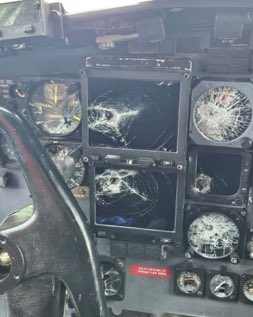
Inside, he allegedly cut electrical wiring and hydraulic lines, crimped a liquid oxygen line, destroyed cockpit gauges and punctured air ducts.
He also allegedly brought capsules of gallium, a metal capable of severely damaging aluminium components.
At approximately 09:40, the returning flight crew spotted him through a cockpit window and alerted airport security.
O’Corrain allegedly escaped through a roof hatch, struck the aircraft's exterior with an axe and introduced unknown substances and objects, including ball bearings, into its fuel tanks.
Irish authorities subsequently apprehended him at the aircraft.
The DOJ also alleges that he used straps, brackets, screws and ball bearings mixed with epoxy to secure or obstruct aircraft doors. It says that cutting, rather than crimping, the liquid oxygen line could have created a serious explosion risk.
ADIC Barnacle:
“As alleged, Daithi O’Corrain carried out a deliberate, planned attack against a U.S. military aircraft, causing tens of millions of dollars in damage and jeopardizing critical military operations. This was not an act of spontaneous vandalism. The defendant allegedly spent months researching the aircraft, acquiring tools and materials, and preparing to maximize the destruction he could inflict. The FBI and our law enforcement partners will continue to pursue anyone who targets U.S. military assets, regardless of where those attacks occur.”
The April 2026 attack did not occur in isolation. The DOJ indictment specifically identifies three earlier incidents involving breaches of Shannon Airport's security perimeter and restricted areas.
May 1, 2025 – Perimeter fence breach
Three individuals were arrested after allegedly driving a van through the airport's perimeter fence.
May 17, 2025 – Military aircraft sprayed with paint
Three individuals allegedly entered the runway area and sprayed paint on a U.S. military aircraft, temporarily rendering it inoperable.
November 22, 2025 – C-40 aircraft approached
Three individuals allegedly breached the airport perimeter in a van and reached a restricted area where a U.S. military C-40 was parked. Airport security intercepted them.
These earlier incidents are significant because they show that airport security breaches involving U.S. military aircraft had already been reported before the C-130 was allegedly destroyed.
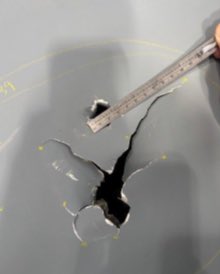
The first reports emerged on April 11, 2026, when Irish police confirmed that a man in his 40s had been arrested following an alleged security breach and damage to a U.S. military C-130 Hercules.
Shannon Airport temporarily suspended operations at approximately 09:50 and resumed them around 10:15. Two departing flights experienced delays, while an arriving flight was briefly placed in a holding pattern.
On April 13, O’Corrain appeared before Limerick District Court and faced three Irish charges:
Criminal damage to the C-130 Hercules.
Criminal damage to the airport perimeter fence.
Trespassing on an airport taxiway.
He was initially refused bail and remanded in custody. However, by May 7, the Irish Examiner reported that he had subsequently secured High Court bail. The Irish proceedings were described as a complex investigation.
The DOJ's November 17 announcement now brings a separate U.S. federal prosecution into the case.
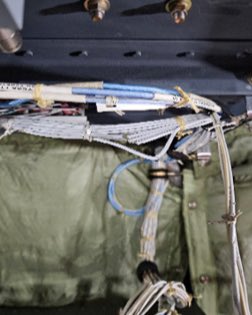
O’Corrain has been indicted on one count of destruction of government property, under Title 18, U.S. Code, Section 1361.
The charge carries a maximum potential sentence of 10 years in prison. The indictment values the aircraft at approximately US$60 million and identifies it as U.S. government property.
The DOJ says the prosecution involved cooperation between the FBI, the U.S. Air Force Office of Special Investigations, the Missouri Air National Guard and Irish authorities. The indictment states that the defendant is expected to be first brought to and arrested in the Southern District of New York.
Importantly, an indictment is an accusation, not a conviction. The defendant is presumed innocent unless proven guilty.
The case highlights several important vulnerabilities for airport and military aviation security:
Perimeter protection: Repeated breaches raise questions about the effectiveness of fencing, surveillance and intrusion-detection systems.
Protection of parked military aircraft: Aircraft on remote taxiways or isolated parking positions can be vulnerable if access controls fail.
Aircraft systems vulnerability: Damage to electrical, hydraulic, oxygen and fuel systems can make an aircraft uneconomical or impossible to return to service.
Insider-level technical knowledge: The DOJ alleges that the accused had researched the aircraft's construction and critical components before the incident.
International security cooperation: The investigation demonstrates the importance of cooperation between airport authorities, national police, military investigators and international law-enforcement agencies.
The aircraft's reported loss is particularly significant: a C-130H is a tactical airlifter designed for military transport missions, and the DOJ estimates the destroyed aircraft's value at around US$60 million.
This is more than an aircraft vandalism case. The U.S. indictment describes an alleged, carefully prepared attack that rendered a military transport aircraft permanently inoperable and potentially endangered personnel nearby.
Perhaps the most concerning aspect is the sequence of earlier security breaches at Shannon Airport. The April incident raises difficult questions about how an individual could allegedly penetrate the airport perimeter, reach a military aircraft and remain inside it for several hours before being discovered.
The motive behind the alleged attack has not been publicly established in the DOJ announcement. The criminal proceedings in Ireland and the newly announced U.S. federal prosecution will be important developments to follow.
Sources and documents
U.S. Department of Justice – November 17 indictment announcement
Full federal grand jury indictment – U.S. v. Daithi O’Corrain