
Argentina is opening a new chapter in its livestock export industry, with live cattle now being transported internationally by air following the removal of a decades-old export restriction. The unusual cargo operations are creating fresh opportunities for freight operators while offering Argentine livestock producers access to new international markets.
The development follows the Argentine government's decision in February 2025 to repeal a restriction that had prohibited the export of live cattle destined for slaughter for human consumption since 1973.
Under Presidential Decree 133/2025, published on February 26, 2025, the government abolished Decree 322/1973, ending a restriction that had remained in force for more than five decades. The change reopened the market for live cattle exports, although shipments remain subject to veterinary certification and the importing country's sanitary requirements.
One of the most unusual developments following the regulatory change is the use of aircraft to transport live cattle to overseas buyers.
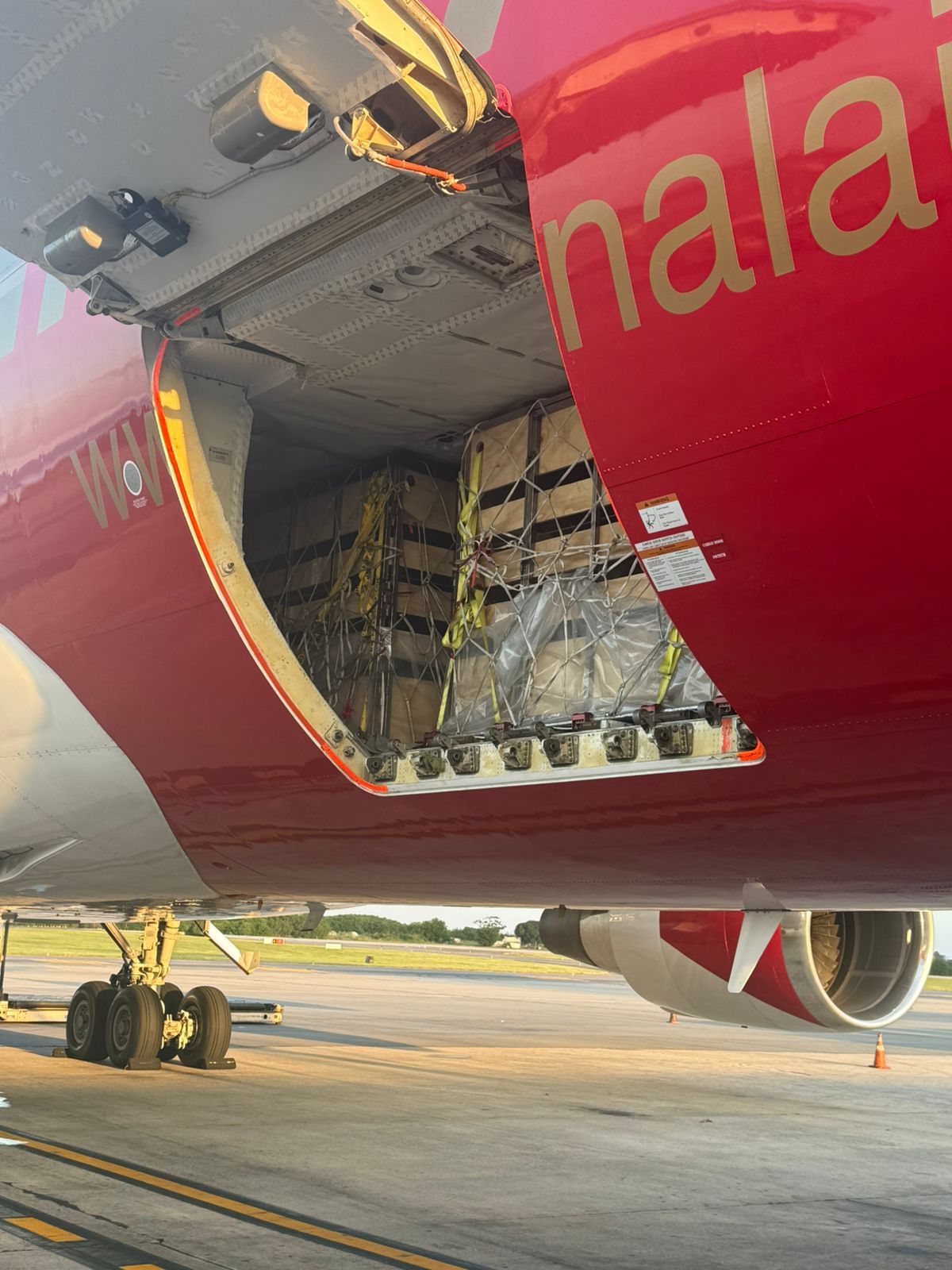
Veterinarian Gabriel Carnevale, associated with Argentine livestock brokerage Colombo and Colombo, has explained how the operation works. Rather than relying exclusively on dedicated livestock vessels, exporters are exploring available cargo capacity aboard aircraft that arrive in Argentina carrying imported goods and return overseas with unused space.
The air shipments can involve relatively small consignments of approximately five, 10 or 20 animals, depending on the requirements of the buyer and the transportation arrangements.
The cattle are transported using specially prepared equipment, with arrangements for water, feed and temperature control during the journey. According to Carnevale, certain air journeys can be completed faster than comparable domestic road transportation.
An earlier reported operation demonstrated the potential of this transportation model. In December 2025, Colombo and Colombo reportedly transported 32 pregnant Holstein dairy heifers to Nigeria by air, marking an early commercial shipment following the reopening of live cattle exports.
Demand for Argentine livestock is emerging from several international markets.
Carnevale has confirmed that an earlier shipment to Africa was completed successfully, with another consignment being prepared for the continent.
The company is also exploring commercial opportunities with Türkiye and the United States, while receiving an inquiry from Kosovo for cattle.
Potential buyers are interested in different categories of livestock, including pregnant dairy cows, calves and animals intended for slaughter. The demand reflects opportunities for Argentine producers to supply both breeding-related and meat-production markets.
Transporting live cattle by air is not intended to replace traditional livestock shipping by sea. Instead, it offers an alternative for smaller consignments, specialised buyers and deliveries where speed is important.
One of the main advantages is the possibility of utilising cargo capacity that might otherwise remain unused on return journeys.
For freight operators, this creates an opportunity to generate additional revenue from available aircraft capacity. For livestock exporters, it provides access to international customers without necessarily having to assemble thousands of animals for a dedicated maritime shipment.
However, live animal transportation requires careful planning, including suitable loading equipment, ventilation, temperature management, feeding, watering and veterinary supervision.
Despite the opportunities, Argentina's live cattle export industry faces significant challenges before it can become a large-scale international business.
Fernando Molinari, secretary of the Argentine Association of Live Cattle Exporters, has highlighted difficulties involving sanitary protocols, certification requirements and the availability of animals that meet international buyers' specifications.
The requirements for transporting cattle intended for slaughter differ from those for breeding animals. Existing sanitary arrangements have historically been more focused on breeding and reproduction, making access to some overseas markets more complicated.
Large-scale maritime exports also require substantially different logistics. According to industry representatives, approximately 5,000 cattle may need to be assembled to make certain long-distance vessel shipments commercially viable.
Argentina's reopening of live cattle exports demonstrates how changes in agricultural trade regulations can create opportunities beyond the traditional livestock and meat industries.
For the aviation sector, the development introduces a specialised cargo category that requires dedicated handling arrangements, veterinary oversight and careful coordination between exporters, freight operators and destination-country authorities.
While shipments involving five to 20 animals are very different from conventional large-scale livestock exports, the model illustrates how available aircraft capacity can be used for unconventional cargo operations.
With interest emerging from Africa, Türkiye, the United States and other markets, Argentina's live cattle trade could develop into a specialised niche within international air freight.
From conventional cargo and industrial equipment to live cattle, aircraft are increasingly being explored for transporting some of the world's most unusual commercial shipments.
FL360aero note
The 2025 decree removed the restriction on live cattle exports for slaughter; it was not an aviation-specific regulation. Air transportation is one of the logistics options now being explored under the broader export framework.