
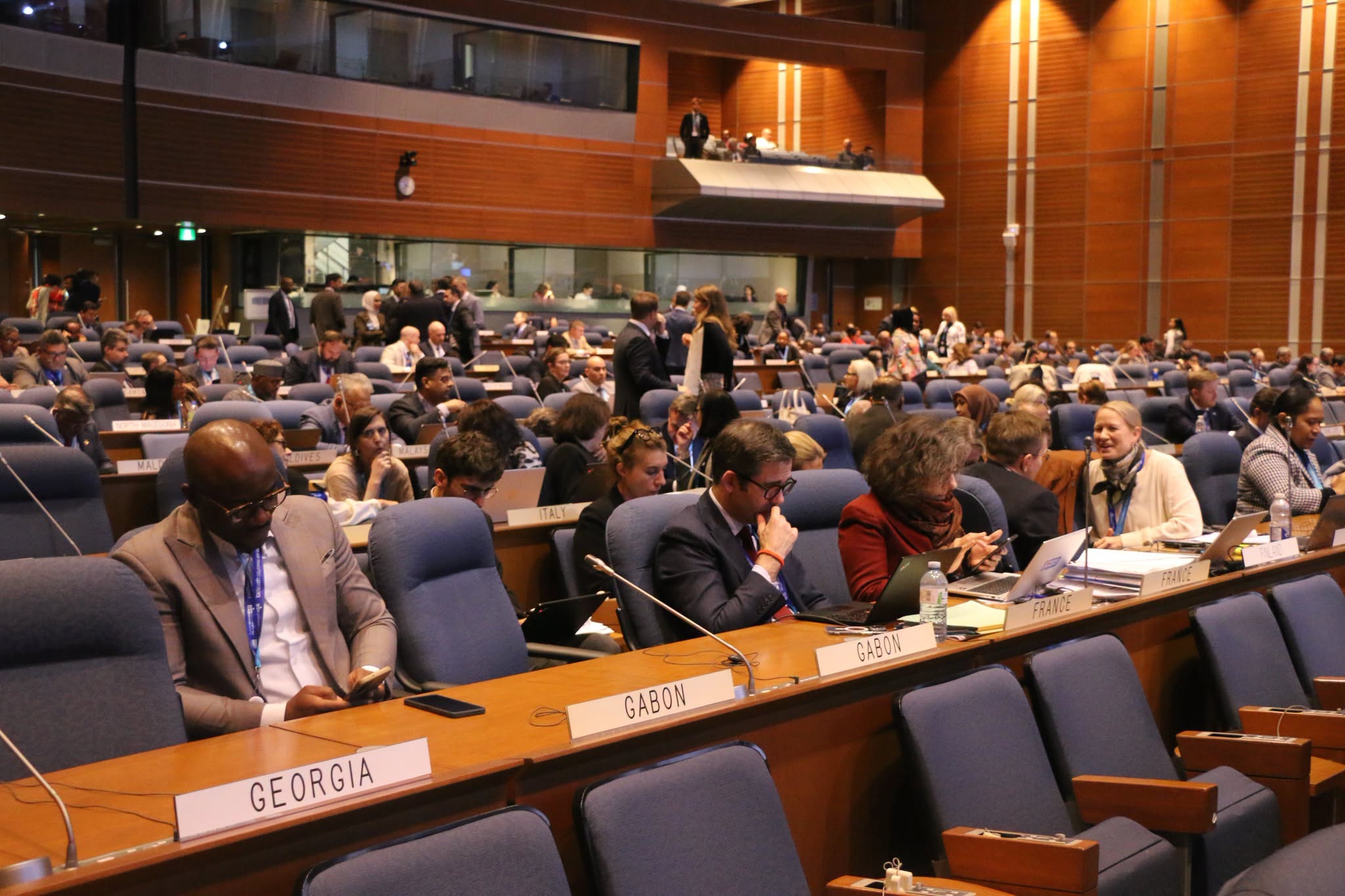
Middle Eastern opposition: Saudi Arabia, supported by Kuwait, Qatar and Egypt, challenged the proposed EU ETS expansion at ICAO's ATConf/7.
2029 expansion plan: The EU proposal seeks to cover EEA departures to third-country destinations within 5,000 km of Frankfurt.
CORSIA defence: Saudi Arabia wants ICAO's global carbon-offsetting scheme to remain the sole market-based mechanism for international aviation.
Qatar's proposal: Doha called for an ICAO technical assessment of the implications of the EU ETS expansion for CORSIA.
European disagreement: Several European countries rejected the Middle Eastern position.
Airline cost concerns: Opponents warn of overlapping carbon obligations, higher compliance costs and potential competitive distortions.
No final legislation yet: The European Commission's proposal remains under discussion in the European Parliament and EU Council.
A proposed expansion of the European Union's Emissions Trading System (EU ETS) to cover more international airline operations has encountered strong opposition from Middle Eastern countries at a major global aviation conference in Montreal, Canada.
Saudi Arabia, backed by Kuwait, Qatar and Egypt, has challenged the European Commission's plans to extend carbon-emissions obligations to flights connecting European airports with destinations outside the European Economic Area (EEA).
The issue was raised during the Seventh Worldwide Air Transport Conference (ATConf/7), organised by the International Civil Aviation Organization (ICAO), which ran from November 16 to 20, 2026.
At the centre of the disagreement is whether international aviation emissions should be addressed through the existing ICAO-administered Carbon Offsetting and Reduction Scheme for International Aviation (CORSIA), or whether regional programmes such as the EU ETS should also apply to international routes.
The debate highlights growing tensions between Europe's climate ambitions and the aviation industry's demand for a consistent global regulatory framework.
The European Commission presented a legislative proposal on July 17, 2026, seeking to expand the geographical coverage of the EU ETS for aviation from 2029.
Under the proposal, the system would continue covering flights within the European Economic Area while extending its reach to flights departing from EEA airports and arriving at destinations in third countries within a radius of 5,000 kilometres of Frankfurt Airport, used as the geographical reference point for the European Union.
The proposed expansion would bring several destinations in the Middle East and North Africa within the system's scope.
Importantly, the geographical boundary would not include transatlantic flights to the United States.
The proposal also seeks to lower the emissions threshold for aircraft operators subject to the system, bringing more smaller operators, including business and private aviation, within its reporting and compliance requirements.
The Commission argues that expanding the system would strengthen the aviation sector's contribution to European climate targets and ensure more consistent carbon-pricing obligations across competing airlines.
The proposal remains under consideration by the European Parliament and the Council of the European Union. It has not yet become law.
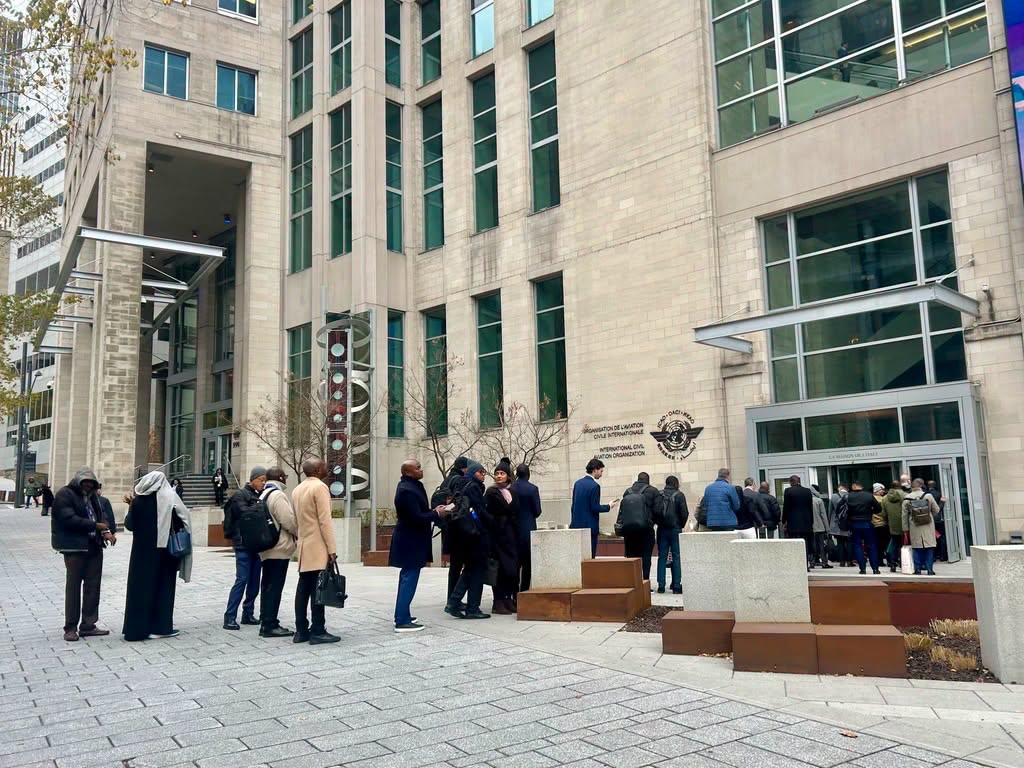
During the Montreal conference, Saudi Arabia urged ICAO member states to support a globally coordinated approach to aviation emissions, with CORSIA serving as the sole market-based emissions mechanism for international aviation.
The position received support from Kuwait, Qatar and Egypt.
The countries warned that extending the EU ETS beyond European airspace could create overlapping obligations for airlines already participating in CORSIA.
Their concerns include:
Double charging: Airlines could face overlapping carbon-compliance costs under the EU ETS and CORSIA for the same international operations.
Higher operating costs: Additional carbon obligations could increase expenses for airlines operating routes between Europe and the Middle East.
Administrative complexity: Different reporting, verification and compliance requirements could complicate international airline operations.
Competitive distortions: Airlines with different network structures and access to environmental incentives could face unequal financial consequences.
Regulatory sovereignty: The proposed geographical extension raises questions about the application of regional environmental regulations to emissions associated with operations beyond European territory.
Saudi Arabia and its supporting countries called on governments and regional organisations to avoid duplicative or extraterritorial emissions-trading arrangements.
Qatar also proposed that ICAO conduct a technical assessment of the potential implications of the EU ETS expansion for CORSIA.
Several European countries disagreed with the Middle Eastern countries' position, reflecting the continuing divisions over how international aviation should be regulated.
The disagreement largely centres on two different approaches to reducing aviation's carbon footprint.
1. CORSIA – The global aviation framework
The Carbon Offsetting and Reduction Scheme for International Aviation was established by ICAO in 2016 to address the growth in CO₂ emissions from international aviation.
It requires airlines from participating countries to monitor, report and verify emissions and offset applicable emissions growth through eligible carbon credits.
CORSIA is designed as a globally coordinated market-based mechanism, although it does not impose an absolute emissions cap on international aviation.
Its supporters argue that a single global framework reduces regulatory fragmentation and maintains a level playing field for international airlines.
2. EU ETS – Europe's carbon-pricing system
The European Union Emissions Trading System operates on a cap-and-trade principle.
Airlines covered by the system must surrender emissions allowances corresponding to their regulated CO₂ emissions. The number of available allowances is progressively reduced to encourage emissions reductions.
Unlike CORSIA's offsetting approach, the EU ETS creates a carbon price linked to a declining emissions cap.
The European Commission argues that CORSIA alone is insufficient to deliver the emissions reductions required by Europe's climate objectives.
Its July 2026 proposal also includes provisions allowing airlines to deduct eligible CORSIA offsetting costs where both systems apply, with the intention of avoiding double charging.
The opposition is not entirely new.
On July 17, 2026, ICAO publicly expressed concern about the European Commission's proposed expansion, warning that it could undermine the globally harmonised approach established through CORSIA.
ICAO argued that applying additional regional carbon-trading obligations to international aviation could introduce duplicate requirements, fragment global environmental efforts and complicate the implementation of the existing international framework.
The Arab Air Carriers' Organization (AACO) also criticised the proposal on July 21, describing its extension beyond EU airspace as extraterritorial and potentially inconsistent with the sovereignty principles of the Chicago Convention.
AACO warned that additional compliance costs could ultimately affect airline operating expenses and passenger fares.
The organisation has called for international aviation emissions to be addressed through ICAO rather than overlapping regional measures.
The latest intervention by Saudi Arabia, Kuwait, Qatar and Egypt at ATConf/7 demonstrates that the disagreement is now an important issue in international aviation policy discussions.
If the European Commission's proposal is adopted, airlines operating from EEA airports to destinations within the proposed 5,000-kilometre boundary could face additional carbon-compliance obligations from 2029.
This would be particularly relevant to carriers operating between Europe and the Middle East, North Africa and neighbouring regions.
Airlines could face additional costs associated with purchasing emissions allowances, monitoring fuel consumption, reporting emissions and complying with verification requirements.
The financial impact would vary depending on route distance, aircraft efficiency, emissions exposure and the treatment of CORSIA-related costs.
Airlines may eventually seek to recover some of these expenses through ticket prices, although the actual impact on fares would depend on market conditions and the final legislation.
The proposal could also influence competition between European and non-European carriers, particularly those operating connecting services through major international hubs.
The outcome of the debate will depend on further discussions between European institutions, ICAO member states and the wider aviation industry.
ICAO provides a platform for international coordination, but it cannot directly impose environmental legislation on its 193 member states.
Meanwhile, the European Union retains the authority to develop and implement its own emissions policies within its legal framework.
The central challenge will be reconciling the European Union's ambition to accelerate aviation decarbonisation with the industry's preference for globally coordinated rules.
The aviation sector has committed to achieving net-zero carbon emissions by 2050, but progress remains constrained by the availability and cost of sustainable aviation fuel, technological limitations and rising passenger demand.
The Montreal conference has made one issue particularly clear: while airlines broadly agree on the need to reduce aviation emissions, there is still no international consensus on who should regulate those emissions, how they should be priced and whether regional carbon-trading systems should extend beyond their own borders.
Sources
ICAO – Statement on proposed expansion of EU ETS, July 17, 2026.
Arab Air Carriers' Organization – Statement on EU ETS expansion.
European Commission – EU Emissions Trading System 2026 progress report.
FL360aero assessment: This is an important international aviation policy dispute, not an adopted ban or a new carbon tax on Middle Eastern airlines. The key question is whether the EU can extend its regional carbon-pricing framework to more international routes while maintaining compatibility with the global CORSIA system.