
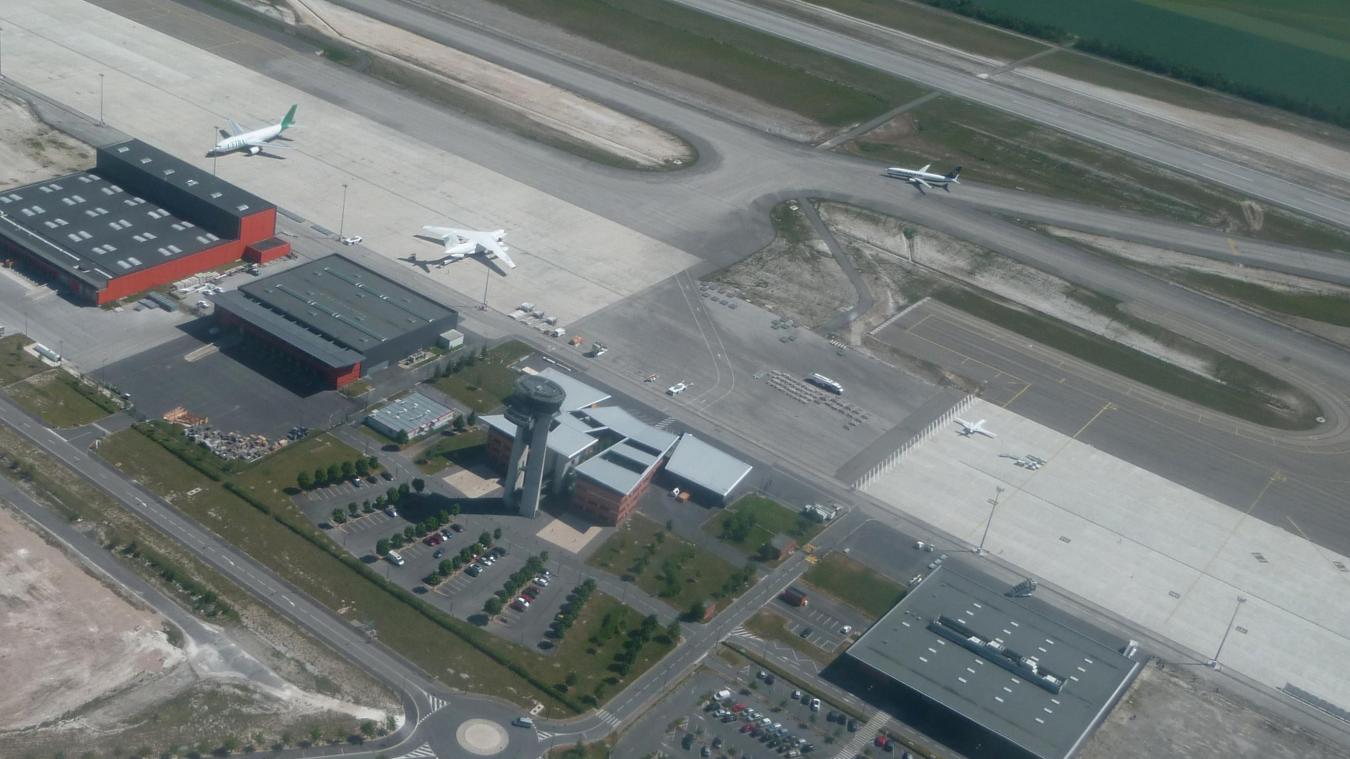
Paris-Vatry Airport (XCR), in France's Marne department, is facing the prospect of a gradual shutdown after more than 25 years of operations. The airport's owner, the Marne Departmental Council, has announced plans to end its financial support for the struggling facility, citing collapsing air-cargo activity, mounting operating losses and €27 million in essential infrastructure investments.
On November 10, 2026, Jean-Marc Roze, president of the Marne Departmental Council, announced that he would propose a gradual cessation of airport activities at a plenary council meeting scheduled for December 4, 2026.

If approved, the process could take up to three years. This is not an announcement of an immediate airport closure: the future operating arrangements, timing and possibility of a takeover remain unresolved.
The biggest problem is the collapse of the airport's cargo business, which historically generated approximately 80% of its revenue.
Vatry was developed primarily as an air-freight hub, with passenger services forming a secondary part of its business model. Its location, substantial cargo facilities and ability to accommodate night operations were intended to attract international freight operators.
However, the airport struggled to retain cargo volumes after the exceptional demand during the COVID-19 pandemic.
The figures illustrate the problem:
|
Year |
Air freight handled |
|---|---|
|
2021 |
30,588 tonnes |
|
2023 |
9,100 tonnes |
|
2024 |
Approximately 12,000 tonnes |
The 2021 peak was largely driven by exceptional pandemic-related shipments, including masks, vaccines and medicines. The subsequent decline demonstrated that this traffic was not a sustainable commercial base.
The Regional Chamber of Accounts had already identified a structural problem in its February 2025 assessment: Vatry needed approximately 50,000 tonnes of annual freight to reach its estimated operating break-even point. Its realistic growth potential was considered considerably lower, around 20,000–25,000 tonnes annually.
The introduction of France's small-parcel tax in March 2026 reportedly accelerated the departure of Chinese e-commerce cargo operators.
According to Jean-Marc Roze, cargo operators redirected flights towards competing airports in Belgium and other Benelux countries. Even after the French measure was replaced by a European customs arrangement on July 1, the lost operators had not returned.
An important regulatory distinction:
March 1, 2026: France introduced a temporary €2 tax on qualifying small parcels.
July 1, 2026: The French measure was suspended and replaced by a €3 EU-wide customs duty per category of goods in qualifying consignments valued at €150 or less.
November 1, 2026: An additional €2 processing fee per category of goods came into effect for relevant imports, regardless of parcel value.
These measures are not interchangeable, and the €3 duty and €2 processing fee are separate charges.
The timing is particularly damaging for Vatry. The airport had been competing for price-sensitive e-commerce cargo, where logistics operators can rapidly relocate flights to alternative European hubs.
The deeper problem is that the tax may have triggered the immediate loss of traffic, but the airport's dependence on a narrow and highly mobile cargo market made it vulnerable in the first place.
The airport faces another major challenge: infrastructure modernisation and regulatory compliance.
According to the Department's figures, approximately €27 million will be required over five years, including €12 million by 2027.
The proposed work includes:
Runway and taxiway infrastructure.
Aircraft parking and turnaround areas.
Runway and airfield lighting systems.
Other essential upgrades required to maintain regulatory compliance.
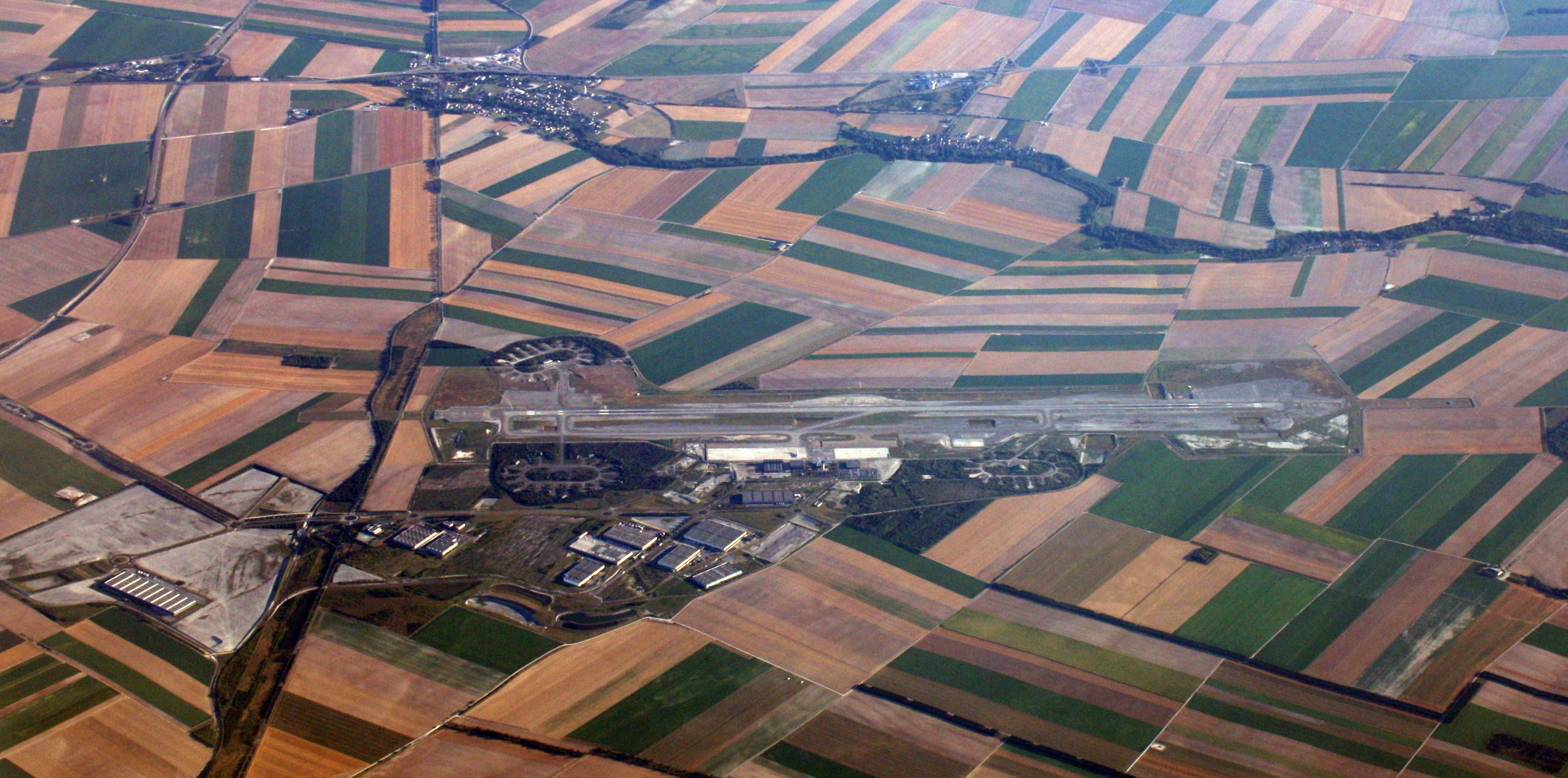
This creates a difficult financial equation. The airport needs substantial capital investment precisely when its principal revenue-generating business is deteriorating.
Jean-Marc Roze has argued that the Department can no longer justify spending €3–4 million annually to sustain the operation, particularly amid increasing social welfare expenditure and pressure on local government finances.
The regional funding structure has also weakened. The Grand Est Region withdrew its financial support in 2026, leaving the Marne Department and the Châlons-en-Champagne urban community as the principal remaining public-sector backers.
Passenger traffic has not been sufficient to compensate for the decline in freight.
By the end of September 2026, approximately 52,000 passengers had used the airport, against a full-year target of 80,000.
Ryanair has been an important passenger operator, serving destinations including Porto and Marrakech.
For perspective, the Regional Chamber of Accounts recorded 68,000 passengers in 2023 and 86,500 in 2024, when increased summer Ryanair operations boosted traffic.
The passenger business therefore has some regional value, particularly for residents of the Marne and neighbouring Aube department, who can use Vatry as an alternative to travelling to larger airports around Paris.
However, passenger operations alone are unlikely to support the airport's entire infrastructure and staffing costs.
This is an important distinction: even if passenger numbers recover, the airport would still need to finance its extensive airfield infrastructure without the cargo revenue that originally justified its development.
The airport's financial difficulties are not new.
Vatry was developed from a former NATO military airbase. The Marne Department incorporated the airport into its public property in 1995, with commercial airport operations beginning in 2000.
The project was intended to establish a major cargo gateway for the Champagne region while also supporting passenger connectivity and regional economic development.
However, it never achieved sustainable financial independence.
A February 2025 report by the Regional Chamber of Accounts provides a particularly revealing financial picture.
Public funding invested in Vatry, 1992–2023
Historical expenditure in nominal euros
Inflation-adjusted to December 2023
These figures include construction, equipment and subsequent public financial contributions. They are not simply cumulative operating subsidies.
The audit's conclusion was particularly significant: Vatry's freight development potential was limited, and its future required diversification into additional revenue-generating activities.
The report also highlighted potential opportunities in specialised cargo, logistics-related activities and the commercial use of the airport's substantial land reserves.
That earlier assessment suggests the current crisis is not simply the consequence of a new tax. It is the culmination of a much longer structural problem.
The proposed cessation would also have significant employment consequences.
Approximately 80 employees are currently associated with the airport. Seventeen positions had reportedly already been eliminated in May 2026 as part of earlier cost-cutting measures.
The future of the remaining workforce is another major consideration.
The Department is expected to examine the possibility of reallocating employees to other departmental services, while a smaller team could potentially remain responsible for maintaining and securing the airport site.
Fuel suppliers, ground-handling companies, logistics providers and other service operators would also be affected by any gradual reduction in activity.
One important aspect of the proposal is that the Department is considering a gradual cessation rather than an immediate physical closure.
There are several reasons for this:
Regulatory compliance: The DGAC (French Civil Aviation Authority) must ensure that airport infrastructure meets applicable aviation safety requirements.
Infrastructure preservation: The authorities may wish to retain the facilities in a condition that allows a future operator to take over.
Service-provider arrangements: Fuel supply, security, firefighting, ground handling and other essential services would need to be addressed.
Employment: Staff transfers and workforce arrangements would require planning.
Potential takeover: A private operator or the French State could theoretically become involved, although no confirmed rescue agreement has been announced.
If essential safety standards cannot be maintained, the airport could lose the ability to accommodate aircraft before the full three-year cessation process is completed.
In other words, a gradual cessation of commercial operations does not necessarily mean that the airport will immediately disappear as a physical aviation facility.
The most revealing part of this story is the Regional Chamber of Accounts' earlier assessment of Vatry's commercial potential.
The airport possesses several advantages:
A 3,860-metre runway.
Extensive land available for logistics and industrial development.
Dedicated freight warehouses and temperature-controlled storage facilities.
The ability to operate night flights without the same curfew restrictions as several competing airports.
A strategic position within the European logistics network.
Yet these advantages have not translated into a sustainable business.
The audit identified several structural disadvantages:
Competition from established cargo hubs, including Paris Charles de Gaulle, Liège, Luxembourg and Frankfurt-Hahn.
Limited availability of air traffic controllers during certain overnight hours.
Insufficiently competitive fuel supply arrangements, with fuel delivered by road rather than pipeline.
Limited intermodal connectivity and the additional road transport costs associated with moving cargo between Vatry and major logistics centres.
Difficulty attracting large cargo operators capable of generating consistent traffic.
The audit suggested that Vatry should focus on specialised freight rather than trying to compete directly with Europe's largest e-commerce cargo hubs. Pharmaceutical shipments, temperature-sensitive products and other specialised cargo could potentially offer better commercial returns.
However, such a strategy would require investment, customer commitments and a sufficiently reliable operating environment.
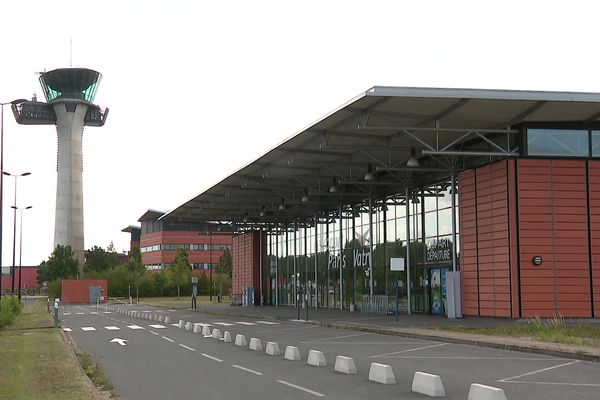
The Marne Departmental Council is scheduled to consider Jean-Marc Roze's proposal on December 4, 2026.
The decision will determine whether the Department formally begins the process of gradually ending airport operations.
The three-year period provides some scope for an orderly transition, but it also raises questions about whether an alternative operator or funding arrangement can emerge before the airport loses its commercial viability.
The possibility of retaining the infrastructure for future use is important. Vatry has substantial physical assets that could still have strategic value for regional logistics, emergency operations and specialised aviation.
Nevertheless, maintaining an airport without commercial operations also carries costs, meaning that preservation is not a cost-free alternative.
The potential shutdown of Vatry is more than a local French infrastructure story. It illustrates the financial vulnerability of regional airports that depend heavily on a small number of cargo customers or airline operators.
Three important lessons emerge.
1. Cargo diversification is essential.
An airport that depends on e-commerce cargo is exposed to changes in customs policy, commercial demand and the operating decisions of major logistics companies. Cargo airlines can relocate operations quickly when another airport offers better economics.
2. Infrastructure investment must be matched by realistic traffic forecasts.
Vatry's historical investment demonstrates that a long runway and extensive logistics facilities do not automatically create a successful cargo hub. Infrastructure must be supported by committed operators, competitive handling costs, fuel availability and efficient ground transportation.
3. Passenger traffic cannot automatically replace lost cargo revenue.
Even with 80,000–90,000 passengers annually, the airport would struggle to justify the full cost of maintaining a large cargo-oriented facility. Passenger and freight operations have different revenue structures and infrastructure requirements.
The wider question for regional airport owners is whether they should continue subsidising airports with uncertain commercial prospects or redirect public funds towards transport infrastructure with more measurable economic returns.
Vatry's situation could become an important case study in that debate.
You may like to read......