
Key Highlights
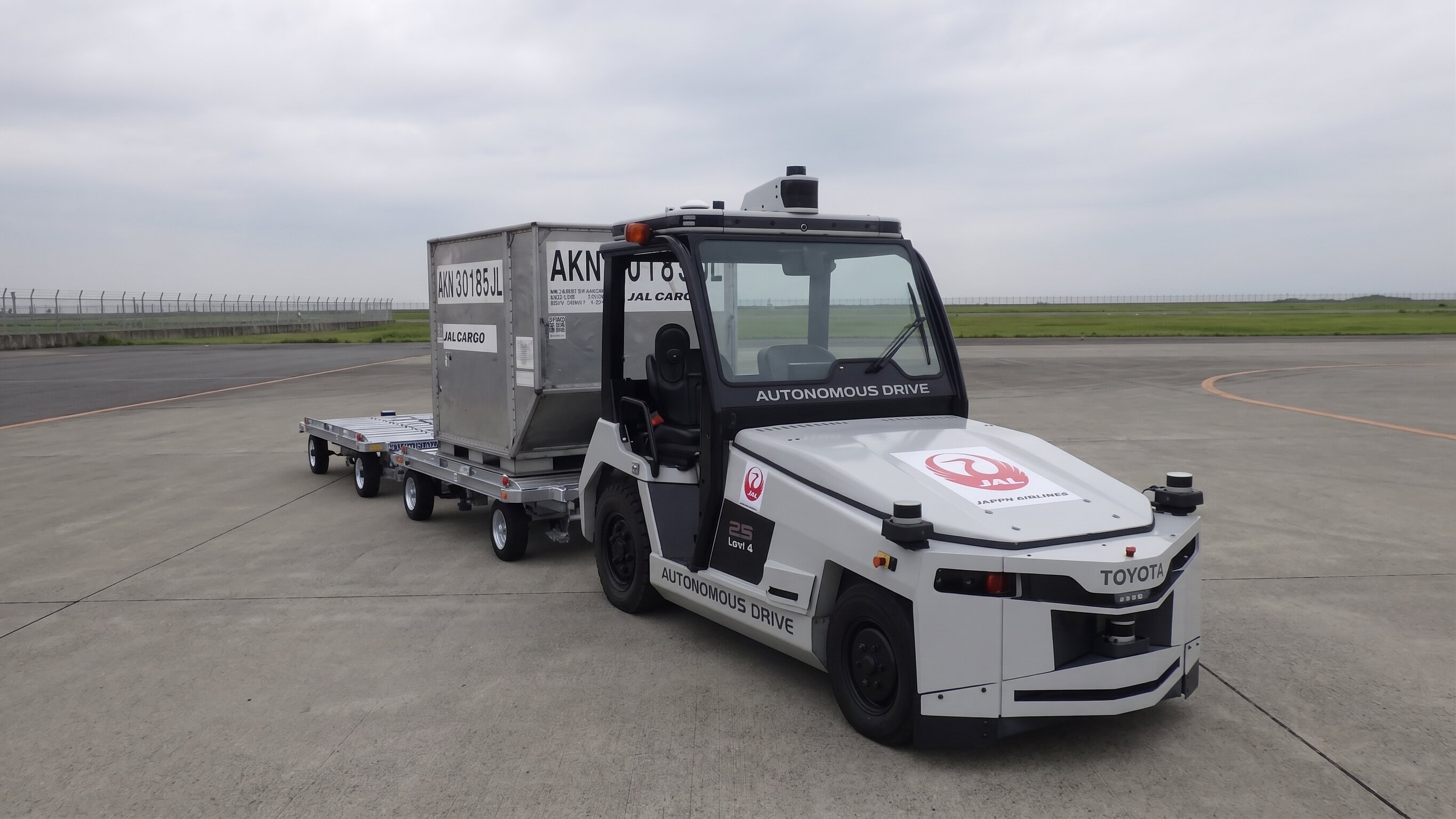
November 2026 Trials: Japan Airlines (JAL) and Toyota Industries will begin trials of Level 4 autonomous towing tractors at Tokyo's Haneda Airport.
More Challenging Routes: The trials will include tunnel sections, testing autonomous operations in more complex driving environments.
Building on Previous Success: JAL launched commercial Level 4 autonomous towing operations at Haneda on December 15, 2025, using shared infrastructure provided by Japan's Civil Aviation Bureau (JCAB).
Advanced Airport Infrastructure: The trials will assess coordination with airport signalling systems, cameras and other shared infrastructure supporting driverless vehicles.
Reduced Labour Requirements: Autonomous towing technology aims to address ground-handling staff shortages, improve operational efficiency and reduce reliance on human drivers.
Environmental Benefits: Electric autonomous towing tractors are expected to help reduce emissions from airport ground-handling operations.
Nationwide Expansion: JAL and Toyota Industries aim to expand autonomous towing technology to different operating environments, paving the way for deployment at airports across Japan.
The initiative will test the capabilities of Toyota Industries' autonomous towing tractor on new routes, including sections passing through tunnels. The trials represent another step towards expanding driverless ground transportation in airport restricted areas, where aircraft, ground vehicles and personnel operate in close proximity.
Unlike the routes currently used for autonomous towing operations, the new routes present more challenging operating conditions and different driving environments. The two companies will therefore assess the technical and operational requirements necessary to ensure reliable transportation under Level 4 autonomous driving conditions.
A key element of the programme will be testing the tractor's interaction with shared infrastructure being developed by the Japan Civil Aviation Bureau (JCAB), including airport signalling equipment and camera systems designed to support autonomous vehicle operations.
The latest initiative builds on Japan's progress in introducing driverless vehicles into airport ground-handling operations.
On December 15, 2025, Level 4 autonomous towing tractor operations entered commercial service at Tokyo's Haneda and Narita airports, marking a significant milestone for Japan's aviation industry.
These operations were made possible through collaboration between airlines, technology providers and aviation authorities, with shared infrastructure playing an important role in enabling autonomous vehicles to navigate airport restricted areas.
Level 4 autonomous driving allows a vehicle to perform all driving tasks without a human driver within its designated operational conditions and approved operating environment. Unlike conventional driver-assistance systems, the technology is designed to operate without a driver behind the wheel, although its deployment remains subject to defined operational limitations.
The Japanese Ministry of Land, Infrastructure, Transport and Tourism (MLIT) has been promoting autonomous ground vehicles as part of broader efforts to improve airport productivity and address labour shortages in ground handling.
Toyota Industries has been expanding its autonomous vehicle technologies for airport logistics, working with airlines to automate baggage and cargo transportation.
A notable development came on December 15, 2025, when Toyota Industries and All Nippon Airways (ANA) introduced autonomous towing tractors for domestic cargo transportation at Haneda Airport. ANA initially deployed three Toyota Industries-manufactured vehicles, with plans to add another three during the 2025 financial year.
The tractors were introduced for regular domestic cargo operations, demonstrating how autonomous vehicles could move beyond experimental programmes into everyday airport logistics.
Meanwhile, JAL's Level 4 programme at Haneda and Narita was supported by autonomous towing technology developed by other industry partners, including AiRO and ROBO-HI. This demonstrates that Japan's airport automation strategy involves several technology providers rather than a single manufacturer.
The Japanese government is also playing an important role in accelerating airport automation.
The Japan Civil Aviation Bureau has been working with airlines, airport operators and technology companies to establish common infrastructure that allows autonomous vehicles to operate safely within airport restricted areas.
NEC Corporation supplied vehicle management equipment for Haneda Airport, including:
These systems are particularly important in airports, where towing tractors must operate alongside aircraft, service vehicles and ground personnel.
The MLIT has also established a dedicated committee to address the technical and operational challenges associated with autonomous driving in airport restricted areas. Meetings were held in February and August 2026, reflecting continued government efforts to establish common standards and expand deployment.
Japan's airport automation programme has already progressed beyond Tokyo.
On October 26, 2026, JAL announced the introduction of Level 4 autonomous towing tractor operations at Fukuoka Airport, in collaboration with Fukuoka International Airport Co., Ltd.
The deployment makes Fukuoka the third airport in JAL's domestic network to introduce Level 4 autonomous towing operations, following Haneda and Narita.
The Fukuoka deployment uses an EZTow autonomous towing tractor manufactured by TLD Robotics, demonstrating the airline's approach of working with different technology providers to expand driverless ground-handling capabilities.
The initiative is intended to address ground-handling labour shortages, improve operational efficiency and modernise airport logistics beyond the Tokyo metropolitan area.
The upcoming November trials at Haneda are significant because they will test autonomous driving technology in more complex environments, particularly tunnel sections.
Operating in tunnels introduces additional challenges for autonomous vehicles, potentially affecting positioning, communications, visibility and coordination with airport infrastructure. The trials will help determine what additional capabilities and infrastructure are required before operations can be expanded.
For airlines and airport operators, autonomous towing tractors offer several potential advantages:
However, expanding Level 4 operations will require careful safety assessments, infrastructure coordination and validation under different operating conditions.
Japan's longer-term objective is to extend these technologies to airports nationwide, creating a more automated and efficient airport ground-handling ecosystem.
The Bigger Picture: Japan is moving from limited autonomous vehicle deployments towards broader airport automation. With JAL, ANA, Toyota Industries, NEC and other technology providers participating in the transformation, Haneda is becoming an important testing ground for the next generation of driverless airport logistics.
| Date | Development |
|---|---|
| July 2024 | MLIT conducts an early Level 4 autonomous towing tractor trial at Haneda. |
| December 15, 2025 | Level 4 autonomous towing operations enter commercial service at Haneda and Narita. |
| December 15, 2025 | ANA introduces Toyota Industries autonomous towing tractors for domestic cargo transportation at Haneda. |
| February 2026 | MLIT holds a committee meeting on autonomous airport vehicle operations. |
| August 2026 | MLIT holds another meeting addressing autonomous driving technology in airport restricted areas. |
| October 26, 2026 | JAL introduces Level 4 autonomous towing operations at Fukuoka Airport. |
| November 2026 | JAL and Toyota Industries plan trials on more challenging Haneda routes, including tunnels. |