
Suvarnabhumi International Airport (BKK/VTBS) has announced an accelerated airfield maintenance and inspection program following an incident involving an Emirates Airbus A380 operating flight EK373 from Bangkok to Dubai.
The aircraft became immobilized on taxiway E21 at approximately 21:11 local time on November 2, prompting airport authorities to coordinate with Bangkok Flight Services (BFS) to deploy an aircraft towing vehicle.
The aircraft was subsequently moved and departed for Dubai.
The incident has triggered an urgent engineering response involving the affected taxiway, adjacent runway infrastructure, and surrounding pavement areas.
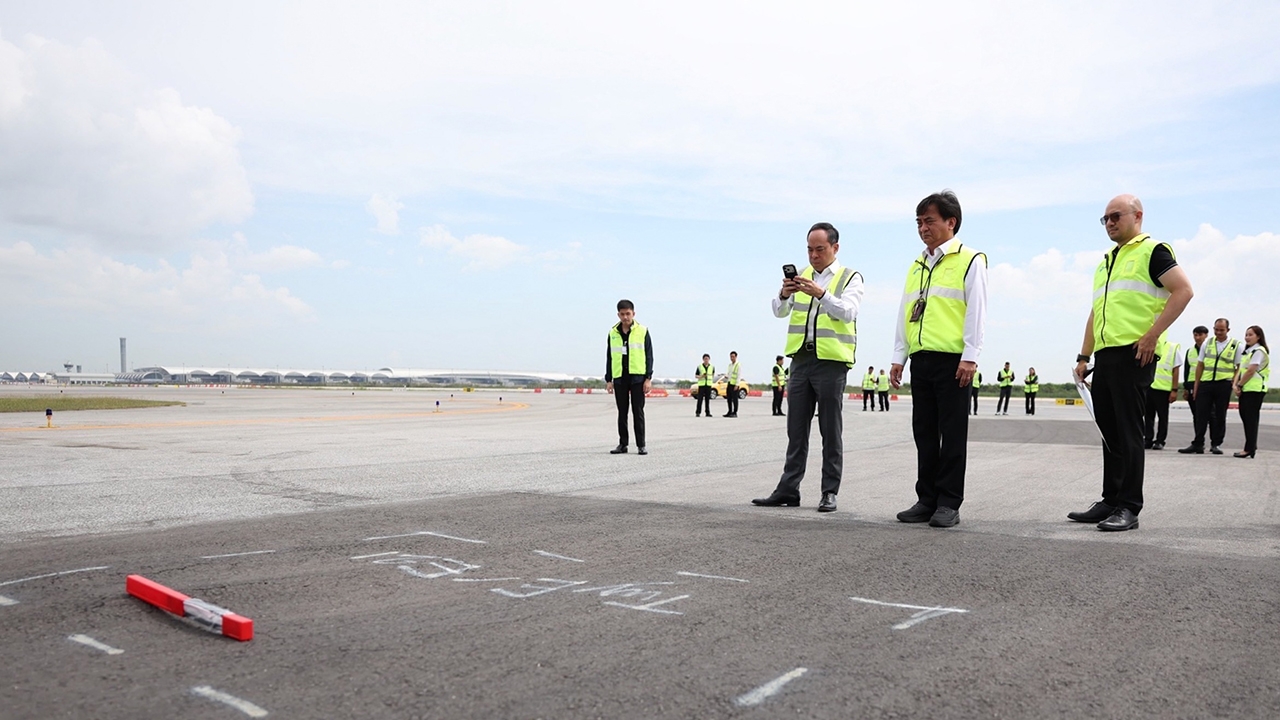
According to Suvarnabhumi Airport's preliminary explanation, sections of taxiway E21 suffered pavement damage following heavy rainfall and flooding in the surrounding area.
The airport indicated that water accumulated beneath the soil layer, potentially affecting the supporting ground structure.
Under the weight of the aircraft, certain sections of the taxiway surface subsequently suffered damage.
The findings raise important questions about pavement integrity, drainage effectiveness and the load-bearing capacity of airport movement areas following prolonged or heavy rainfall.
Although the airport has identified water accumulation as a contributing factor, a complete engineering root-cause determination has not yet been established.
Suvarnabhumi Airport is accelerating repairs and inspections under a program scheduled to run from November 3 at 19:00 until November 6 at 08:00.
The work involves both taxiway E21 and the affected section of runway 02R/20L.
Reported repair dimensions include:
The program is divided into two operational stages.
Stage 1: November 3, 19:00 – November 4, 08:00
Runway 02R/20L will be temporarily closed to facilitate pavement repairs. Work will also be undertaken on taxiway E21, while taxiway E19 undergoes inspection.
Stage 2: November 4, 08:00 – November 6, 08:00
Runway 02R/20L is scheduled to return to service, subject to the required inspections. Taxiway E21 will remain closed to allow the repaired pavement sufficient time to achieve the necessary strength before reopening.
During the maintenance period, Suvarnabhumi Airport is coordinating with Aeronautical Radio of Thailand (Aerothai) to manage aircraft movements and maintain operational continuity.
Aircraft will be directed away from the affected E21 area, with taxiway E19 identified as an alternative route where operationally suitable.
During the temporary runway closure, aircraft operations will be managed using the remaining two runways.
The airport has indicated that coordination with Aerothai will allow flight operations to continue without significant disruption to overall airport services.
Nevertheless, temporary capacity restrictions and individual flight delays remain possible.
Separately, the airport is preparing to bring the completed Taxiway D extension into service, subject to inspection by the Civil Aviation Authority of Thailand (CAAT).
The development is associated with the wider perimeter taxiway F13 project and is intended to improve aircraft ground movements and provide additional operational flexibility.
It is important to distinguish this project from the damaged E21 taxiway and runway 02R/20L repair program.
The new infrastructure is part of Suvarnabhumi's longer-term airport development strategy.
The latest Emirates incident follows another aircraft immobilization event at Suvarnabhumi on October 28, 2026.
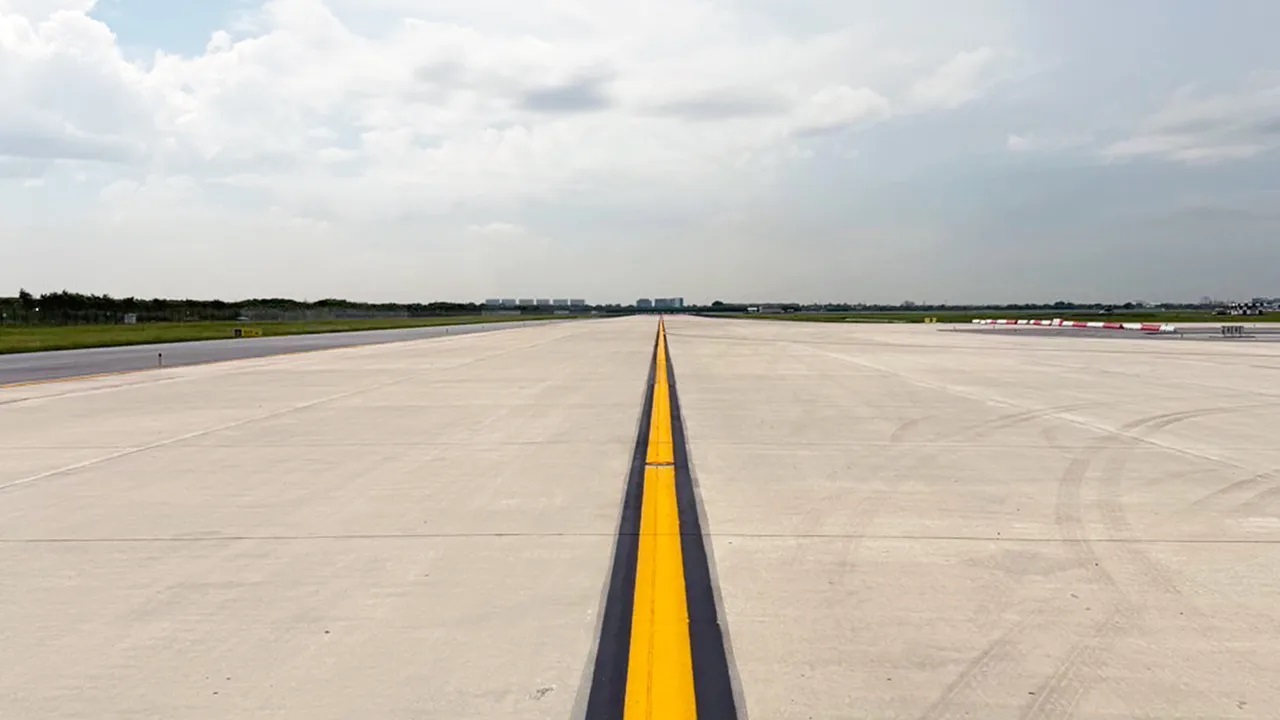
A China Airlines Boeing 737-800 operating flight CAL840 became stuck in a soft section of pavement near taxiway E21 and runway 02R while preparing for departure.
Four aircraft behind it were unable to proceed and had to be repositioned using pushback tugs.
Five flights were affected, with delays of approximately two hours.
Following that incident, airport authorities accelerated pavement repairs and inspections. CAAT also called for wider examinations of runway, taxiway and apron surfaces, particularly in potentially vulnerable areas.
The subsequent Emirates A380 incident makes the condition of the airport's pavement infrastructure an important subject for further engineering assessment.
Airport operator Airports of Thailand (AOT) is expected to coordinate further inspections with CAAT.
The reported program includes examination of the affected areas, verification of repaired pavement strength and assessment of surrounding infrastructure.
AOT is also expected to develop longer-term maintenance measures to improve pavement integrity and reduce the risk of similar incidents.
Non-destructive inspection technology may provide additional opportunities to assess pavement conditions and identify potential weaknesses without extensive destructive testing.
The Emirates incident highlights the importance of airport pavement engineering, particularly at major international hubs handling high volumes of wide-body aircraft.
Runway and taxiway surfaces must withstand substantial aircraft loads, repeated traffic movements, and environmental stresses.
Water infiltration and deterioration of the supporting subgrade can compromise pavement performance, potentially creating hazards for aircraft during taxiing, runway entry, and departure.
The investigation should therefore examine not only the visibly damaged surface but also the underlying pavement structure, drainage systems, and surrounding ground conditions.
The October 28 China Airlines incident and November 2 Emirates event also underline the importance of identifying whether multiple pavement failures share a common infrastructure-related factor.
Suvarnabhumi Airport has emphasized that passenger safety, aircraft safety and the continuity of flight operations remain its highest priorities.
The coming inspections and engineering assessments will be important in determining the full extent of the pavement damage and ensuring that affected areas are returned to service only after the required strength and safety standards have been verified.
The central question now is whether the recent incidents represent isolated pavement failures or evidence of a wider infrastructure vulnerability requiring more extensive intervention.