
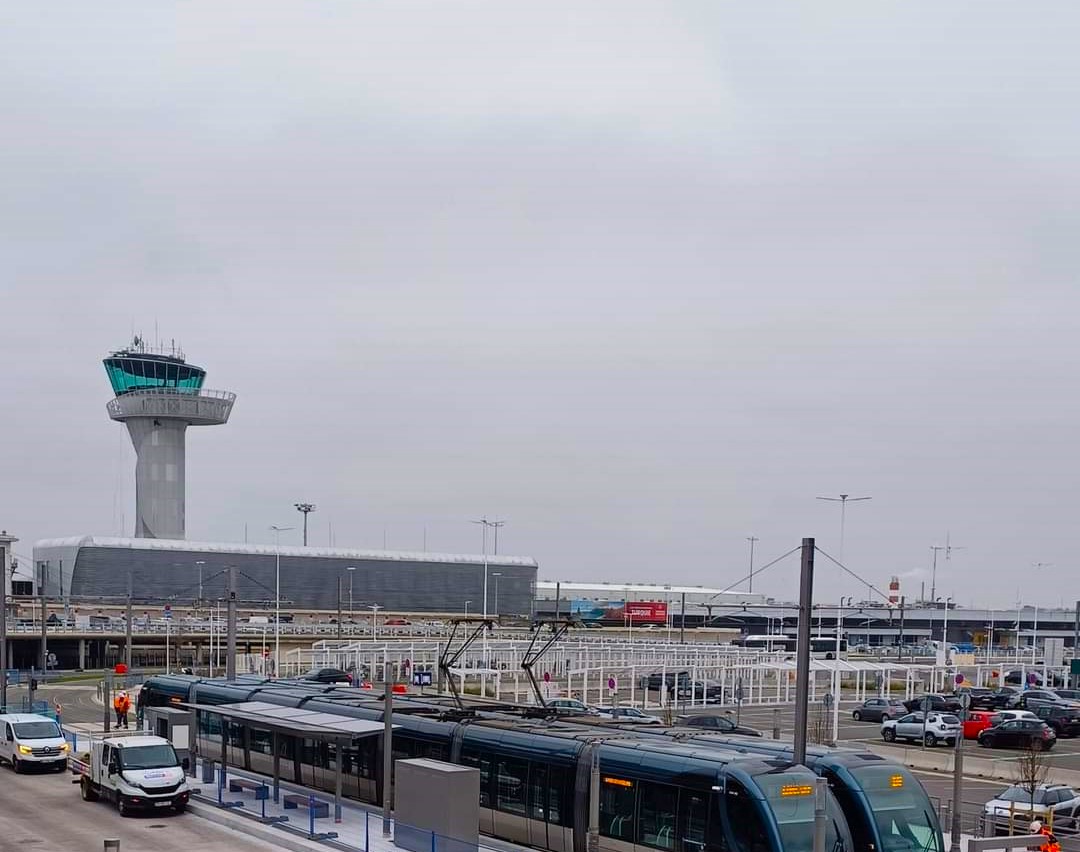
Runway 29 procedures: France is modifying RNAV departure coding at Bordeaux-Mérignac Airport.
Regulatory submission: SNA-SO submitted the proposal to ACNUSA on September 16, 2026.
Earlier recommendations: The changes follow ACNUSA's April 2024 report on aircraft trajectory deviations.
Automated monitoring: The revised coding aims to help airlines track and monitor departure trajectories more rigorously.
Minimal environmental impact: Noise and visual impacts are very low, while additional effects on fuel consumption and gaseous emissions are negligible.
Favourable opinion: ACNUSA issued its favourable opinion on November 18, 2026.
France is moving ahead with improvements to aircraft departure procedures at Bordeaux-Mérignac Airport following a favourable opinion from the country's independent aviation noise and environmental authority, ACNUSA.
The proposed modification concerns the RNAV (Area Navigation) departure procedures for Runway 29, with the primary objective of enabling airlines to monitor aircraft flight paths more accurately and automatically, helping prevent unwanted deviations from approved departure trajectories.
The South-West Air Navigation Service (SNA-SO) formally submitted the proposed changes to ACNUSA on September 16, 2026. The authority published its favourable opinion on November 18, following an assessment of the operational and environmental implications.
The modification involves changing the coding of the existing RNAV departure trajectories rather than introducing an entirely new runway or a new flight route. It is intended to make the prescribed departure paths easier for airline operators to monitor systematically and ensure that aircraft follow their cleared trajectories.
The initiative also implements recommendations previously made by ACNUSA in its April 2024 report examining the risk of aircraft trajectory deviations at Bordeaux-Mérignac.
The proposed changes follow concerns raised by ACNUSA over repeated aircraft trajectory deviations during departures from Runway 29 and visual approaches to another runway at Bordeaux-Mérignac.
In its April 2024 investigation, ACNUSA reported that numerous deviations had resulted in enforcement proceedings by France's civil aviation administration.
The authority noted that some deviations were not justified by established safety requirements, despite corrective measures already introduced by certain airlines.
Its investigation involved consultations with airlines and local air traffic control personnel to identify ways to improve compliance with published flight procedures and reduce the environmental consequences of aircraft departing from or approaching the airport.
The report also highlighted the importance of informing occasional airport users and airline operators about local operational requirements.
The latest RNAV coding modification is part of the follow-up to those recommendations, using more systematic flight-path monitoring to improve adherence to prescribed departure trajectories.
As part of the proposed modification, an Étude d'Impact de la Circulation Aérienne (EICA), or Air Traffic Impact Assessment, was conducted to evaluate its potential environmental consequences.
The assessment concluded that the overall environmental impact would remain broadly unchanged.
Its principal findings included:
Noise impact: The overall visual and acoustic impact of the revised procedures is expected to be very low.
Fuel consumption: The changes are not expected to produce any significant increase or reduction in aircraft fuel consumption.
Atmospheric emissions: Effects on gaseous emissions are considered negligible.
Flight trajectories: The overall environmental footprint is expected to remain stable, with no significant change in the distribution of environmental impacts.
Based on these findings, ACNUSA concluded that the proposed modification would improve the ability of airlines to monitor aircraft trajectories without creating significant additional environmental consequences.
Following its examination of the technical documentation and environmental impact assessment, the ACNUSA Board issued a favourable opinion on the proposed modification.
The authority considered that the changes incorporated its earlier recommendations and offered a practical way to strengthen compliance with established departure procedures.
The decision also reflects the cooperation between SNA-SO, airport management, airlines and the environmental authority in addressing operational and environmental concerns at Bordeaux-Mérignac.
ACNUSA's favourable opinion is an important regulatory milestone, although it should not be confused with confirmation that the revised procedures have already entered operational service.
The Bordeaux-Mérignac initiative illustrates how improvements in air navigation procedure design and coding can contribute to more consistent aircraft operations.
RNAV allows aircraft equipped with appropriate navigation systems to follow defined routes using satellite-based and other navigation references, rather than relying exclusively on ground-based navigation aids.
More accurate coding and automated monitoring can help airlines identify deviations from prescribed departure paths, improve operational oversight and support compliance with local noise-abatement requirements.
For airports located near populated areas, maintaining aircraft within approved departure corridors is particularly important because even relatively small deviations can affect communities that are not normally exposed to the same level of aircraft noise.
The Bordeaux project therefore represents a targeted improvement in flight-path monitoring rather than a major change to the airport's traffic capacity or runway infrastructure.
The broader objective is straightforward: improve aircraft trajectory compliance, strengthen operational oversight and maintain environmental performance without imposing significant additional costs on the surrounding communities.
ACNUSA – Official favourable opinion on the proposed RNAV departure modification.
ACNUSA – 2024 report on preventing trajectory deviations at Bordeaux-Mérignac.
ACNUSA – Visit to Bordeaux-Mérignac and discussions on modernising departure procedures.
French Aeronautical Information Publication (AIP) – Bordeaux-Mérignac airport procedures.