
France’s Bureau of Enquiry and Analysis for Civil Aviation Safety (BEA) is set to participate in the formal investigation into Air India flight AI2379, the Phuket–Delhi service that suffered a sudden 300-foot altitude drop in cruise.
Led by India’s Aircraft Accident Investigation Bureau (AAIB) under ICAO Annex 13 guidelines, the probe has been formally categorized as a Serious Incident. Because the involved aircraft is a French-manufactured Airbus A320neo (registration VT-EXO), BEA’s inclusion brings specialized OEM expertise to evaluate complex system architectures alongside AAIB investigators.
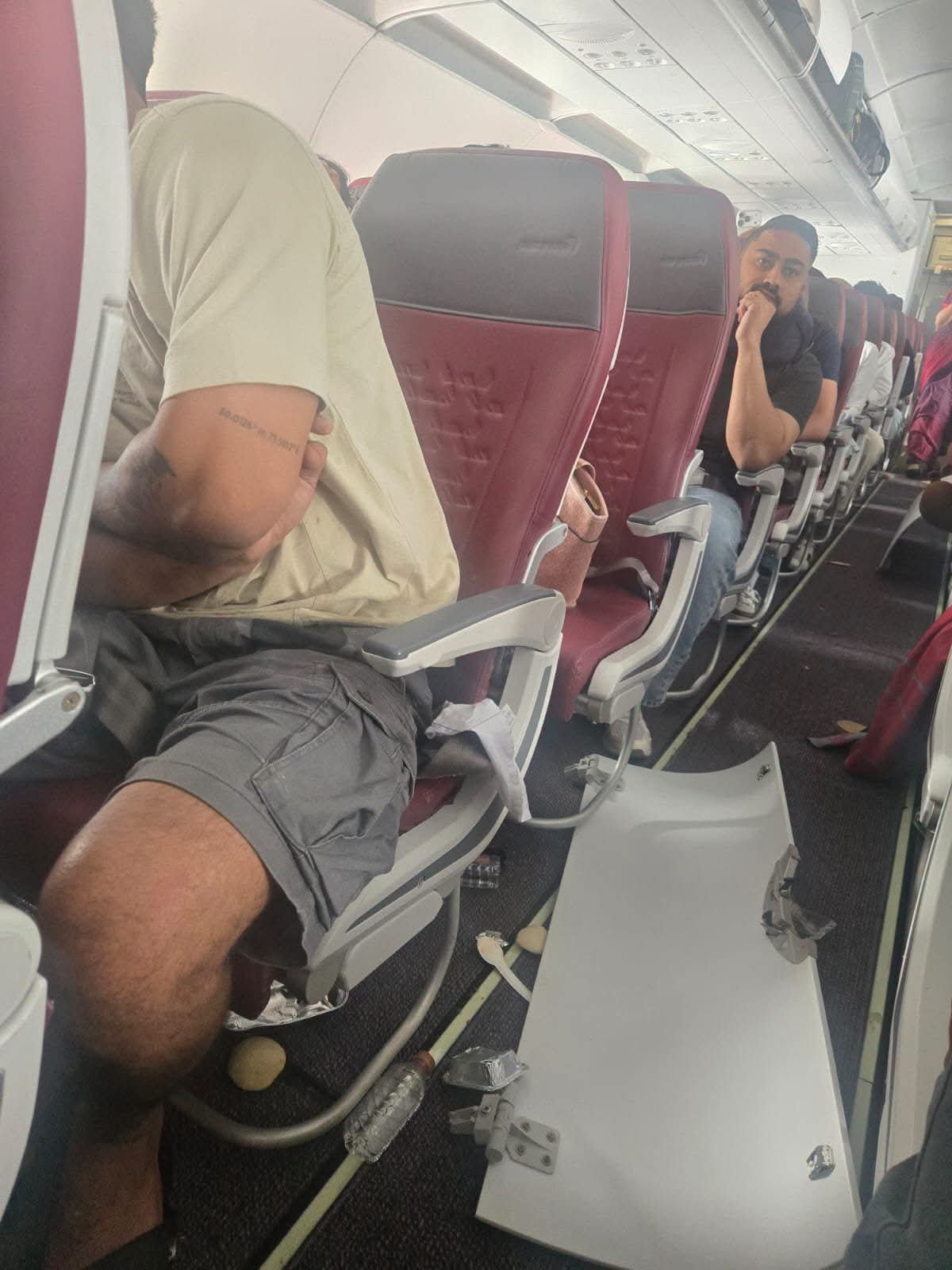
Incident Overview: Air India flight AI2379 (Phuket to Delhi) experienced a sudden 300-foot loss of altitude at cruise height, injuring 17 people (13 passengers and 4 cabin crew).
Shift Beyond Weather: What was initially reported by the airline as a turbulence-related event is now being examined for a cascading sequence of technical and flight-control failures.
International Investigation: India's AAIB leads the investigation, with France’s BEA participating as the authority representing the State of Design and Manufacture.
Parallel Screening Line: Post-flight toxicology screening of the Pilot-in-Command returned a "non-negative" result, triggering mandatory confirmatory lab testing while both crew members are off-rostered.
Data emerging from the preliminary investigation reveals that approximately 2½ hours into the flight (around 09:32 IST), the aircraft experienced multiple system anomalies. Maintenance reports indicate low-pressure warnings and cascading failures across the aircraft's hydraulic systems, followed by an autopilot disconnect and simultaneous fault indications affecting both the left and right elevators.
Shortly after these warnings, the aircraft experienced a rapid 300-foot drop before the flight crew stabilized the aircraft and proceeded to land safely at Indira Gandhi International Airport in Delhi at 11:07 IST. Investigators are working to establish whether these system anomalies directly caused the altitude drop, occurred as a reaction to severe atmospheric conditions, or represent a coincidental malfunction.
AAIB investigators and French technical advisors will review flight parameters and physical systems, focusing on:
Digital Flight Data Recorder (DFDR) & Cockpit Voice Recorder (CVR): Reconstructing exact surface positions (elevators, ailerons, rudder), control column inputs, autopilot modes, and system states.
Hydraulic Architecture: Analyzing pressure logs and fluid levels across the A320neo's three independent hydraulic circuits.
Flight Control Computers: Evaluating Electronic Centralized Aircraft Monitor (ECAM) fault logs and actuator responses surrounding the event.
Environmental Data: Reviewing meteorological radar and meteorological reports to isolate clear-air turbulence or severe wind-shear metrics.
Maintenance Logs: Reviewing the aircraft’s prior defect history for recurring hydraulic or flight-control system flags.
Following standard operating procedures for serious operational incidents, both flight crew members underwent post-flight psychoactive substance screening.
The preliminary screening for the Pilot-in-Command returned a "non-negative" result and was forwarded to a certified laboratory for confirmatory analysis. In line with Directorate General of Civil Aviation (DGCA) regulations, both pilots have been removed from active duty roster pending final laboratory findings. Authorities caution that a preliminary non-negative result is an initial screening flag rather than a confirmed positive test, and toxicology remains a separate inquiry line unless evidence directly links it to the operational sequence of the flight.
While early public statements framed the occurrence as an encounter with clear-air turbulence, the presence of recorded flight-control and hydraulic system faults has widened the scope of the inquiry. AAIB investigators, supported by BEA and Airbus safety specialists, are tasked with establishing whether the altitude excursion was driven by atmospheric phenomena, an uncommanded flight-control event, or a complex interaction between system dynamics and weather conditions.
You may like to read.......

.jpg)
.jpg)