
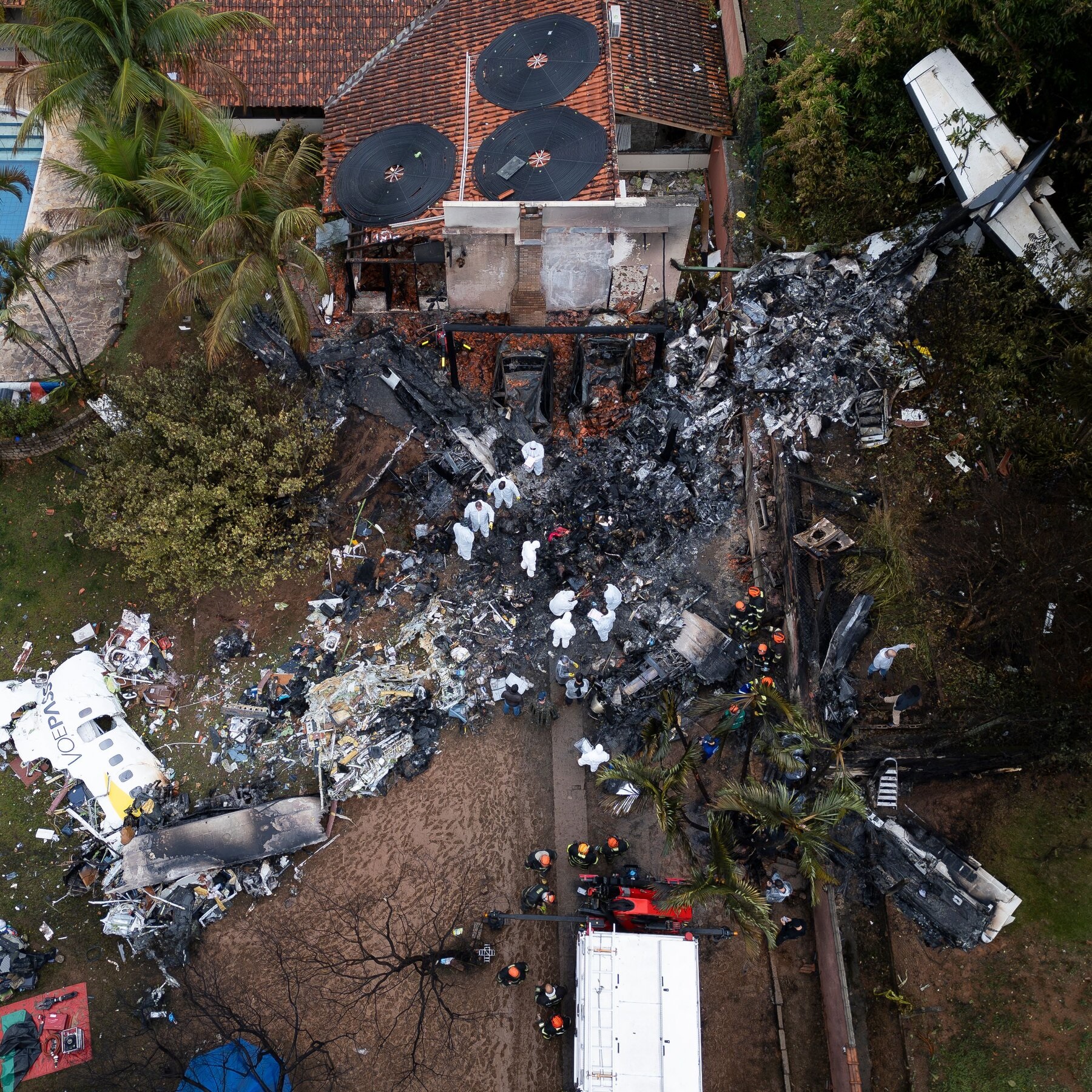
The Brazilian Federal Police (PF) has concluded that the pilots of the Voepass ATR 72 that crashed in Vinhedo, São Paulo, on August 9, 2024, were aware of a malfunction in the aircraft's de-icing system before the accident that claimed 62 lives.
According to a Federal Police report based on the final investigation by Brazil's Center for Investigation and Prevention of Aeronautical Accidents (Cenipa), the aircraft lost control after encountering severe icing conditions while its pneumatic de-icing system was inoperative. Investigators also determined that several required emergency procedures were not carried out correctly or in time.
The findings were first reported by Fantástico and later confirmed by Estadão.
Cockpit voice recorder transcripts included in the investigation reveal that the flight crew discussed both the icing conditions and the aircraft's malfunctioning de-icing system shortly before the crash.
In one exchange, the crew debated climbing to avoid icing conditions.
First Officer: "Look at the situation. Although it's not reported here, to avoid getting icy we'd have to go to FL110, right?"
Moments later, the aircraft's ice detection warning sounded.
Captain: "As soon as I said it, the airplane heard me. This aircraft is like that old Volkswagen Beetle from the movie Herbie."
As ice continued to accumulate, the conversation turned to the aircraft's de-icing equipment.
First Officer: "There's a lot of ice over there."
Captain: "Yeah."
First Officer: "Turn on the airframe."
Captain: "This damn thing isn't working, is it?"
Investigators say these conversations demonstrate that the crew recognized both the worsening icing conditions and the apparent failure of the aircraft's pneumatic de-icing system.
The report also includes cockpit conversations from the aircraft's previous flight between São Paulo-Guarulhos and Cascavel, where the crew again discussed ice accumulation.
During that flight, the captain remarked:
"There's the ice! The ice is gone now, finally! I heard a noise—it was the ice flying away."
After landing safely, the crew expressed relief.
Captain: "We arrived alive."
Captain: "Phew, we made it alive."
The conversations suggest that icing conditions and concerns about the aircraft's performance had also been encountered before the accident flight.
According to the Federal Police, the accident resulted from a combination of factors, including:
The report also states that both pilots were fully qualified to operate the ATR 72 and had successfully completed the company's required training. However, investigators said they could not determine why the required emergency procedures were not properly executed during the rapidly developing emergency.
"It is not possible to determine the reason for the inadequate execution of these procedures in light of the emergency encountered on the flight," the Federal Police concluded.
Cenipa's final report also identified contributing factors involving the airline, the aircraft, the flight crew, and Brazil's civil aviation oversight system. The findings have intensified scrutiny of maintenance practices, operational decision-making, and regulatory oversight following one of Brazil's deadliest aviation accidents in recent years.
The crash of Voepass Flight 2283 near Vinhedo killed all 62 people on board and remains one of the country's most significant aviation disasters, prompting extensive reviews of ATR operations in icing conditions and airline maintenance practices.
Related article.......

.jpg)
.jpg)