

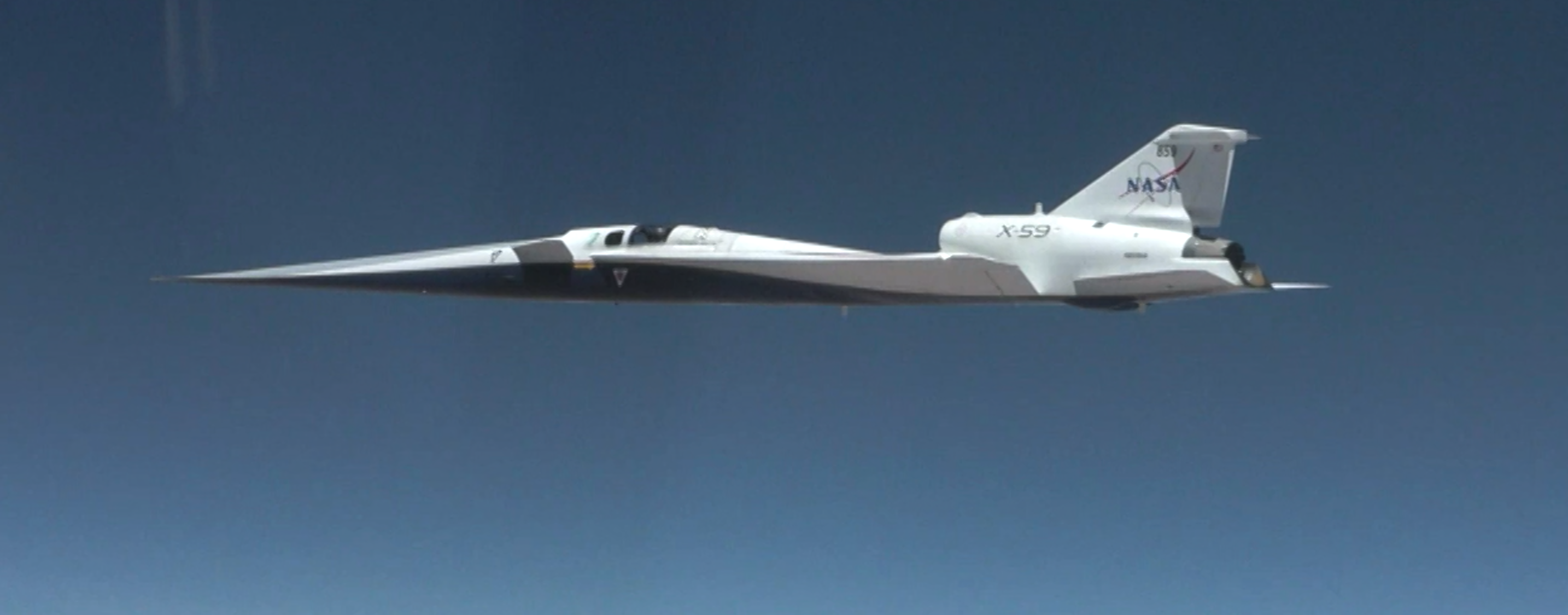
NASA’s X-59 Quesst experimental aircraft has successfully completed its first supersonic flight, marking a new era for commercial aviation by providing technologies that suppress the traditional loud sonic boom.
Developed at Lockheed Martin Skunk Works, X-59 aircraft officially completed its first supersonic test flight on Friday, June 5, 2026. Piloted by NASA test pilot Jim Clue Less, the aircraft took off and landed safely at Edwards Air Force Base in California.
Preliminary design work started in February 2016, with a plan of X-59 to be delivered to NASA in 2021 for flight testing in 2023. It is expected to cruise at Mach 1.42 (937 mph) at an altitude of 55,000 ft (16,800 m), creating a low 75 Perceived Level decibel (PLdB) thump to evaluate supersonic transport acceptability.
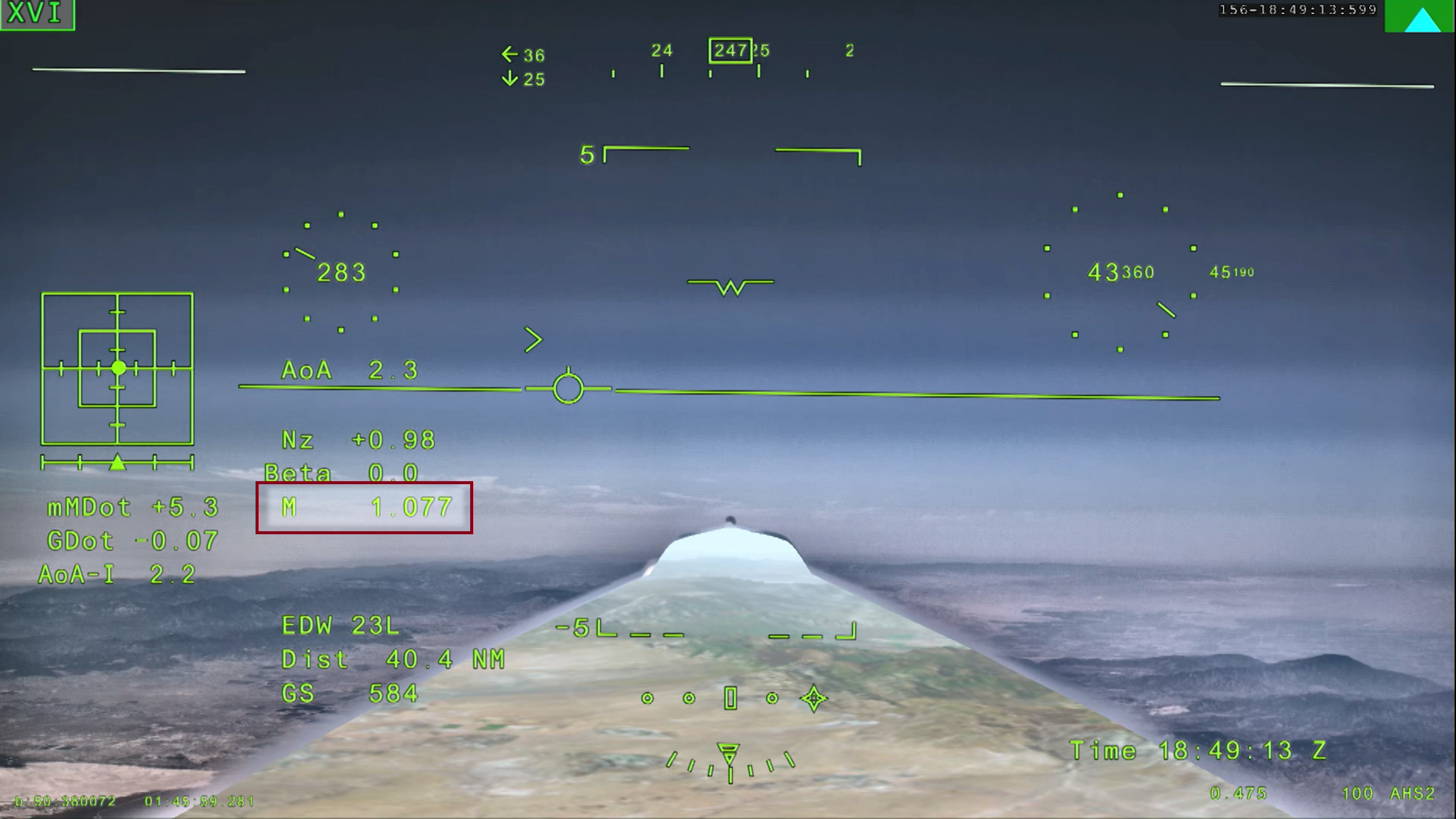
The latest test mission lasted approximately 81 minutes and reached a maximum speed of Mach 1.1 (about 713 mph or 1,147 km/h) while flying at an altitude of 43,400 feet (around 13.2 km).
For this case, although the cockpit display read Mach 1.07 (or 1.077) due to a system calibration phase, the true speed achieved was Mach 1.0. NASA will continue to fine tune these instrumentation readouts in upcoming flights.
The core objective of the X-59 Quesst mission is to prove that an aircraft can travel faster than sound without generating the rattling shockwaves that disturb communities on the ground.
The X-59 features a unique physical layout, measuring 99.7 feet (~30.4 m) in length with a slender wingspan of just 29.5 feet (~9 m). Because the nose of the plane is elongated and pointed to slice through the air, the pilot’s forward view is completely blocked. To solve this design challenge, engineers replaced the traditional glass cockpit windshield with the eXternal Vision System (XVS). This setup uses a high definition forward facing camera to stream imagery directly to a monitor in front of the pilot.
The combination of the stretched fuselage, specialized wings, and a top mounted General Electric F414-GE-100 engine (producing 22,000 lbf of thrust) prevents individual shockwaves from merging as they travel away from the aircraft.
Instead of producing a loud, thunderous sonic boom, the structural design spreads out the air pressure waves, reducing the ground noise to a gentle thump measured at 75 EPNdB—about the same volume as a car door closing.
The X-59 project is not just a new aircraft flight test; rather a part of an international effort to change global civil aviation laws.
Following the flight parameters of the Quesst mission, the aircraft is expected to make its first “mission conditions” flight, reaching a cruising speed of Mach 1.4 (925 mph) and altitude of approximately 55,000 feet.
The ultimate goal is to collect real world data on how people on the ground react to the quiet supersonic thump. This scientific data will be handed over to the Federal Aviation Administration (FAA) and the International Civil Aviation Organization (ICAO) to help regulators reconsider the ban on commercial overland supersonic flights, which has been enforced in the U.S. since 1973 due to noise pollution concerns. The related publication read as,
This speed and altitude are the base conditions for the X-59 when it will eventually fly over several U.S. communities enabling NASA to gather data about how people may perceive its quiet thump.
NASA will share this data with U.S. and international regulators to help establish new data-driven noise standards to enable a future viable market for supersonic commercial flight over land.
Read more........


.jpg)