
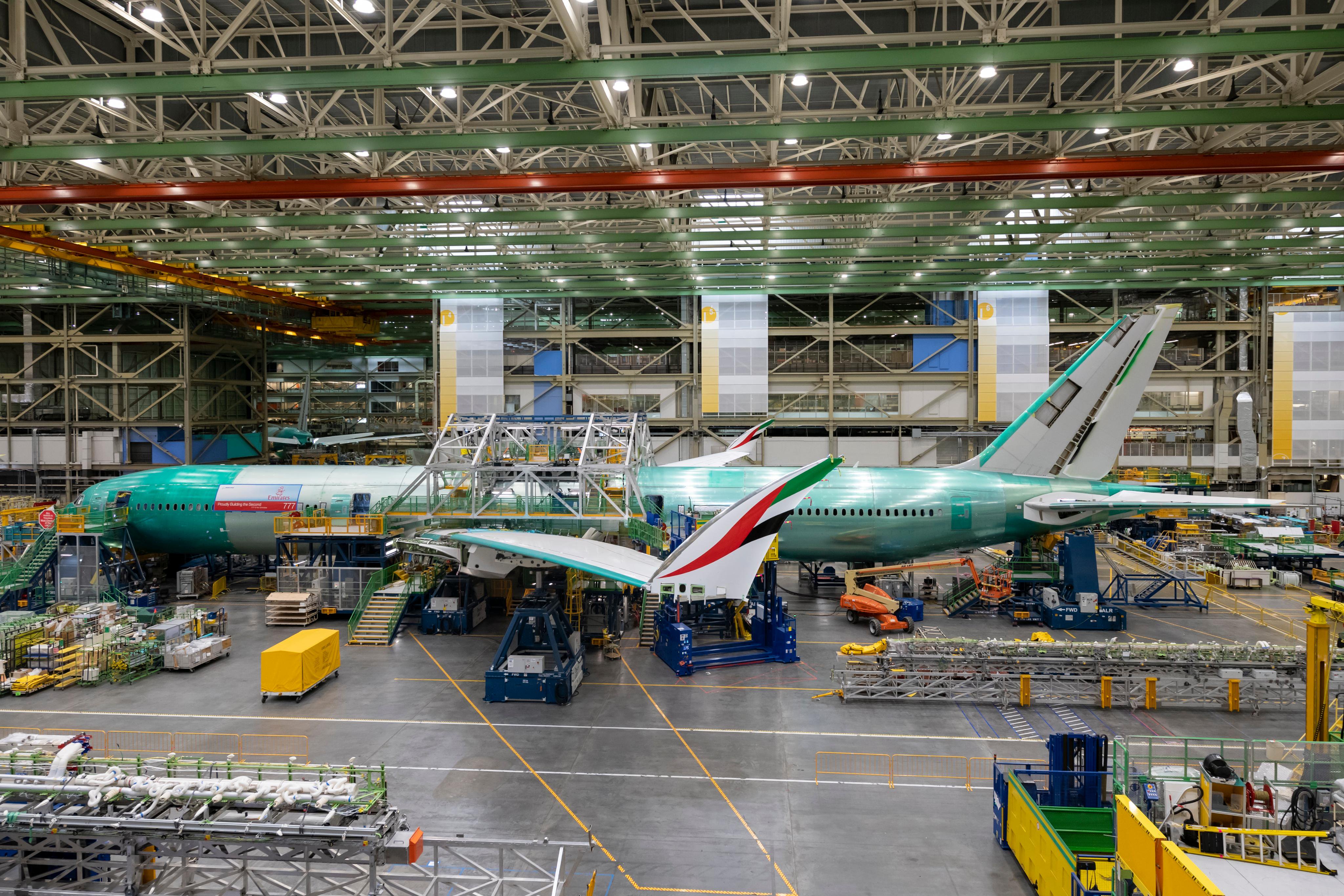
Emirates will reject the first 10 or 11 Boeing 777X aircraft built for the airline, citing their age and the extensive design modifications made during years of certification delays, Emirates President Sir Tim Clark said at the Farnborough International Airshow.
The decision represents another setback for Boeing's flagship widebody program, which has already slipped seven years behind schedule and has faced repeated technical and certification challenges.
Speaking to The Daily Telegraph, Clark said the aircraft—manufactured in 2019—had undergone so many changes during the prolonged development process that bringing them up to the final production standard would no longer be practical.
"We will not take them, definitively," Clark said.
He added that Boeing would be free to dispose of the aircraft as it sees fit, joking that they were "only fit for conversion into cans of cooked beans."
Despite rejecting the first aircraft, Clark emphasized that Emirates remains fully committed to the Boeing 777X program itself.
Emirates is by far the aircraft's largest customer, with 270 Boeing 777X aircraft on order, making the type central to the airline's long-term fleet renewal strategy.
According to Clark, the issue is not the aircraft's final design but the earliest production examples, which have accumulated years of engineering modifications while awaiting certification.
"The airplane has evolved considerably," Clark indicated, noting that retrofitting the earliest aircraft to the latest configuration would require extensive work that is no longer economically viable.
Originally launched as Boeing's next-generation widebody, the 777X was expected to enter commercial service in 2020.
Instead, certification has been repeatedly delayed as Boeing addressed a series of engineering and regulatory issues.
Among the major setbacks:
Collectively, these issues pushed first customer deliveries from 2020 to 2027, making the 777X one of the most delayed commercial aircraft programs in Boeing's history.
Clark also referenced Boeing's structural redesign work, saying the extent of engineering changes since the earliest aircraft were built has made those frames unsuitable for delivery.
His comments follow reports that Boeing dismantled one of the earliest 777X test aircraft in 2025 after it had remained parked for years near the company's Everett production facility. The move underscored the challenge of bringing older airframes into compliance with the latest production standard after years of design evolution.
Responding to questions at Farnborough, Stephanie Pope, President and CEO of Boeing Commercial Airplanes, said Boeing routinely evaluates whether upgrading early-built aircraft is economically justified.
She said the company continues balancing the cost of incorporating years of engineering changes against the operational benefits for customers, adding that Boeing will determine the most appropriate solution for both the manufacturer and its airline customers.
The 777X remains Boeing's largest twin-engine passenger aircraft and the successor to the highly successful 777-300ER.
Powered by GE Aerospace's GE9X engines and featuring an all-new composite wing with folding wingtips, the aircraft is designed to reduce fuel consumption by around 10% compared with previous-generation widebodies while carrying more than 400 passengers, depending on configuration.
For Boeing, certification and entry into service of the 777X are considered critical milestones as the manufacturer works to stabilize production, restore customer confidence, and compete more effectively against Airbus' A350 family.
While Emirates' rejection of the first batch does not affect its long-term commitment to the program, it highlights the lasting consequences of the aircraft's prolonged development, leaving Boeing to determine the future of some of its earliest-built 777X airframes.
Read more......

.jpg)