
Six Key Highlights: Volotea–Aegean Airlines
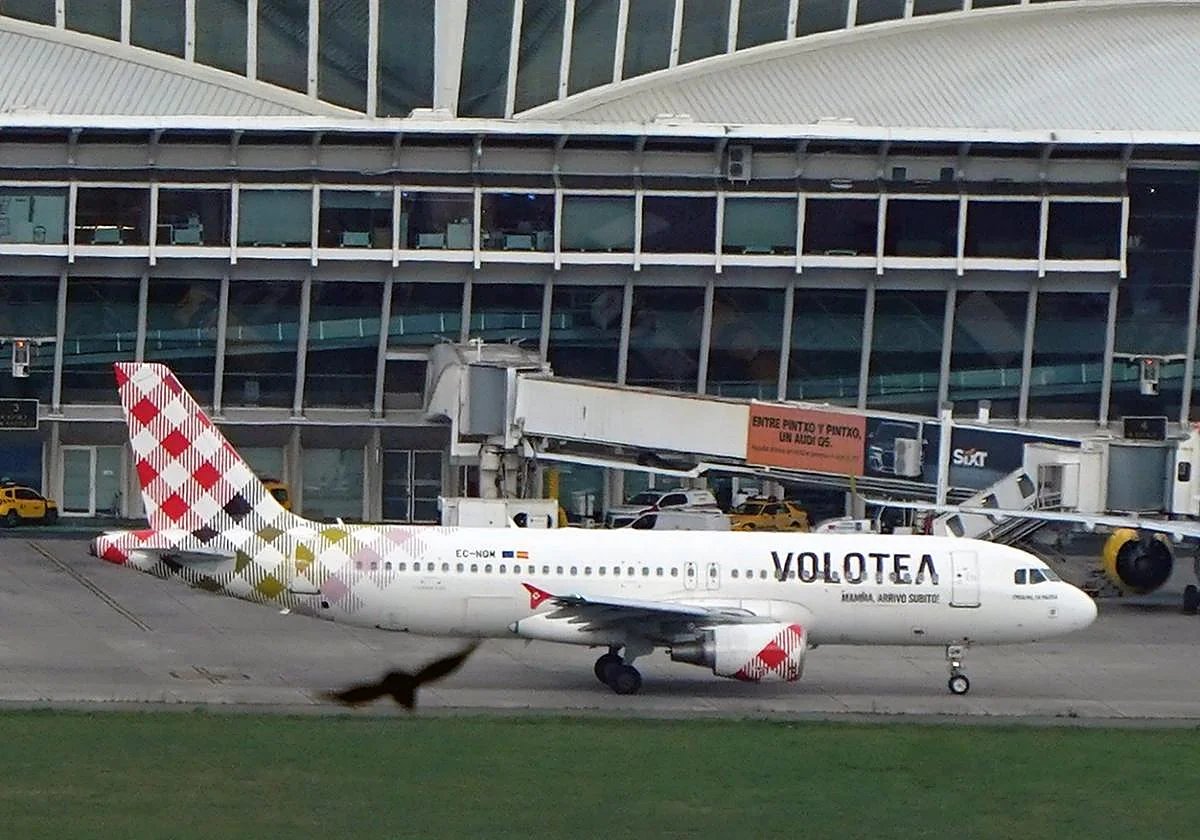
Volotea’s financial restructuring is entering a critical phase as rising fuel costs, debt negotiations and planned operational cuts put pressure on the Spanish low-cost carrier. At the same time, its strategic partner and shareholder, Aegean Airlines, has appointed a new chief executive after two decades under Dimitris Gerogiannis. The leadership transition comes amid reports that Aegean could take control of Volotea through a debt-to-equity restructuring—although the Greek airline has publicly denied seeking a majority stake.
The developments raise important questions about Volotea’s future ownership, its regional European network and the balance of power between the airline’s founders and its financial backers. While a takeover has not been confirmed, Aegean’s growing financial involvement makes the restructuring one of the most consequential developments in Volotea’s recent history.
The first major development came on October 12, 2026, when Aegean Airlines announced that Michalis Kouveliotis would replace Dimitris Gerogiannis as chief executive officer, effective immediately.
Gerogiannis had led the Greek airline for approximately 20 years and was among the company's founding executives. He will remain involved as an adviser, overseeing the development of Aegean's technical base and training centre. The transition represents a generational shift at the top of Greece's largest airline.
Kouveliotis brings extensive financial and corporate experience to the position. He served as Aegean's chief financial officer before its listing on the Athens Stock Exchange and became deputy CEO in early 2025 as part of the succession process.
His appointment comes at a particularly sensitive moment for the airline, which is navigating higher operating costs and disruption to some Middle Eastern routes while expanding its strategic involvement in Volotea.
The timing has attracted attention because Aegean is reportedly involved in negotiations that could significantly change Volotea's ownership structure.
However, there is no established evidence that Kouveliotis's appointment was made specifically to facilitate a takeover of Volotea. The leadership change and the restructuring negotiations are concurrent developments, and any direct connection between them remains unproven.
The relationship between the two airlines has evolved from commercial cooperation into a substantial financial partnership.
Aegean and Volotea established a codeshare partnership in 2021, enabling them to expand their commercial reach and offer passengers additional travel connections.
Their networks are complementary in important respects. Aegean has a strong presence in Greece and operates an extensive network through Athens, while Volotea specialises in connecting small and medium-sized European cities, including destinations in France, Italy and Spain.
The partnership offered both airlines an opportunity to improve connectivity without necessarily duplicating their existing routes.
On September 3, 2024, Volotea announced a capital-strengthening programme of up to €100 million, with Aegean joining its investor base.
The initial financing tranche amounted to €50 million, of which Aegean committed €25 million. The arrangement gave the Greek airline a potential 13% stake through the conversion of its financing into shares.
A second tranche of up to €50 million was also envisaged, potentially increasing Aegean's ownership to 21% if the financing was completed and converted.
The agreement also formalised a commercial joint venture and expanded the airlines' existing codeshare cooperation.
At the time, the investment was presented as a way to strengthen Volotea's finances and support its development, rather than as an outright acquisition.
The capital-raising programme continued with additional backing from existing investors, including Aegean and US investment firm PAR Capital.
By October 2025, Volotea reported that the cumulative financing raised under the programme had reached €56 million.
The investment helped reinforce the company's capital position, but it did not eliminate the longer-term challenges associated with its debt and exposure to volatile operating costs.
On March 26, 2026, Volotea announced that it had completed a €71 million capital increase, concluding the financing process initiated in 2024.
The participants included Aegean Airlines, PAR Capital and Alaeo, the investment vehicle representing members of Volotea's management team.
Volotea confirmed that Aegean's holding had risen above 20%.
The Spanish airline also reported that it carried approximately 11.2 million passengers in 2025 and was planning to expand its network to around 430 routes during 2026.
At that stage, Volotea presented the financing as a milestone that would allow it to concentrate on growth and network development.
The subsequent deterioration in its financial outlook, however, has changed the context of Aegean's investment.
By September 2026, the Spanish carrier was negotiating with creditors over a restructuring plan intended to strengthen its financial position and secure the continuity of its operations.
According to reporting by Cinco Días and AeroTime, the proposed measures include reducing the fleet from 44 aircraft to approximately 30–35 and cutting around 50 positions at the company's Barcelona headquarters.
Volotea is also negotiating changes to its debt repayment arrangements with creditors, including Spain's state-owned industrial holding company, SEPI.
Several factors have contributed to the pressure.
Higher fuel prices have increased operating expenses at a time when airlines across Europe are already facing competitive pricing and pressure on profit margins.
Volotea has attributed a significant part of its difficulties to the fuel-price crisis associated with the conflict in the Middle East.
According to AeroTime's September 24 report, the company estimated the annual impact at approximately €150 million.
For an airline that recorded operating earnings before interest and taxes (EBIT) of €47.4 million in 2025, an increase of that magnitude would represent a substantial financial challenge.
In 2022, Volotea received a €200 million loan from SEPI to help it withstand the impact of the COVID-19 crisis.
The repayment date had already been extended to 2029, but the company is now seeking further adjustments to its repayment schedule.
Restructuring the debt could ease immediate cash-flow pressures, although it would not necessarily resolve the underlying issue of long-term profitability.
Reducing the fleet from 44 aircraft to between 30 and 35 would represent a substantial change in Volotea's operating model.
Depending on how the cuts are implemented, the airline could need to reduce frequencies, suspend certain seasonal operations or reconsider the deployment of aircraft across its network.
The precise bases and routes affected have not been fully identified in the reporting cited above.
For passengers and airports that depend on Volotea's direct connections, the restructuring therefore creates uncertainty about future capacity.
Nevertheless, the proposed reductions should not be interpreted as confirmation that the airline is ceasing operations or abandoning its regional-market strategy.
The most consequential question concerns whether Aegean could emerge from the restructuring as Volotea's controlling shareholder.
A report published by aviation industry outlet Aviacionline on September 18 described a possible transaction involving the conversion of approximately €56 million in debt into equity and a further €15 million capital increase.
Under the reported arrangement, Aegean would contribute approximately €9.5 million to the new capital injection.
The proposal would go beyond a conventional cash acquisition. Instead, the conversion of existing financing into shares and the restructuring of the ownership arrangements could allow Aegean to obtain control with a comparatively limited additional cash contribution.
The report also described a possible holding-company structure through which control of Volotea could be consolidated.
However, the proposal was reported as a transaction under discussion, with negotiations involving lenders and the necessary administrative authorisations still outstanding. Volotea had not confirmed the reported takeover arrangement.
There is an important qualification to the takeover narrative.
On October 3, Kathimerini reported that Aegean had explicitly denied proposing to acquire a majority stake in Volotea or take control of its management.
The Greek airline also said that Volotea, as a private company, was responsible for communicating information about its ownership, operations and future plans.
This denial means the reported transaction cannot be presented as an agreed or confirmed takeover.
The distinction is particularly important because Aegean already owns more than 20% of Volotea, giving it a substantial financial interest in the Spanish carrier without necessarily conferring management control.
The latest reports published on October 17 continue to discuss the possibility of a change in ownership, but the outcome remains unresolved.
If Aegean eventually secures control, the implications could extend beyond the company's shareholder structure.
Volotea was founded in 2011 by Carlos Muñoz and Lázaro Ros, who had previously founded Vueling.
Its business model centres on connecting smaller and medium-sized European cities through direct services, frequently avoiding the major hubs used by larger network airlines.
Under new controlling ownership, the company could face a reassessment of its route network, aircraft deployment, investment priorities and financial strategy.
Aegean might seek to preserve Volotea's distinctive regional network while integrating its commercial planning more closely with its own operations.
That would be consistent with the rationale behind their existing partnership, although any specific integration plans would depend on the terms of a final agreement.
Volotea's management team, led by founder and CEO Carlos Muñoz, has remained an important part of the company's shareholder structure.
A transaction that transfers control to Aegean could reduce the founders' influence over major corporate decisions.
Nevertheless, the extent of any change would depend on the final ownership percentages, governance arrangements and the roles retained by existing shareholders.
It would be premature to assume that the founders would leave the company or that Aegean would immediately replace Volotea's management.
Aegean's involvement could provide Volotea with a more stable ownership structure and a partner with an established position in the European aviation market.
However, a takeover would also expose Aegean more directly to Volotea's debt obligations, restructuring requirements and operational challenges.
The question is not simply whether Aegean can provide additional capital, but whether the combined businesses can generate sufficient returns to justify the investment.
That challenge is particularly relevant while Aegean is also dealing with higher fuel costs and disruption affecting some of its own markets.
Kouveliotis's appointment is noteworthy because of his long experience in finance and corporate management.
As former CFO and deputy CEO, he has been involved in Aegean's financial and operational decision-making for years. His appointment therefore provides continuity within the airline's existing leadership structure rather than introducing an entirely external executive.
His financial background may be relevant as Aegean evaluates its investment commitments, capital allocation and exposure to Volotea.
However, there is no verified evidence that his appointment signals a decision to acquire Volotea.
The leadership transition should instead be understood as part of Aegean's own succession process, taking place alongside a separate and still-unresolved restructuring situation at its Spanish partner.
For investors and industry observers, the central issue will be whether Aegean's existing shareholding evolves into a controlling position, and whether the new leadership supports any such transaction.
The Volotea situation illustrates a broader challenge for European aviation: an airline can expand its network and improve its operating performance while remaining financially vulnerable to external shocks.
Volotea's reported 2025 EBIT of €47.4 million demonstrates that its operations generated a positive operating result. Yet operating earnings alone do not determine whether a business can meet its debt obligations, finance its fleet and withstand sudden increases in costs.
The company's restructuring therefore involves more than cutting expenses. It requires a sustainable balance between fleet size, route profitability, financing costs and access to capital.
For Aegean, the situation presents a strategic choice between maintaining a significant minority investment and potentially taking on a more direct role in Volotea's future.
For airports and passengers, the immediate concern is whether Volotea can preserve the regional connections that distinguish its business model.
Any eventual change of control would also need to be assessed in light of the relevant regulatory requirements and the interests of Volotea's existing creditors and shareholders.
As of October 17, 2026, Volotea is confronting a difficult combination of rising fuel costs, debt negotiations and planned fleet and staffing reductions. Its existing financial relationship with Aegean has become increasingly important as it seeks to strengthen its capital position.
Aegean's appointment of Michalis Kouveliotis as CEO adds a significant development to the story, bringing a finance-focused executive to the top of the Greek airline during a period of strategic uncertainty.
Nevertheless, the key distinction is between a reported takeover scenario and a confirmed change of control. Aegean already holds more than 20% of Volotea, and reports describe a potential restructuring that could increase its influence. But Aegean has denied proposing to acquire a majority stake, and no completed takeover has been established by the sources cited here.
The next decisive developments will be the outcome of Volotea's negotiations with its creditors, the final structure of any capital restructuring and whether the company's shareholders agree to changes that would transfer control.
Until those questions are resolved, Volotea's future ownership remains uncertain. What is clear is that the airline's financial restructuring could reshape its position in the European regional aviation market—and that Aegean, regardless of the final outcome, has become a central player in that process.
FL360aero note: This article distinguishes confirmed corporate announcements from reported transaction proposals. The potential takeover should remain described as unconfirmed unless the companies announce an agreement or reliable subsequent reporting establishes that control has changed hands.

.jpg)