
Russia's state-owned defense conglomerate Rostec is preparing to consolidate several aviation companies into a single holding structure, a move Ukrainian intelligence says reflects mounting structural problems within the country's civil aviation industry rather than a genuine operational reform.
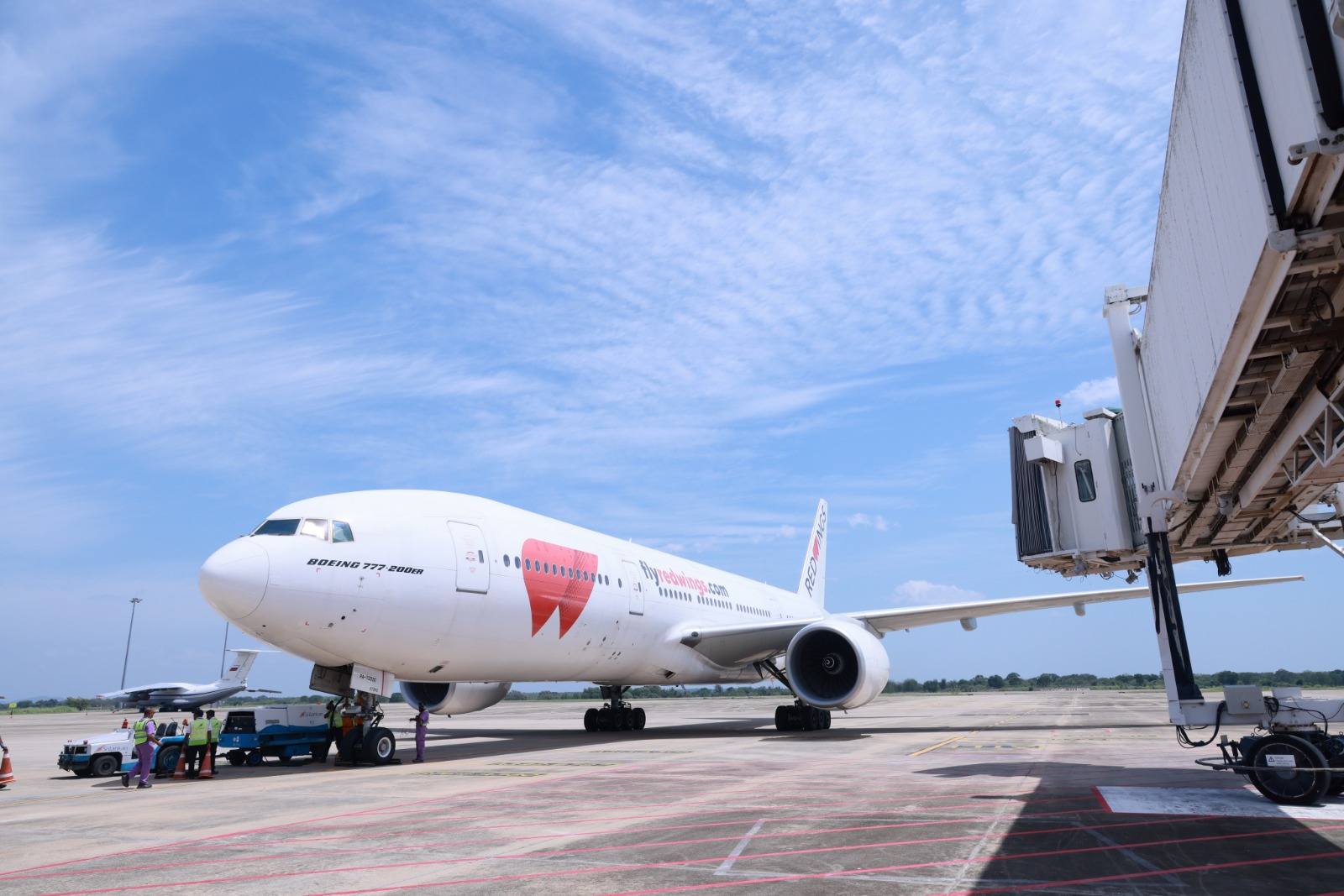
According to an assessment released on July 26 by Ukraine's Foreign Intelligence Service (SZRU), the proposed holding company will combine passenger carrier Red Wings Airlines, cargo operator SkyGates, medical aviation services, and aircraft leasing company Aviakapital-Service under the management of Ilyushin Finance Co.
The russian state-owned corporation “rostec” is preparing yet another paper reform for its own aviation empire, which has long been propped up by borrowed engines, outdated Boeing aircraft, and a shortage of personnel. The corporation’s management plans to bring the passenger carrier “red wings”, the cargo operator “skygates,” medical aviation, and the leasing entity “aviacapital-service” under one roof, entrusting management to “ilyushin finance co”.
Formally, this is presented as centralization and a unified maintenance system. In reality, this is an attempt to hide the bankruptcy of individual assets within the holding company’s consolidated financial statements.
Russian officials have described the restructuring as an effort to centralize management, streamline operations, and establish a unified aircraft maintenance system. However, the SZRU argues the merger is primarily intended to consolidate the financial reporting of struggling businesses, masking the deteriorating condition of individual companies instead of addressing the industry's underlying problems.
According to Kommersant, Rostec plans to merge its airlines—passenger Red Wings, cargo carrier SkyGates, air ambulance operator NSSA—and other entities into a single holding company. It published as,
Rostec confirmed to Kommersant that the consolidation of assets "into a single holding company is being discussed at the corporate level," and clarified that the new merger's parent structure and management will be determined by a board decision following the strategy's approval. "The goals of the merger are to streamline the management of air transport and operational assets, as well as to establish a centralized system for after-sales service and repair of aircraft and helicopters, and to train personnel in the commercial passenger, cargo, and medical aviation sectors," the corporation explained. It added that it was "extremely premature" to discuss the specific parameters of the holding company's structure.
The planned merger comes as Russia's commercial aviation industry continues to grapple with the long-term consequences of Western sanctions imposed following the country's invasion of Ukraine.
Sanctions have significantly limited Russian airlines' access to Western-built aircraft parts, maintenance support, software updates, and replacement engines. Although Russian operators have continued flying largely through domestic maintenance programs and alternative supply channels, maintaining fleets of Boeing and Airbus aircraft has become increasingly complex.
According to the SZRU, these pressures are becoming increasingly visible within Rostec's aviation assets.
The intelligence agency reports that Red Wings has experienced growing operational difficulties. Of its three Boeing 777 aircraft, only one is currently flying scheduled services, while a second remains on standby and the third is effectively inactive. The agency also cited management disputes and the departure of experienced personnel as contributing factors affecting the airline's performance.
Cargo operator SkyGates is reportedly facing similar constraints. The airline is said to be struggling with shortages of aircraft engines and spare parts, extended repair timelines, and an aging fleet that has become progressively more difficult to keep operational.
From Moscow's perspective, consolidating several aviation businesses under one management structure could simplify procurement, maintenance planning, and financial oversight.
However, the SZRU contends the primary benefit is accounting rather than operational.
By combining multiple companies into a single holding, financial losses at one subsidiary could potentially be offset by stronger performance elsewhere, creating a more stable consolidated balance sheet while allowing aircraft, spare parts, technicians, and funding to be redistributed among affiliated operators.
According to the intelligence assessment, the restructuring does not create additional aircraft, increase engine availability, or solve the shortage of experienced maintenance personnel.
As the SZRU stated:
"No reorganization scheme will restore Western component supplies to Russia, accelerate serial production of domestic aircraft, or stop the outflow of personnel exhausted by years of emergency decision-making."
Whether or not the SZRU's assessment fully reflects Rostec's intentions, many of the structural challenges it identifies have been widely documented since 2022.
Russia's aviation industry has faced several persistent obstacles:
While Russian authorities have promoted import substitution and expanded domestic aerospace manufacturing, replacing decades of reliance on Western aircraft and supply chains has proven significantly more difficult than anticipated.
The announcement also comes amid reports that Russia's civilian aviation sector is increasingly supporting military logistics.
Earlier this year, Dallas Analytics reported that Russian authorities had expanded the use of civilian airlines and commercial aircraft to transport troops, military equipment, and cargo as the country's dedicated military transport fleet struggled with maintenance challenges and aircraft availability. The report also highlighted the growing use of dual-purpose airports and commercial operators to sustain military logistics.
If civilian airlines are increasingly supporting defense requirements while simultaneously managing aging commercial fleets under sanctions, pressure on aircraft utilization, maintenance resources, and personnel is likely to intensify.
The claims regarding the purpose of the proposed airline merger and the operational condition of Red Wings and SkyGates originate from Ukraine's Foreign Intelligence Service and have not been independently verified. Russian authorities have publicly characterized the restructuring as an operational reform designed to improve management efficiency and aircraft maintenance coordination.
If implemented, the consolidation would represent one of the most significant reorganizations of Rostec's civil aviation assets in recent years and could provide further insight into how Russia intends to manage an aviation sector operating under prolonged sanctions and continuing supply chain constraints.
Corporate restructurings are common across the aviation industry and are not, by themselves, evidence of financial distress. Airlines frequently merge subsidiaries to reduce administrative costs, improve efficiency, or simplify management.
However, the timing of Rostec's proposed consolidation raises broader questions about the resilience of Russia's civil aviation sector.
The industry's core constraints remain largely unchanged: restricted access to Western technology, slow progress in domestic aircraft production, an aging fleet, and shortages of skilled personnel. A holding company may improve resource allocation and financial oversight, but it cannot manufacture additional aircraft, produce certified engines overnight, or replace international supply chains.
It is also important to note that the claims regarding the motivations behind the restructuring and the operational status of individual airlines originate from Ukraine's Foreign Intelligence Service. While many of the broader challenges facing Russian aviation have been independently documented, the specific assessment of Rostec's internal strategy has not been publicly confirmed by Russian authorities.
If the merger proceeds as planned, it is likely to provide insight into how Russia intends to manage a civil aviation sector operating under prolonged sanctions and continuing pressure on both its commercial and state-owned aviation assets.
You may like to read......

.jpg)