
Taiwan’s three major full-service airlines are moving to stop displaying employees’ complete Mandarin names on frontline work badges, following a campaign by aviation labor unions over concerns that publicly identifying workers could expose them to harassment, doxxing, stalking and other personal-safety risks.
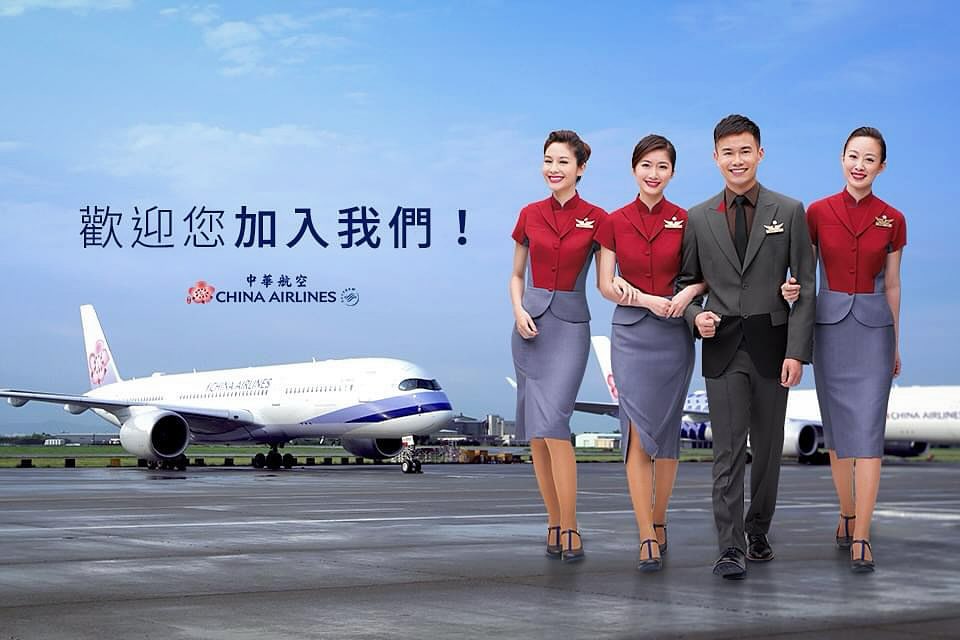
China Airlines, EVA Air and Starlux Airlines have all agreed to change their badge policies, prompting the Taoyuan Flight Attendants Union and other aviation unions to cancel a planned Sept. 18 news conference at Taiwan’s Ministry of Labor. The unions had been calling on national airlines to stop requiring frontline employees to display their full names.
The campaign began Aug. 17, when the Taoyuan Flight Attendants Union and other aviation labor organizations launched a survey and petition focused on frontline employees’ work badges and personal privacy. The union said it received 3,713 responses through Aug. 31.
Among respondents, 39.4% said they had experienced searching, private messages, following or harassment after their real names were disclosed, while 98.3% supported reforming work badges to avoid displaying full names.
Another 92.9% said they worried passengers could use their real names to locate private information.
The issue extends beyond aviation. The unions say that displaying a worker’s full name can make it easier for members of the public to locate private social-media accounts or other personal information. Reported problems have included unwanted contact, unauthorized photography, online exposure or public shaming, threats, and stalking. Similar privacy and safety concerns have arisen in sectors such as postal services, banking, restaurants, and rail transportation.
The unions have also pointed to cases involving other frontline workers. In one example cited in coverage of the campaign, a postal employee’s name was photographed and posted online in connection with comments about the employee’s appearance. The unions have also raised concerns about fraudsters impersonating postal counter staff by using workers’ identities to deceive members of the public.
China Airlines announced on Aug. 26 that it would remove employees’ full Mandarin names from frontline service badges beginning in March 2027, with replacement badges issued in stages. Under the new format, badges will show a Mandarin and English surname, together with either an abbreviated English given name or a foreign-language alias. Mandarin Airlines, a China Airlines subsidiary, will follow the same arrangement.
EVA Air announced on Sept. 17 that it would issue replacement badges during the first half of 2027. The new badges are expected to show either a Mandarin or English surname together with an employee identification number, rather than the employee’s complete name.
Starlux notified its enterprise union on Sept. 2 that it had agreed to revise its badge format, although the airline was still finalizing the details at that point. According to the union and subsequent reporting, Starlux plans to use flight attendants’ English aliases alongside their Mandarin surnames, without displaying their Mandarin given names, with replacement badges to be introduced gradually from 2027.
The three airlines are therefore moving toward the same basic principle — eliminating the public display of a worker’s complete name — but their replacement formats differ.
The change follows an earlier move by Tigerair Taiwan. In January, the airline announced that frontline employees could voluntarily apply for redesigned work identification cards or badges that removed their Mandarin surname and used an English alias instead. The option took effect Feb. 1.
The union had previously urged other Taiwanese airlines to adopt similar measures, arguing that employees should be identifiable for legitimate service purposes without necessarily exposing their complete legal names to passengers.
The debate reflects a broader question for customer-facing industries: how much personal information does an employee need to reveal to remain accountable to customers?
Taiwan’s Ministry of Labor said Sept. 18 that service-identification systems should balance service quality with worker protection and avoid exposing unnecessary personal information that could increase the risk of harassment or threats.
The ministry said cabin crew can face risks including passenger stalking, harassment, threats, and sexual harassment while performing their duties. It said employers have obligations under Taiwan’s occupational-safety and gender-equality laws to take preventive measures and provide necessary support and protection when such incidents become known.
The ministry also said employers can review badge systems with unions and workers and adopt measures that reduce the degree of personal identification while maintaining service accountability.
A shift in frontline-worker identification
The developments mark a significant change in how some of Taiwan’s largest airlines balance employee identification with privacy.
For decades, full names on badges served a straightforward customer-service purpose: passengers could identify individual employees when making compliments or complaints. But unions argue that the widespread use of social media has changed the risk associated with displaying a worker’s real name in public.
Their proposed alternative is not to eliminate identification altogether, but to reduce the amount of personally identifying information displayed to passengers through surnames, abbreviated names, aliases, or employee numbers.
The unions are now calling on other transportation and service companies to reconsider similar practices. Taiwan’s Labor Ministry has indicated that worker privacy and safety should be considered alongside the need for service accountability.
For Taiwan’s airline industry, the transition will unfold mainly in 2027, when the new badges are scheduled to begin replacing existing designs at China Airlines, EVA Air and Starlux.

(1).jpg)