
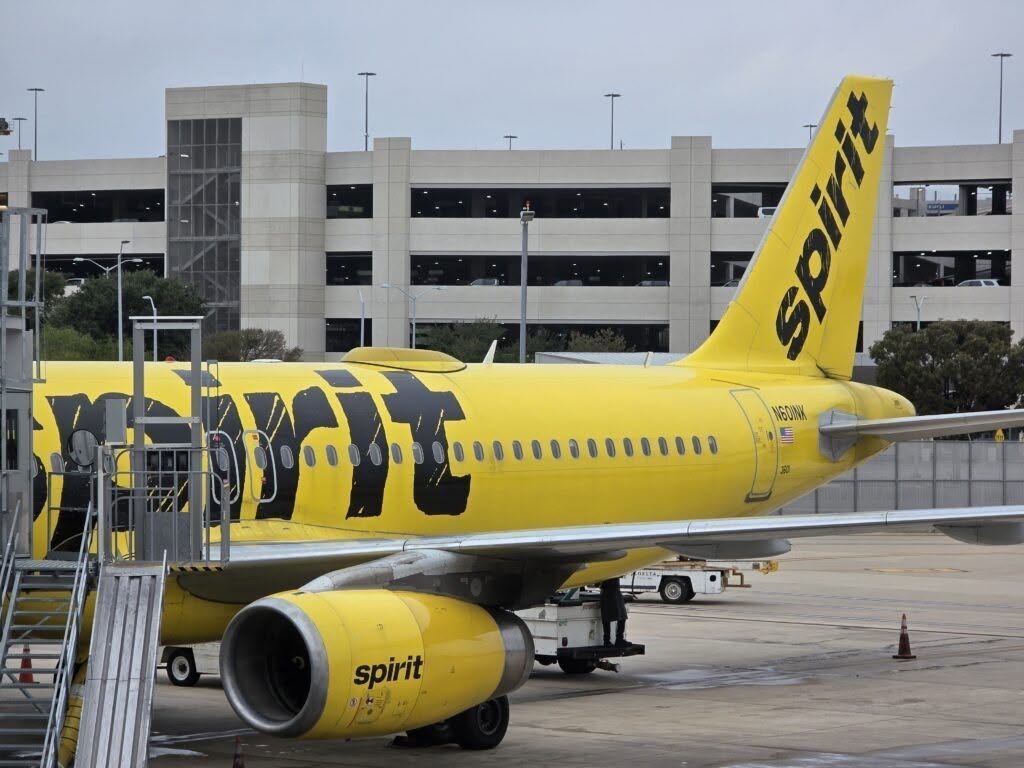
Google’s proposed $10 million purchase of Spirit Airlines’ deidentified business data has cleared an important privacy hurdle after a court-appointed consumer privacy ombudsman recommended that the bankruptcy court approve the transaction.
Lucy L. Thomson, the consumer privacy ombudsman overseeing the case, said Spirit Airlines and Google had taken significant steps to reduce the privacy risks associated with the data sale. The recommendation comes ahead of a U.S. Bankruptcy Court hearing scheduled for October 14, when the court will ultimately decide whether the transaction can proceed.
The deal has nevertheless become controversial because unions representing former Spirit employees argue that the proposed protections do not adequately address the confidentiality of employee information, including records connected to aviation safety and training.
Google emerged as the successful bidder in Spirit’s bankruptcy auction for its deidentified enterprise data, offering $10 million.
The data package is separate from Spirit’s passenger database and includes large volumes of corporate and operational information generated during the airline’s years of operation. Earlier court filings described material including emails, Microsoft Teams messages, calendars, documents, business systems, workflow information, software and operational records.
Google has said the data could help it improve its products and artificial-intelligence models. The company has also maintained that it will not receive personally identifiable information from Spirit.
The original auction process identified AI data and recruiting company Mercor as the alternate bidder with a $7.5 million offer. Later, AI training company Micro1 indicated that it wanted to submit a competing and potentially superior bid.
Privacy concerns became a major issue because some Spirit enterprise systems could contain information connected to passengers.
In an earlier report, Thomson warned that deidentified information can still present risks if individuals are reidentified or if artificial intelligence combines information from multiple sources to infer details about individuals. The report noted that Spirit had data associated with more than 97 million passengers.
Since then, Spirit and Google have narrowed the scope of the proposed transaction.
The revised arrangement excludes passenger databases, while Tonic.ai, an independent third party specializing in data de-identification, has been brought in to process information that could contain personal details. The ombudsman said these measures significantly reduce the potential risk of harm to consumers who had provided their information to Spirit while booking flights.
The parties have also agreed to use an updated de-identification standard and additional protections covering verification and certification, transparency, restrictions on attempts to reidentify individuals, protections for children and teenagers, and security within the AI-training environment.
Thomson ultimately concluded that the changes had eliminated or mitigated the identified privacy risks sufficiently to recommend approval of the sale.
The ombudsman’s recommendation has not ended opposition to the transaction.
The Association of Flight Attendants-CWA, which represented Spirit cabin crew, has objected to the sale, arguing that de-identification does not necessarily eliminate the confidentiality concerns surrounding employee records.
The pilots’ union has also raised objections. The Allied Pilots Association, which represents American Airlines pilots and includes roughly 700 former Spirit pilots, has argued that the sale could affect aviation safety by exposing confidential information connected to employee training and safety programs.
The distinction is significant because Thomson’s privacy review was conducted under the bankruptcy provisions governing consumer privacy. Her assessment did not determine whether the transaction adequately protects the privacy or confidentiality of Spirit employees.
That leaves a separate dispute over whether employee information contained in Spirit’s corporate records should be transferred to Google even after personal identifiers are removed.
The controversy follows the dramatic end of Spirit Airlines’ operations.
Spirit began an orderly wind-down on May 2, 2026, cancelling all flights after efforts to restructure the airline and secure additional funding failed. The company cited higher oil prices and other financial pressures as factors behind the decision.
With the airline no longer operating, its bankruptcy estate has been selling assets to generate value for creditors. The data auction illustrates a new aspect of modern airline bankruptcies: a carrier’s digital infrastructure, internal communications and operational records can themselves become valuable assets to technology companies developing artificial intelligence.
Google’s $10 million offer therefore represents more than the sale of old corporate files. It highlights the growing commercial value of historical operational data generated by airlines and other large companies.
The Google transaction is not necessarily the only possible outcome.
Court documents identify Mercor as the alternate bidder from the original auction, while Micro1 subsequently indicated an interest in making a competing bid. Thomson has said that if either company becomes the proposed buyer, additional privacy analysis would be required.
The ombudsman specifically noted that further information would be required concerning a supply-chain security incident involving Mercor earlier in 2026 before she could complete an assessment if Mercor were to become the successful bidder.
Micro1 has also proposed its own privacy measures, according to reports, underscoring how the Spirit case has become part of a broader competition among AI companies for large, real-world datasets.
Despite the privacy ombudsman’s favorable recommendation, Google does not yet own the data. The proposed sale remains subject to approval by the U.S. Bankruptcy Court for the Southern District of New York.
The next major step is the October 14 hearing, where the court is expected to consider the sale and the objections raised by employee unions and other parties.
The case could become an important precedent for future corporate bankruptcies in which valuable business datasets are sold to AI companies. It also raises a broader question for the aviation industry: when an airline disappears, what happens to decades of operational, employee and passenger-related data that was originally collected for purposes completely unrelated to artificial intelligence?
For Spirit Airlines, the answer could soon be decided in bankruptcy court—with Google waiting to turn part of the carrier’s digital legacy into an AI resource.
You may like to read......


(1).jpg)