
The preliminary report of the ongoing investigation into the Air India flight AI 171, even though gives an indication of the direction the probe may be headed in, has raised many questions in stead of answering the grieving families.
The late night report from the Aircraft Accident Investigation Bureau (AAIB), has published the most probable primary cause of the accident that the engines being starved of fuel with the transitioning of the fuel control switches from ‘RUN’ to ‘CUTOFF’ position within a second of each other moments after lift-off.
The Aircraft Accident Investigation Bureau (AAIB) has released its preliminary report into last month’s crash of Air India Flight AI171 in Ahmedabad, emphasizing that the investigation’s sole objective is to prevent future accidents and not to apportion blame or liability.
The report, prepared under Annex 13 of the International Civil Aviation Organization (ICAO) and India’s Aircraft (Investigation of Accidents and Incidents) Rules, 2017, notes that the findings are based on early evidence and remain subject to change.
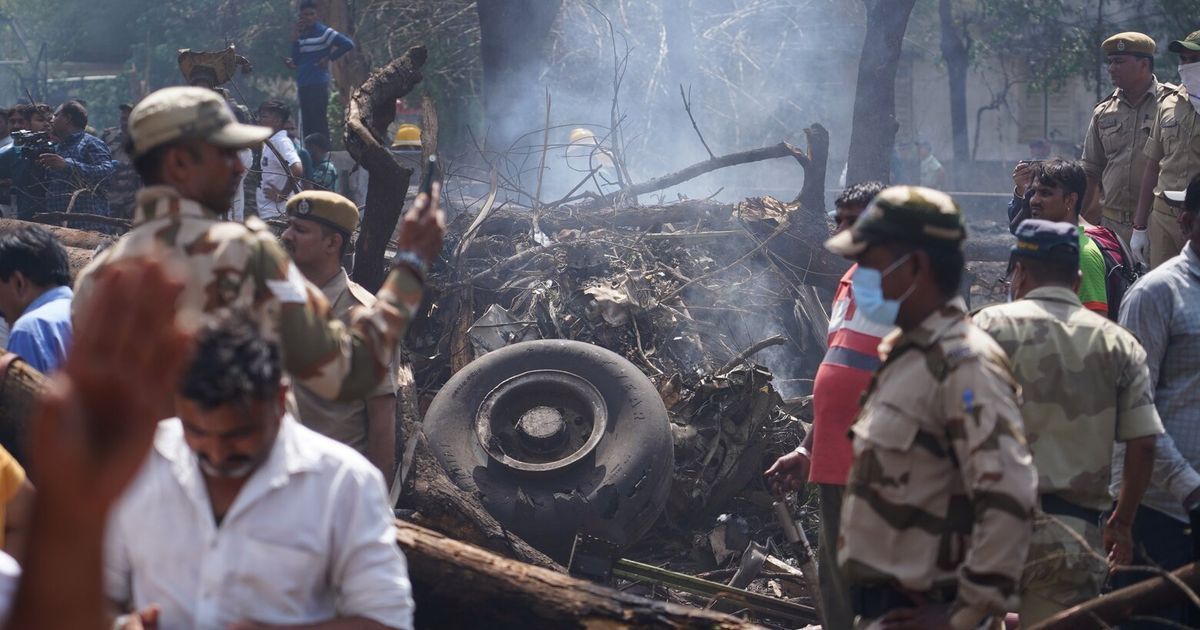
On June 12, the Boeing 787-8 Dreamliner operating as AI171 from Ahmedabad to London Gatwick crashed shortly after takeoff, killing more than 270 people, including international passengers and college students. Only one person survived the crash, which has become one of the deadliest aviation accidents in India in recent years.
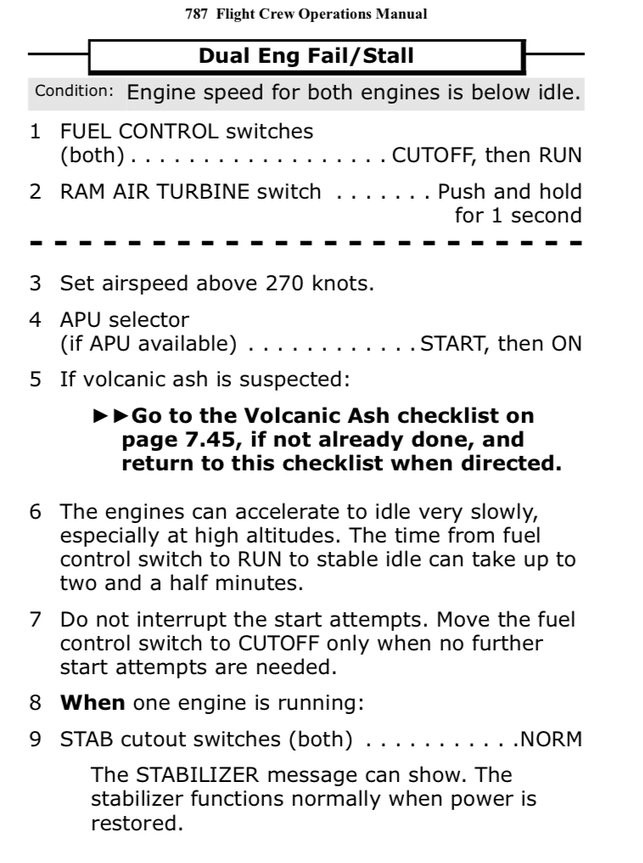
According to the preliminary findings, the aircraft suffered a catastrophic loss of power seconds after becoming airborne. Both engines reportedly shut down within 32 seconds of takeoff after the engine fuel control switches transitioned from RUN to CUTOFF position one after another, cutting the fuel supply and leading to an unrecoverable stall.
Cockpit voice recordings captured an immediate exchange between the two pilots. One asked, “Why did you cutoff?” and the other responded, “I didn’t”.
The engines shut down mid-air, activating the Ram Air Turbine (RAT)—a last-resort system designed to provide emergency power when both engines fail. CCTV footage from the crash site confirmed the turbine’s deployment.
The AAIB noted that the investigation is focused on gathering and analyzing data to understand why the switches were turned off and how such a sequence could occur during a critical phase of flight.
The above action in the cockpit suggests that there was an attempt to restart the engines, but it was not successfull to prevent the crash.
Critically, the AAIB report confirms both fuel cutoff switches transitioned from “RUN” to “CUTOFF” just three seconds after lift-off.
In the cockpit voice recording, one pilot audibly questions, “Why did you cut off?”, and the other responds, “I did not.” This chilling exchange is shaping the core of the investigation: if neither pilot deliberately moved the switches, who or what did?
The probe is being conducted with participation from international experts, including representatives from the U.S. National Transportation Safety Board (NTSB), Boeing, General Electric, and the Federal Aviation Administration. Investigators from the United Kingdom, Portugal, and Canada are also involved, as citizens from these countries were among the victims.
The fuel control switch design, including the locking feature, is similar on various Boeing airplane models including part number 4TL837-3D which is fitted in B787-8 aircraft VT-ANB.
As per the information from Air India, the suggested inspections were not carried out as the SAIB was advisory and not mandatory. The scrutiny of maintenance records revealed that the throttle control module was replaced on VT-ANB in 2019 and 2023.
Here the report raises further questions even though the throttle control module replaced on VT-ANB in 2019 and 2023 could have complied the scope of the Special Airworthiness Information Bulletin SAIB-NM-18-33 of December 17, 2018.

By quoting a SAIB, while the investigators acknowledge the possibility of mechanical or system-induced disengagements, the Preliminary report lacks identification of any direct mechanical failure or external interference that could have caused such a catastrophic action.
The only related finding points to a 2018 FAA advisory (not a mandatory directive) that warned of potential disengagement of the fuel control switch locking mechanism on similar Boeing models.
Was there a requirement to further develop the 2018 SAIB ? The AAIB did not question Air India’s maintenance philosophy or Boeing’s responsibility in failing to escalate that advisory to an Airworthiness directive.
As per the AAIB Preliminary report on Air India Flight AI171, the B787 plane took off from the end of the runway and the flaps were set at 5°.
The report also questions the "media" and "experts", who supported flapless (retracted) take-off theories based on analysis of a smartphone video or the takeoff from the middle of the runway based on a Flight tracking website data to hold pilots responsible.
The report read as,
"The handle was found to be firmly seated in the 5-degree flap position, consistent with a normal takeoff flap setting. The position was also confirmed from the EAFR data."
Few post crash findings from the cockpit centre console
The role of General Electric, the GEnx engine manufacturer, is not to be seen in the Preliminary report. While the relight sequence appears to have worked for one engine but failed for the other, no deeper engine diagnostics or component behavior is discussed.
Questions arise on GEnx engine behavior during relight, especially aircraft under RAT-powered scenarios, needs to be scrutinized next in follow-up reports, atleast in the final report.

The pilot response and B787 aircraft systems operation during those final 20 seconds needs to be elaborated in the follow up reports.
The forward Enhanced Airborne Flight Recorder (EAFR) must have provided further usable data, but the preliminary analysis focuses mostly on confirming mechanical transitions such as cutoff, RAT deployment, APU auto start; but there were no mention on the pilot reactions, decision-making, or system alert sequences.
The report does not confirm that the flap deflection and speed values for takeoff are consistent with the calculation using the day's data. For example, the Boeing software gives a 5° deflection for a 787-9 and the data in the report with speeds of 159/159/163 kt. This is therefore consistent with the values given (5° - 153/155/162 kt) for a 787-8.
Even though report acknowledged that CCTV footage captured RAT deployment, it doesn't confirm if there was a complete electrical power failure ? The status of avionics, navigation, and the autothrottle system at the time of the crash remain unclear.
Question arises here and agencies and stakeholders must be held accountable, Boeing (for cockpit design and part reliability), Air India (for the maintenance oversight and crew training), General Electric (for engine behavior under stress), and FAA and DGCA-India (for not mandating implementation of key safety advisories) after a thorough investigation and testimonies.
Air India has said it is fully cooperating with the AAIB and regulators.
“We acknowledge receipt of the preliminary report released by the Aircraft Accident Investigation Bureau (AAIB) today, 12 July 2025,” the airline said in a statement on X, adding that it is “working closely with stakeholders, including regulators,” as the investigation progresses. “Air India stands in solidarity with the families and those affected by the AI171 accident. We continue to mourn the loss and are fully committed to providing support during this difficult time.”


.jpg)
.jpg)