
The Middle East conflict is triggering a massive global aviation crisis, Jet fuel prices are skyrocketing, forcing major carriers like Korean Air to take desperate measures.
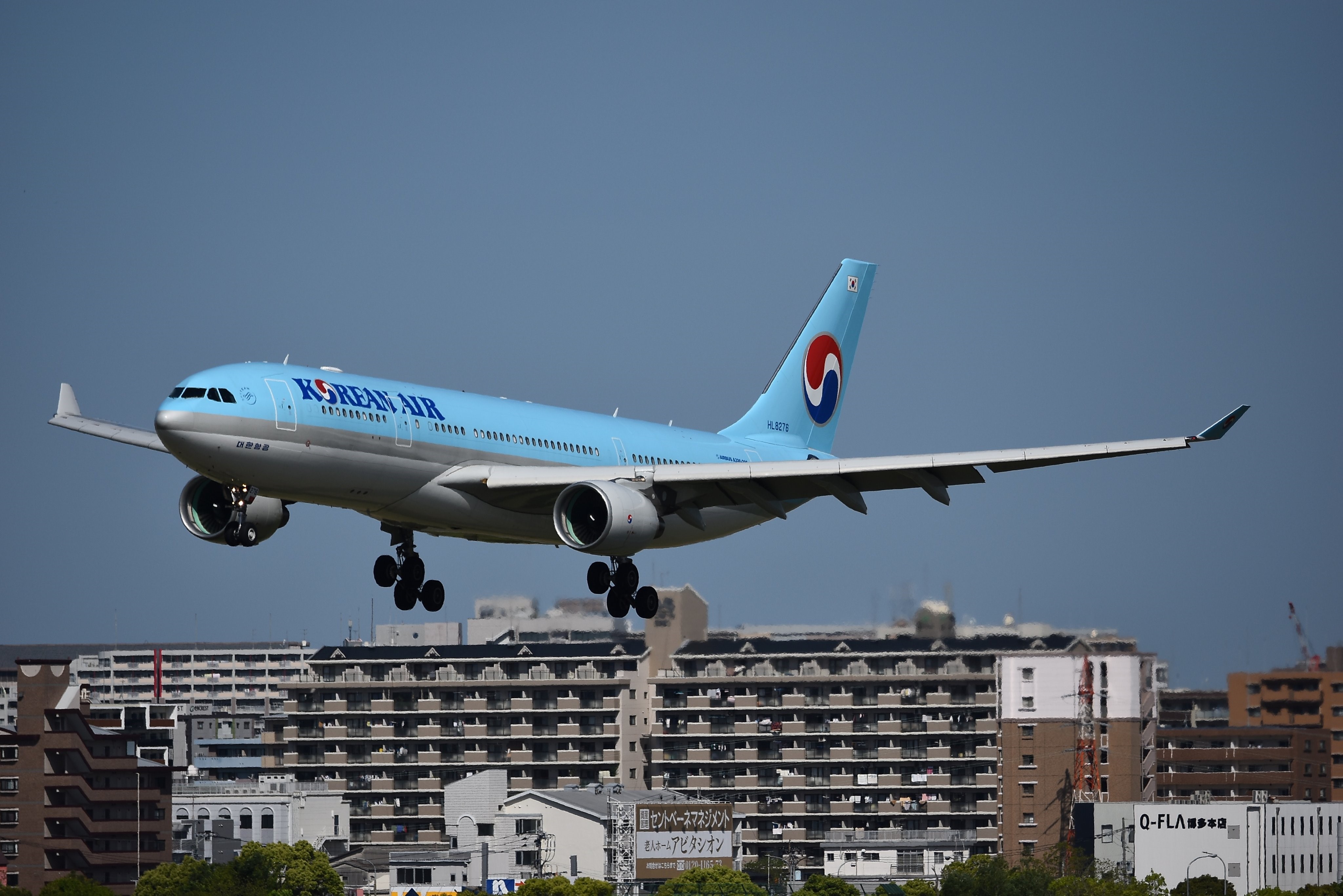
Korean Air, the nation's largest airline, will enter a company-wide emergency management system starting next month due to the worsening financial situation caused by the war.
Korean Air's declaration of emergency management is the third among domestic airlines, following T'way Air and Asiana Airlines.
This is due to the doubling of prices of aviation fuel and the increasing "won-dollar exchange rate" caused by the war, which has been ongoing for over a month.
The South Korean flag carrier plans to implement internal cost-reduction measures to maintain financial stability amid growing economic uncertainty.
In addition, Air Busan, a low-cost carrier (LCC) affiliated with Hanjin Group, will also enter an emergency management system on the same day.
With a total of four domestic airlines having started emergency management, it is expected that the system will spread to other airlines as the crisis gradually worsens.
According to Yonhap News, Korean Air announced through an internal notice issued in the name of Vice Chairman Woo Ki-hong that it will implement an emergency management system starting this coming April.
Vice Chairman Woo stated,
"At the company level, we are switching to an emergency management system to prepare for cost increases resulting from the surge in fuel expenses, and we intend to pursue company-wide cost efficiency by immediately implementing phased response measures based on oil price levels." He added, "If the high oil price situation is prolonged, it appears that achieving our annual business plan targets will face serious setbacks."
Vice Chairman Woo explained that as abnormally high oil prices persist, the fuel price in April is expected to reach 450 cents per gallon, a figure significantly exceeding the standard price of 220 cents per gallon in the business plan, which is adding to the burden of massive fuel costs every month.
"The average price of Dubai crude oil in March of this year was $129 per barrel, and the price of aviation fuel was $194 per barrel," adding, "Accordingly, the unit price of refueling in April is expected to reach the level of 450 cents per gallon."
He added, "These measures are not merely one-time cost-cutting initiatives, but rather an opportunity to strengthen our structural foundation, complete a successful integration, and solidify a stable basis for future growth," and stated, "I believe that with our inherent capabilities, we can wisely overcome this crisis as well."
In addition, Air Busan, a subsidiary of Korean Air, also announced through an internal notice in the name of CEO Jeong Byeong-seop that it would "enter into an emergency management system starting in April as part of preemptive self-rescue efforts to overcome the current crisis."
Accordingly, Air Busan is reviewing non-essential expenditures and focusing on reducing operational costs, lowering fuel expenses through fuel-saving flight techniques, enhancing fleet efficiency through flexible supply operations, and identifying new initiatives to reduce costs and increase profitability.
CEO Jeong emphasized,
"What we must uphold without wavering even in emergency management is undoubtedly safety, and we will maintain customer trust through strict adherence to safety standards."
Since the escalation of the Iran war in late February 2026, Brent crude oil prices have surged by more than 50%, crossing $110 per barrel. This increase has directly impacted aviation fuel, which is one of the largest expenses for airlines worldwide.
T'way Air, a low-cost carrier (LCC), was the first in the aviation industry to implement an emergency management system on the 16th. Following this, Asiana Airlines, the second-largest airline in Korea, entered into emergency management on the 25th.
Asiana Airlines plans to reduce the operation of a total of 14 round-trip flights on four routes to China and Cambodia in April and May. While low-cost carriers (LCCs) such as Jin Air, Air Busan, and Air Premia will also see reduced operations, Asiana Airlines case is the first instance of a major airline cutting flights.
The successive declarations of emergency management and flight reductions by airlines are due to soaring international oil prices, which has increased the burden of fuel costs, typically accounting for about 30% of total expenses, and soaring exchange rates. Since airlines pay major costs, such as aircraft lease fees and maintenance expenses, in dollars, the rise in exchange rates places a massive burden on their overall cost structure.
According to an analysis by global energy research firm S&P Global, as of the 30th, aviation fuel prices in the Asia-Oceania region were 574.47 cents per gallon, a 157% surge compared to the 27th of last month (223.75 cents), just before the war.
The aviation industry predicted that as the war drags on, other airlines would also sequentially enter emergency management systems and reduce flight operations.
Globally, even if they have not officially declared emergency management, virtually all airlines are embarking on company-wide spending cuts and investment reductions. Further measures may include delaying expansion plans, reducing operational expenses, and optimizing flight routes.
For Korean market, while Korean Air has not yet confirmed specific route cuts, industry experts suggest that reducing flight frequencies could become necessary if fuel prices remain elevated.
However, the Korean Air fuel prices crisis reflects a broader global challenge facing the aviation industry as geopolitical tensions disrupt energy markets.



.jpg)