
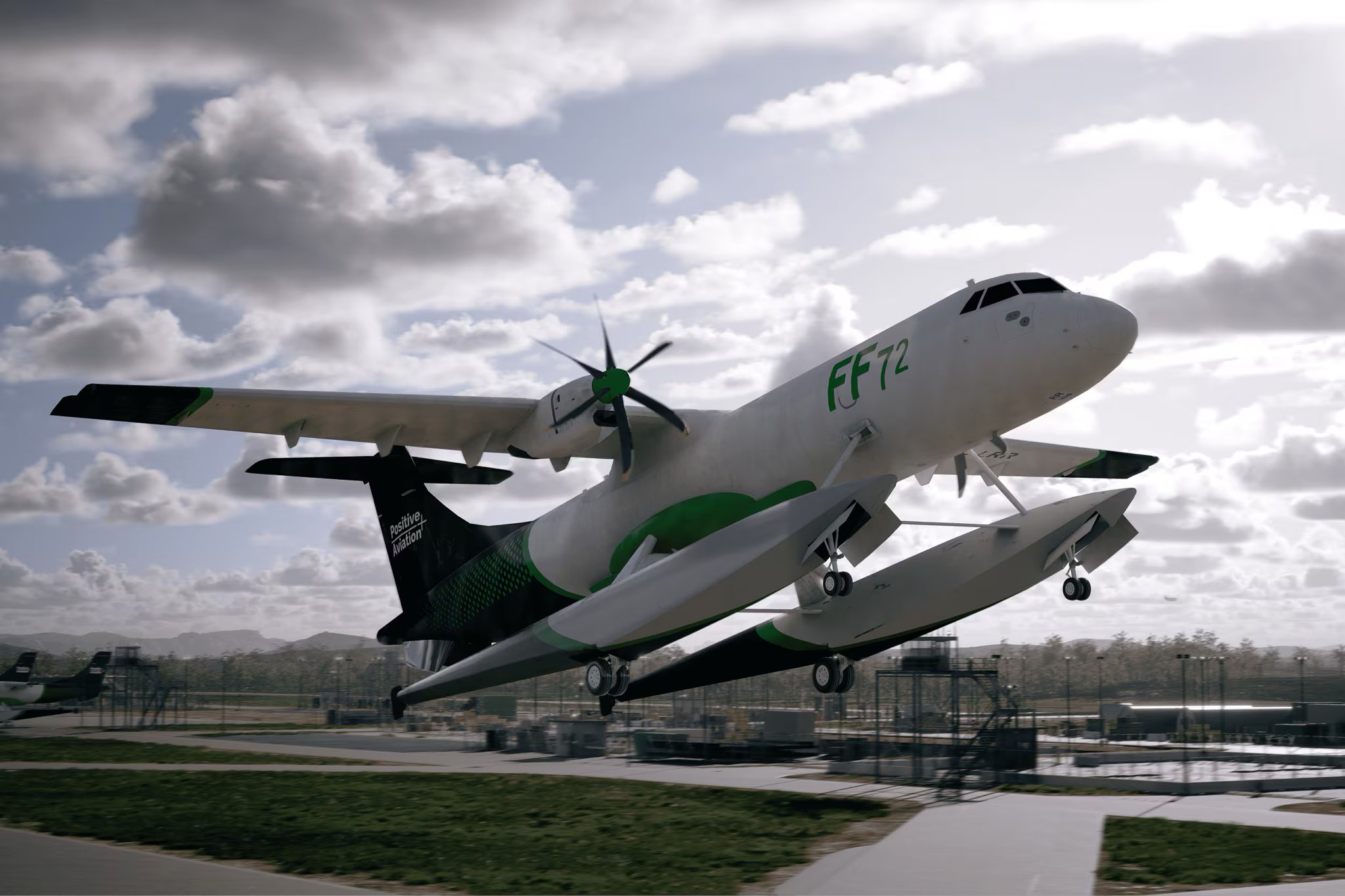
Airbus is set to begin assembling the first amphibious float designed to convert the ATR 72 regional turboprop into a next-generation water bomber, marking a significant milestone in Europe's efforts to develop an alternative to the aging Canadair fleet. If development remains on schedule, the aircraft could enter operational service as early as 2029.
The program is being led by Toulouse-based startup Positive Aviation, which is developing the FF72, an amphibious firefighting aircraft based on the widely used ATR 72 platform. To accelerate industrialization and certification, the company is currently seeking additional investment to support the program's next phase.
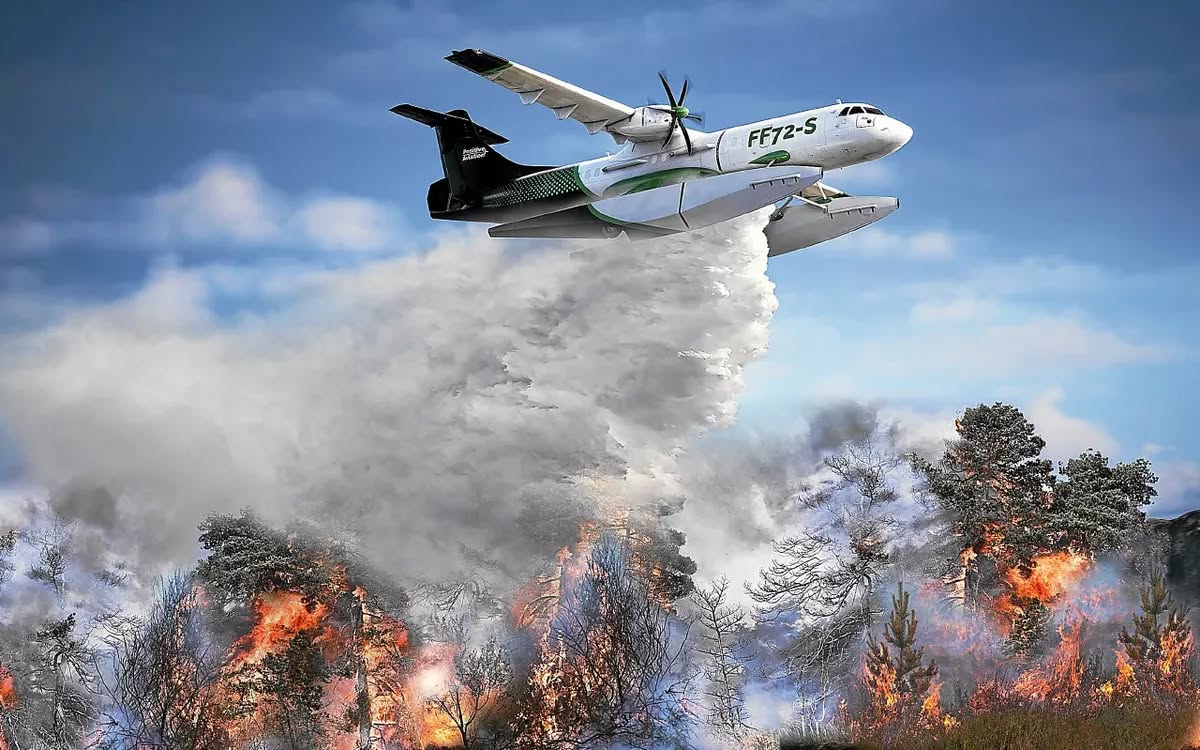
The urgency behind new aerial firefighting solutions has intensified as Europe experiences increasingly destructive wildfire seasons.
By mid-July, France had already recorded nearly 11,000 wildfires and more than 35,000 hectares destroyed by fire—surpassing the total area burned during the entire 2025 summer season. During a visit to firefighters battling the Fontainebleau forest fire, French Civil Security Director General Julien Marion warned that wildfire intensity and frequency continue to increase.
At the same time, operators face another challenge: the limited availability of modern water bombers.
Production of the iconic Canadair CL-415 ended in 2015, leaving many countries dependent on aging fleets. Although De Havilland Aircraft of Canada is developing the DHC-515, intended as the CL-415's successor, the program has experienced delays, with initial deliveries expected no earlier than 2028.
Rather than designing an entirely new aircraft, Positive Aviation has chosen to convert an existing ATR 72 into an amphibious firefighting platform.
The concept centers on installing specially designed floats—manufactured with Airbus support—that incorporate retractable landing gear, water scooping capability, and new firefighting systems while preserving the proven reliability of the ATR airframe.
The converted FF72 is expected to offer several operational advantages:
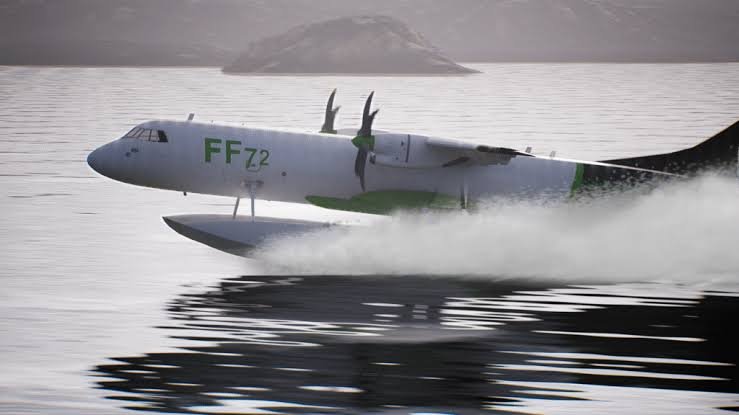
Because the aircraft is based on the already certified ATR 72 platform, approximately 80% of the airframe and 90% of onboard systems remain unchanged, significantly reducing development risk and simplifying maintenance through ATR's global support network.
Another advantage is the interchangeable float system, allowing maintenance to be performed more efficiently while minimizing aircraft downtime.
Airbus will manufacture the program's first float, representing a major industrial milestone for the FF72 project.
The float assembly will validate the aircraft's amphibious configuration before the complete demonstrator enters testing. Positive Aviation believes leveraging Airbus' industrial expertise will accelerate certification and prepare the design for series production.
The company is simultaneously seeking funding to industrialize the aircraft and expand manufacturing capacity ahead of planned deliveries.
Cost is one of Positive Aviation's strongest selling points.
The company estimates a price of approximately €40 million for a newly built FF72 based on a new ATR 72, while conversions using second-hand aircraft could reduce the acquisition cost to around €32 million.
This pricing compares favorably with newly built amphibious aircraft and could make modern aerial firefriting capabilities accessible to countries with limited budgets.
According to Positive Aviation President Laurent Schmitt, many regions most vulnerable to wildfires—including Indonesia, Malaysia, Brazil, Ecuador, the Democratic Republic of Congo, and several Mediterranean nations—lack sufficient aerial firefighting resources.
The company estimates the long-term global demand at around 400 aircraft.
Positive Aviation's development schedule remains ambitious.
The company plans to fly its demonstrator first, followed by certification and industrial ramp-up.
Current production targets include:
Operational entry is targeted for 2029, potentially offering customers an alternative while deliveries of the DHC-515 remain limited.
France currently operates a fleet of 12 CL-415 Canadair aircraft, many of which have accumulated decades of operational service.
French Civil Security has repeatedly highlighted declining fleet availability as maintenance requirements increase. A 2025 government assessment concluded that France may require approximately 20 additional aerial firefighting aircraft by 2040, with operators calling for a 20–30% increase in aerial suppression capacity to cope with increasingly severe wildfire seasons.
Beyond France, demand is expected across southern and eastern Europe, including Spain, Italy, Greece, Romania, Bulgaria, Turkey, and the Baltic states.
Positive Aviation is not the only French company pursuing a next-generation solution.
Another Toulouse-based program, Hynaero's Frégate F-100, is developing an entirely new amphibious aircraft capable of scooping up to 10 tonnes of water, significantly more than today's Canadair fleet.
While the Frégate F-100 represents a clean-sheet design aimed at maximizing firefighting performance, Positive Aviation's FF72 emphasizes faster market entry by adapting an already certified regional aircraft.
Together, the two programs reflect Europe's growing determination to establish a sovereign aerial firefighting capability and reduce reliance on aging imported fleets at a time when wildfire seasons are becoming longer, more intense, and increasingly global.

.jpg)