
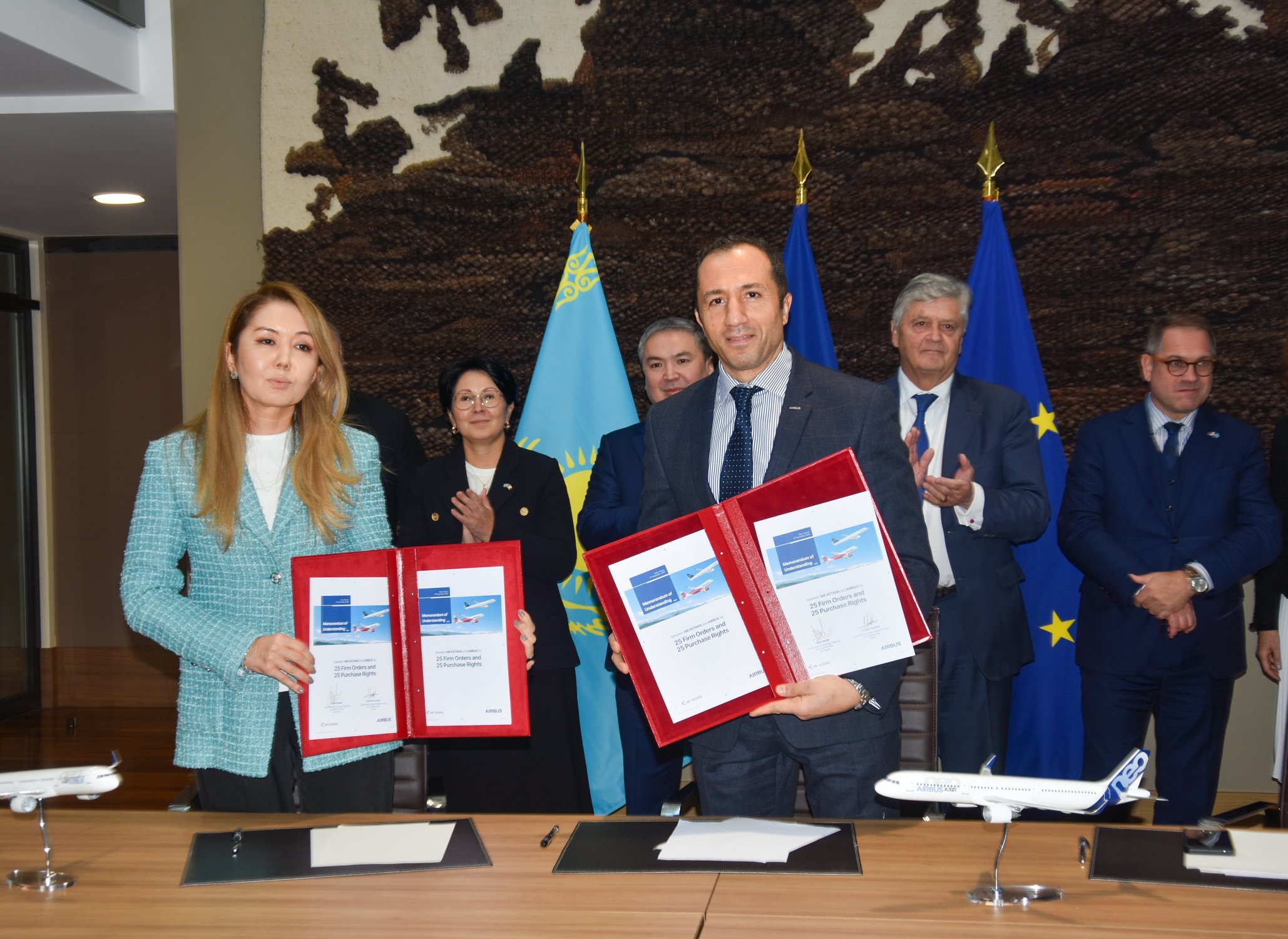
Kazakhstan will acquire 25 Airbus A320neo aircraft with an option for 25 more, as confirmed by the Kazakh Transport Ministry. The ministry, however, did not disclose the details of the deal or value of the deal.
Kazakh Vice Minister Talgat Lastayev also met with Airbus Vice President Charbel Youzkatli to discuss delivery timelines scheduled for 2031 and the possibility of accelerating them. They also made plans to establish a joint aviation training center with Airbus and explore aircraft leasing arrangements.
To enhance transport connectivity between the two countries, the sides also explored the opportunity to resume Paris-Astana flights and the potential launch of a Shymkent–Nice route.
Airbus delivered its first A320 to Kazakhstan’s Air Astana in 2006, marking the start of a steady expansion of the manufacturer’s presence in the region. According to the company’s data, today, the combined fleets of Air Astana and Fly Arystan low-cost carrier operate more than 50 A320 Family aircraft. Airbus Corporate Jets also has a strong foothold in Kazakhstan, with eight single-aisle and wide-body jets in service, including those operated by the Berkut state carrier.
Understandably, this announcement is the formalization of the same order that Air Astana had made through an agreement with Airbus last month.
Air Astana has committed to a major fleet modernisation by signing a Memorandum of Understanding for up to 50 Airbus A320neo family aircraft. This would be the largest ever order placed by the airline, comprising of 25 firm aircraft and 25 purchase options. The agreement includes a mix of Airbus A320neo and A321neo aircraft, with the first deliveries starting in 2031.
The meeting, co-chaired by Kazakhstan’s Minister of Industry and Construction Yersayin Nagaspayev and France’s Minister Delegate for Foreign Trade and Economic Attractiveness Nicolas Forissier, focused on cooperation prospects in industrial projects, energy, transport, water supply, waste processing, and the adoption of low-carbon and environmentally sustainable technologies.
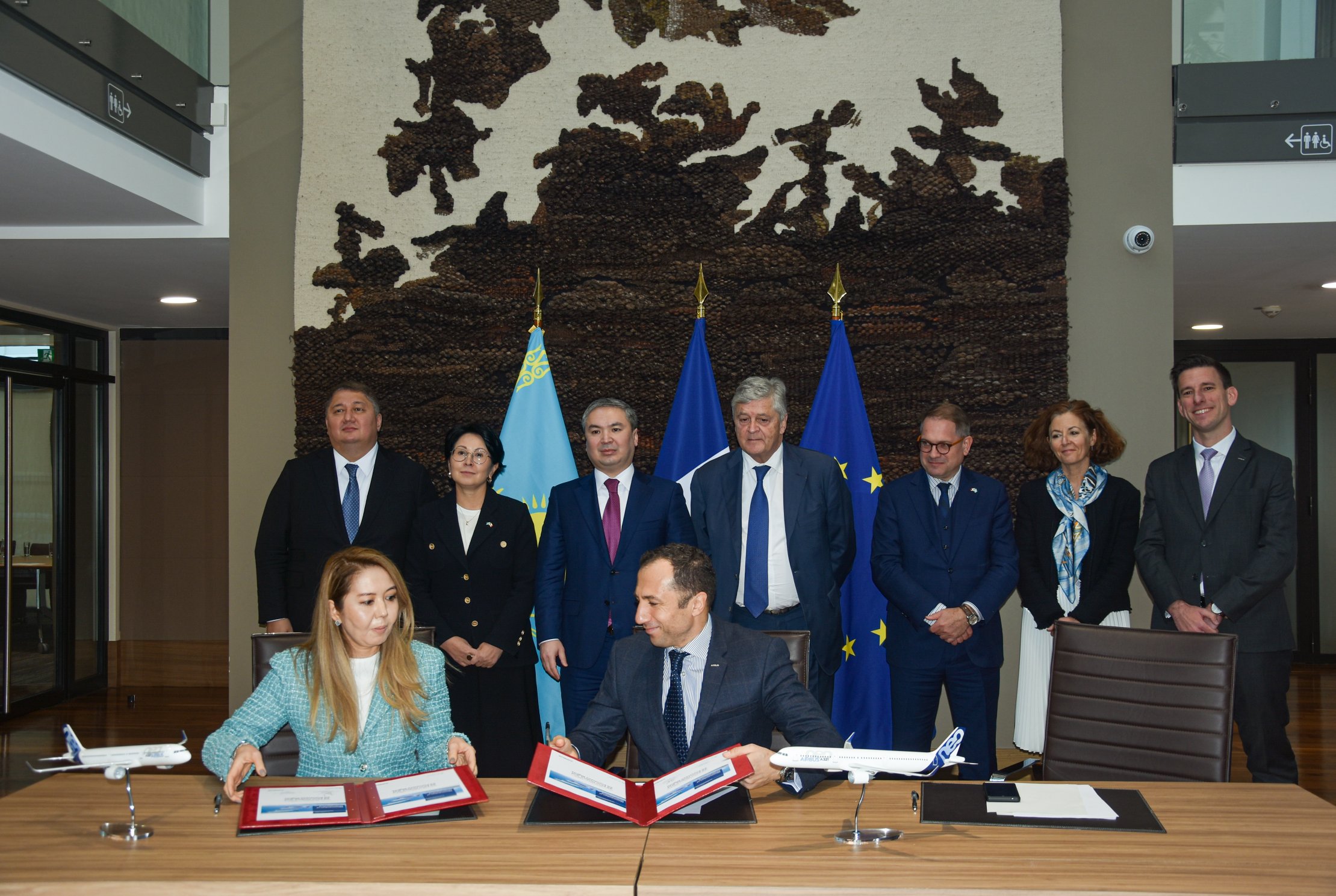
Officials reaffirmed their interest in strengthening the strategic partnership and expanding trade and economic ties. Nagaspayev said Kazakhstan remains committed to creating favorable conditions for French investors and companies already operating in the country.
France remains one of Kazakhstan’s key trade and investment partners. According to the Kazakh Foreign Ministry, bilateral trade reached $4.22 billion in 2024, including $2.89 billion in Kazakh exports and $1.33 billion in imports. French investments in the country have surpassed $20.4 billion.