
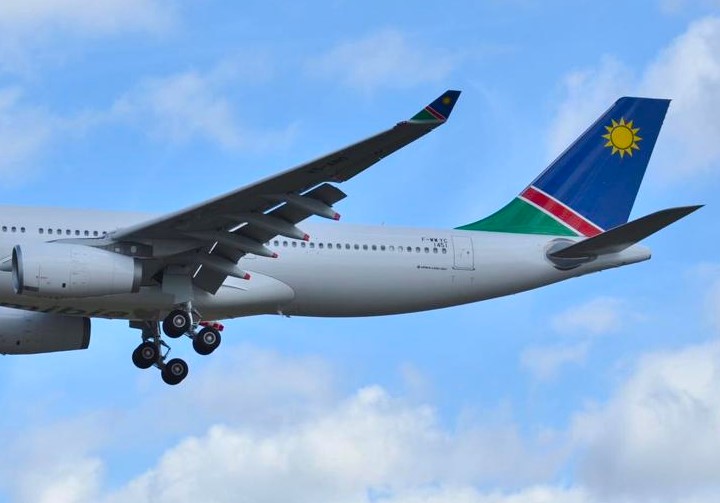
Namibia has moved to distance itself from a leaked internal briefing that outlined a potentially far-reaching role for Ethiopian Airlines in the establishment and management of the country's planned new national carrier, Namibia Air.
The Ministry of Works and Transport confirmed that Namibia is holding analytical and technical discussions with Ethiopian Airlines, but stressed that no binding agreement or commitment has been reached with the Ethiopian carrier or any other party.
The clarification followed publication of an internal ministry document by the Windhoek Observer, which described the outcome of meetings between a Namibian delegation and Ethiopian Airlines executives in Addis Ababa on August 21–22, 2026.
According to the Windhoek Observer, Ethiopian Airlines reviewed Namibia's market study and presented an alternative operating model centred on ATR 72-600 turboprop aircraft, together with training, maintenance, technical assistance and support with aircraft sourcing and regulatory certification.
The briefing reportedly said the proposed airline could face losses during its first five years before reaching commercial viability.
More controversially, the document stated that Ethiopian Airlines was not yet prepared to commit to an equity investment. However, it reportedly indicated that any future equity participation could require management control, including responsibility for the positions of chief executive officer, chief financial officer and maintenance leadership.
The same briefing reportedly described discussions around a possible management contract under which Ethiopian could deploy personnel to help refine Namibia Air's business plan and establish the airline.
Other areas of potential cooperation included aircraft procurement and leasing, maintenance, training, operational manuals, certification documentation and access to Ethiopian Airlines' information-technology and financial systems.
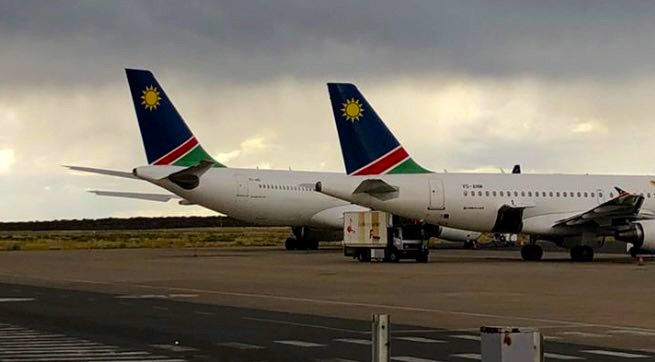
The Namibian government has, however, strongly cautioned against treating the leaked briefing as an agreed government policy.
Jonas Sheelongo, executive director at the Ministry of Works and Transport, said the ministry "does not recognise" the document as an official, authorised or accurate representation of its work, deliberations or positions.
He confirmed that discussions with Ethiopian Airlines are continuing, alongside consultations with Namibian aviation operators and other stakeholders.
The ministry said the objective is to determine the most viable and sustainable model for establishing Namibia Air while ensuring that Namibian expertise and national interests remain central to any eventual arrangement.
Consequently, reports describing Ethiopian Airlines as having already taken control of Namibia Air would be incorrect. At present, the Ethiopian carrier's involvement remains the subject of negotiations and technical assessment.
The leaked proposal nevertheless triggered a political and aviation-sector debate in Namibia.
Independent Patriots for Change (IPC) shadow minister for works and transport Nelson Kalangula criticised the reported management arrangement, arguing that Namibia has qualified aviation professionals capable of occupying senior positions at the new carrier.
The prospect of a foreign airline controlling key executive and technical functions has therefore become a sensitive issue, particularly because Namibia is attempting to establish a national carrier that can develop domestic aviation expertise and provide long-term strategic connectivity.
The debate also extends to the proposed route network.
According to the leaked briefing, Ethiopian Airlines recommended removing Windhoek–Johannesburg, Windhoek–Cape Town and Windhoek–Luanda from the initial network. The Namibian side reportedly considered those connections important to the carrier's business plan.
Ethiopian Airlines' involvement is not without precedent.
The Ethiopian carrier has developed a strategy of supporting or investing in other African airlines. Its current partnership portfolio includes ASKY in Togo, Malawian Airlines, Zambia Airways and Air Congo.
Ethiopian's own corporate information confirms that ASKY is a strategic partner, while Malawian Airlines and Zambia Airways were established through partnerships involving Ethiopian. In the case of Air Congo, the DRC government holds 51% and Ethiopian Airlines holds 49% while managing the airline.
Ethiopian also previously held a 49% stake in Malawian Airlines and provided technical and management services.
That experience is one reason the Ethiopian model could appeal to Namibia: it potentially provides access to established expertise in fleet planning, maintenance, training, airline systems, procurement and operational management without Namibia having to build every capability from scratch.
But the same model can raise questions over how much strategic and operational control remains with the national carrier's home country.
The debate is particularly significant because Namibia is attempting to avoid repeating the financial problems that brought down its previous flag carrier, Air Namibia.
Air Namibia entered liquidation in 2021 after decades of financial difficulties and substantial government support. Estimates of the state's cumulative financial support and losses associated with the airline have been put at approximately US$467 million.
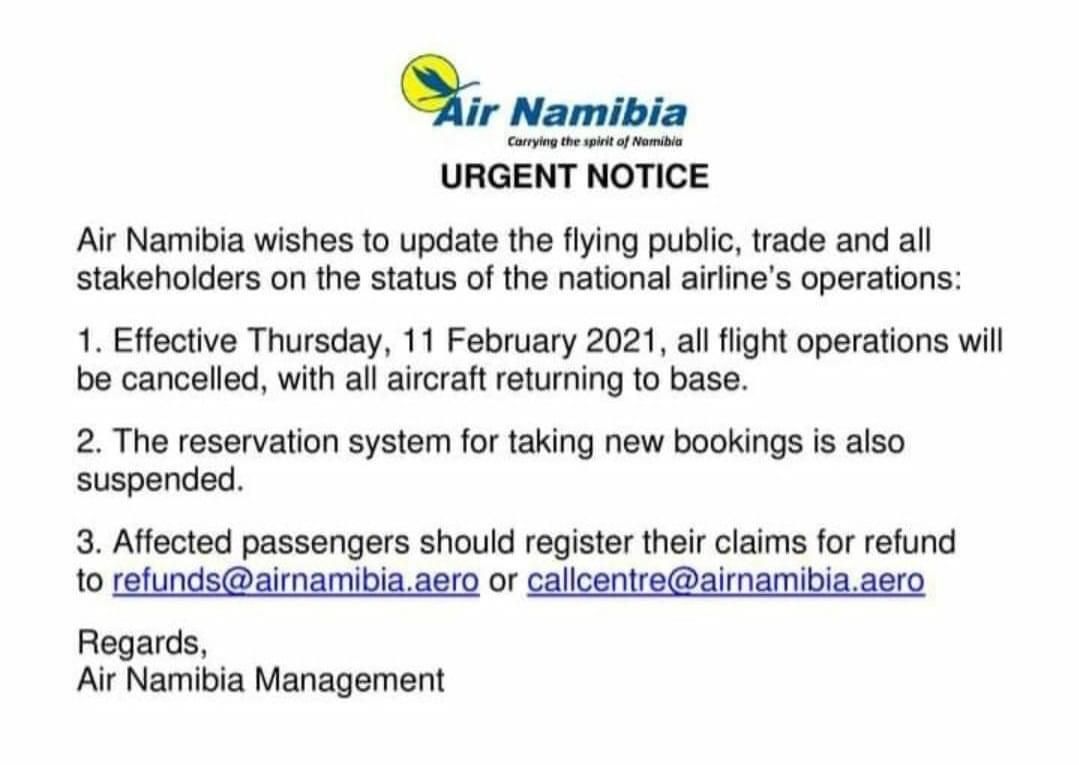
The government has repeatedly indicated that lessons from Air Namibia's collapse must shape the new carrier.
In its September 2 statement, the Ministry of Works and Transport said the consultations with Ethiopian Airlines and other stakeholders were intended specifically to avoid the mistakes that contributed to Air Namibia's financial collapse and eventual closure.
Despite the controversy, Namibia Air's establishment process is continuing.
The proposed carrier received scheduled and non-scheduled air service licences in August 2026, valid for five years. The licences allow the airline to pursue passenger, cargo and charter operations, although an Air Operator Certificate (AOC) is still required before commercial flights can begin. The government has been targeting the first flight in December 2026.
The AOC process is therefore an important remaining regulatory milestone, alongside aircraft acquisition, financing, staffing, maintenance arrangements and the finalisation of the carrier's business model.
The Ethiopian Airlines discussions illustrate the difficult balance Namibia faces.
On one side, Ethiopian brings extensive African airline experience and could potentially accelerate Namibia Air's establishment by providing expertise in aircraft sourcing, maintenance, training, systems and operations.
On the other, a model requiring a foreign airline to control the CEO, CFO and maintenance functions would inevitably raise questions about ownership, governance, local capacity development and the meaning of a national carrier.
For now, however, there is no concluded Ethiopian Airlines takeover or management agreement.
The most accurate description is that Namibia and Ethiopian Airlines are exploring a potential technical, strategic and possibly management partnership, while Namibia evaluates whether such an arrangement would be commercially sustainable and consistent with national interests.
The final structure will depend on further technical, financial and commercial assessments and, ultimately, approval by the Namibian government.


.jpg)