
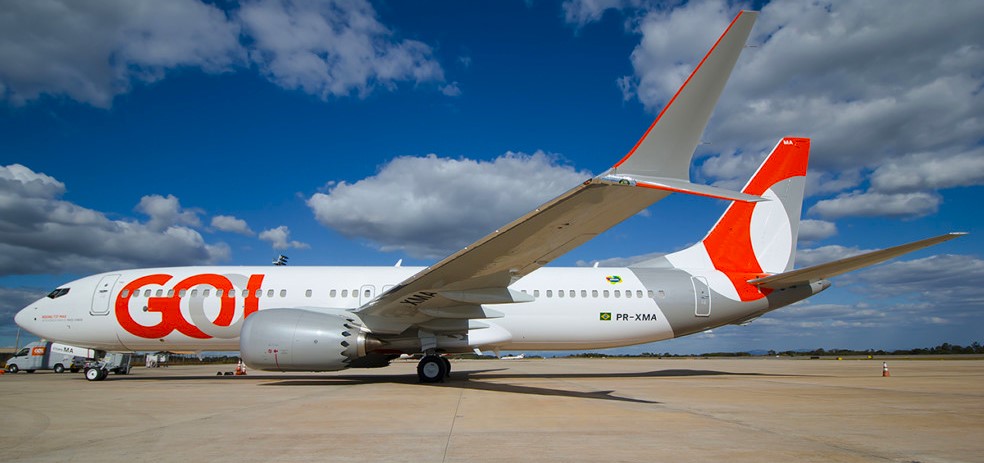
Brazil's government has unveiled an emergency support package for the country's aviation industry, opening an R$8 billion (about US$1.6 billion) credit line to help airlines weather a sharp increase in operating costs caused by soaring jet fuel prices.
The measure, issued as Provisional Measure (MP) 1,368/2026, is designed to provide airlines with access to working-capital loans rather than direct financial aid. Officials argue the move is necessary to prevent disruptions across Brazil's air transport network after jet fuel prices surged by roughly 70%, following conflict in the Middle East that pushed global oil prices higher.
While supporters describe the package as a practical response to an external economic shock, critics question its timing in an election year and argue it amounts to government support for a politically influential industry.
The government's intervention comes through a medida provisória (provisional measure), a legal instrument that allows the president to enact legislation immediately. However, the measure must be approved by Brazil's Congress within 120 days to remain in force permanently.
MP 1,368/2026 authorizes R$8 billion in extraordinary federal credit to fund financing programs for airlines operating in Brazil. Unlike a traditional bailout, the money is not distributed as grants. Instead, it supports loan facilities that airlines must repay, giving carriers access to liquidity needed to maintain day-to-day operations during a period of unusually high costs.
The funding is classified as extraordinary credit, a budget mechanism reserved for urgent and unforeseen events, reflecting the speed and severity of the fuel price shock.
The immediate trigger for the measure is the dramatic rise in jet fuel prices. Aviation fuel is typically an airline's largest operating expense, often accounting for one-third or more of total costs. A sudden increase of around 70% places enormous pressure on carriers, particularly those operating on already thin profit margins.
Brazil's aviation sector has experienced repeated financial challenges over the years, with airline failures and restructurings highlighting the industry's vulnerability to economic shocks. The domestic market is largely dominated by Gol, LATAM Airlines Brazil, and Azul, meaning financial distress at any one major carrier could affect routes, competition, employment, and passenger connectivity across the country.
Government officials argue that providing affordable financing now is less costly than dealing with widespread flight cancellations, job losses, or airline collapses later.
Brazil's vast geography makes air travel an essential part of the country's transportation infrastructure. For many regions, particularly remote areas, flying is the only practical means of fast travel.
Domestic aviation connects cities separated by thousands of kilometers where road or rail alternatives are either slow or unavailable. Any significant disruption to airline operations would affect not only travelers but also tourism, business activity, regional economies, and supply chains.
For that reason, maintaining a stable airline industry is often viewed as a matter of public interest rather than simply corporate support.
The announcement has sparked political controversy because it arrives during an election year.
Opposition figures argue the government is shielding a well-connected industry while many Brazilian households continue to struggle with high borrowing costs and broader economic pressures. They question whether scarce public resources should be directed toward large private companies.
Supporters counter that the measure protects far more than airline balance sheets. By helping carriers continue operating, they argue, the government is safeguarding jobs, preserving tourism, maintaining essential transportation links, and preventing widespread disruption for millions of passengers.
The debate highlights the broader challenge governments face when deciding whether strategic industries deserve temporary support during external economic shocks.
Even as airlines receive emergency financial assistance, the sector faces another potential headwind.
Brazil's ongoing tax reform aims to simplify the country's complex tax system by replacing multiple taxes with a value-added tax (VAT). Industry representatives have warned that the changes could ultimately increase the tax burden on aviation and airline tickets.
If that happens, airlines could face higher operating costs in the future, potentially leading to more expensive airfares and making Brazil a less attractive destination for international airlines and tourists.
As a result, the government finds itself pursuing two policies that could pull in opposite directions—offering temporary financial relief while broader tax changes may increase long-term costs for the industry.
For passengers, the immediate objective of the measure is stability rather than lower fares.
The additional financing should help airlines maintain operations, reducing the risk of flight cancellations, service cuts, or financial distress during a period of elevated fuel costs. However, the credit line does not guarantee cheaper airline tickets.
Fuel prices remain volatile, and any future increase in taxes could continue to place upward pressure on fares. Travelers are therefore more likely to benefit through improved service continuity than through lower ticket prices.