
Amazon just introduced Amazon Leo Aviation Antenna, a competitor to Starlink, which will allow commercial airline passengers and crew to enjoy high performance satellite internet from their departure gate all the way to their arrival gate.
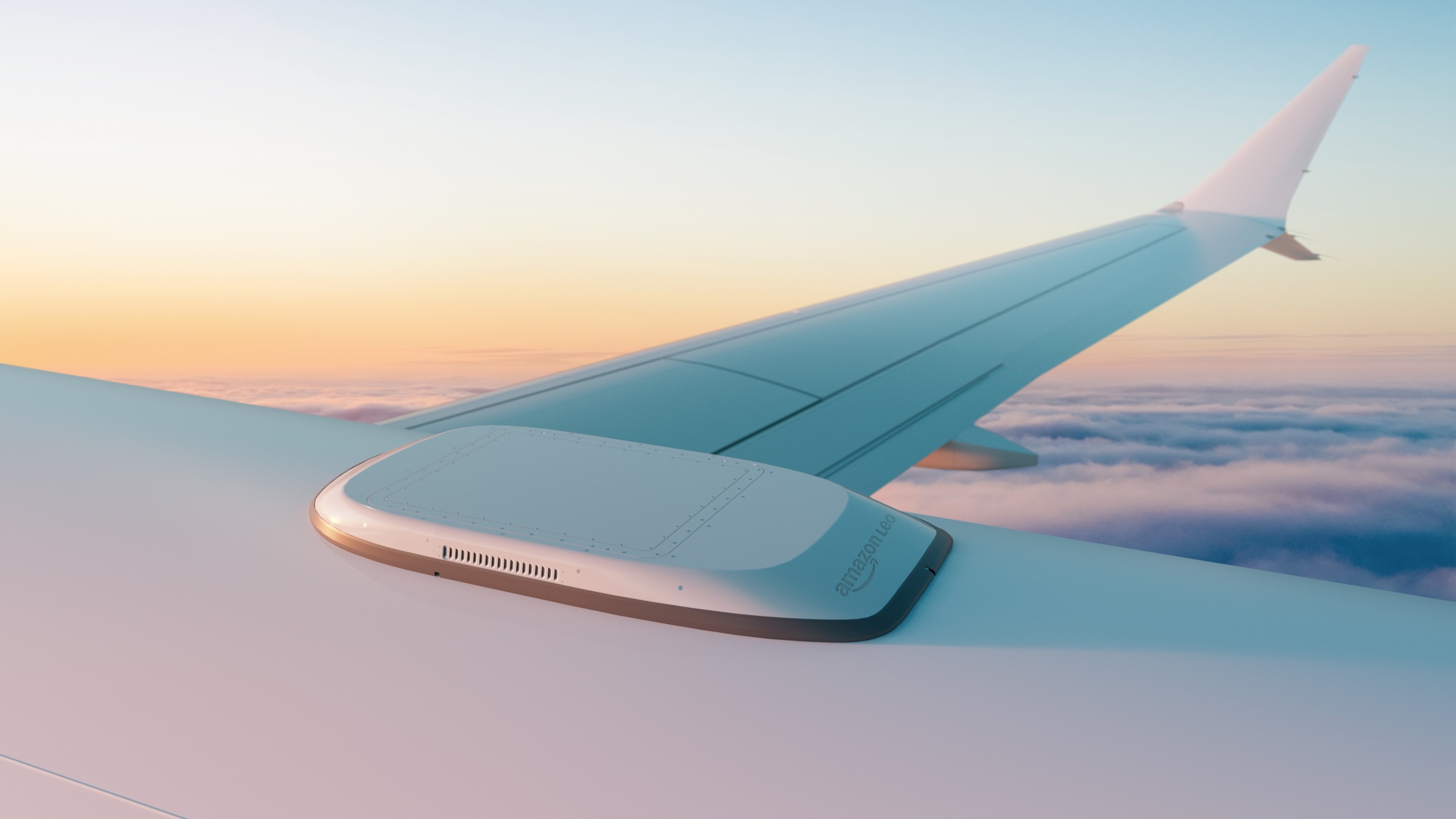
On Monday, Amazon debuted the Leo Aviation Antenna, a dish designed for the fuselage of the planes that promises to deliver high-speed internet to passengers.
The low-profile antenna looks similar to Starlink’s “Aero Terminal” for commercial jets; both systems are designed to be installed on the exterior of the plane, enabling them to receive radio signals from orbiting low-Earth satellites.
Amazon Leo just posted this:
“Introducing the Amazon Leo Aviation Antenna. Delivering speeds up to 1 Gbps downlink and 400 Mbps uplink from a single antenna – it's simple enough to install in a single day, and powerful enough to support an entire cabin full of streaming, browsing, working and more"
However, Amazon here claims a "single-day installation" for its antenna, whereas SpaceX says its Aero Terminal "enables installations during minimal downtime (10-14 days)."
SpaceX's Starlink has received rave reviews for powering high-speed internet on major airlines, offering a performance leap over older in-flight Wi-Fi systems.
Amazon Leo expects to create a fanbase for its product, as Trevor Vieweg, director of global business for Amazon Leo, says:
“We expect our service to be so fast and reliable that passengers will seek out flights featuring Leo connectivity.”
Amazon’s aviation antenna promises to deliver up to 1Gbps in downloads and 400Mbps in uploads simultaneously. However, according to Amazon Leo,
“The bandwidth is shared, and it will be up to our airline customers to determine if they want to segment the experience in any way, but in general the speeds are sufficient to support pretty much a full range of connected experiences, including gaming, streaming, photos, etc., across every passenger and crew member.”
Unveiled during the Aircraft Interiors Expo 2026 in Hamburg, Germany, the flat antenna features an electronically steered phased array and has no moving parts.
The introduction might attract more airlines to Amazon Leo. Starlink has already been adopted at some major airlines, including United, Hawaiian, and Air France.
Delta and JetBlue have signed up to use Amazon Leo. However, the satellite internet system remains in a private beta, with only over 240 satellites in orbit—too few for robust coverage and connectivity. Leo has struggled to launch its satellites on time, prompting Amazon to request a deadline extension from the FCC.
Amazon plans on officially launching the Leo service in “mid-2026" when it expects to have around 700 satellites in orbit. But even so, Leo connectivity won’t arrive on Delta aircraft until 2028; JetBlue will get it sometime in 2027. Both airlines plan to offer Leo for free, though Delta will require users to sign up for its free loyalty program.
Amazon's Leo aviation antenna incorporates technology from the Leo Ultra dish meant for enterprise users. One key difference is that the plane-based equipment can survive “the demands and stresses of aviation,” including harsh weather and low temperatures.
Pushing ahead, the project faces an aggressive deployment schedule to close the gap with SpaceX:
The arrival of enterprise-grade satellite hardware from Amazon is putting pressure on connectivity options in the aerospace sector. The competition to deliver terrestrial speeds at thousands of meters altitude will define the standard for air travel by the end of this decade.
You may like to read......