Key Points
- U.S. appeals court decertifies Boeing shareholder class action over alleged misleading statements about aircraft safety and profit priorities.
- 4th U.S. Circuit Court of Appeals ruled investors failed to present a suitable methodology to calculate damages on a classwide basis.
- The decision overturns a March 2025 ruling by U.S. District Judge Leonie Brinkema that had certified the shareholder class.
- The case is sent back to the district court for further proceedings.
- The ruling does not address the merits of the securities fraud allegations; it only concerns class certification.
- Shareholders, led by Rhode Island's state treasurer, alleged Boeing prioritized profits over safety and overstated its commitment to safe aircraft.
- Investors claim Boeing artificially inflated its stock price through misleading statements following the 2018 and 2019 737 MAX crashes, which killed 346 people.
- The lawsuit also references the January 5, 2024, Alaska Airlines 737 MAX 9 cabin panel blowout as a key event that exposed ongoing safety concerns.
- The proposed class covered investors who owned Boeing stock between January 7, 2021, and January 8, 2024.
- Class-action status is significant because it allows shareholders to pursue claims collectively, potentially reducing litigation costs and increasing recoveries.
- Boeing has consistently denied misleading investors, while plaintiffs argue the company failed to fully disclose safety and certification risks.
- The litigation remains one of several legal and regulatory challenges Boeing faces as it works to rebuild confidence in the 737 MAX program and its broader safety culture.
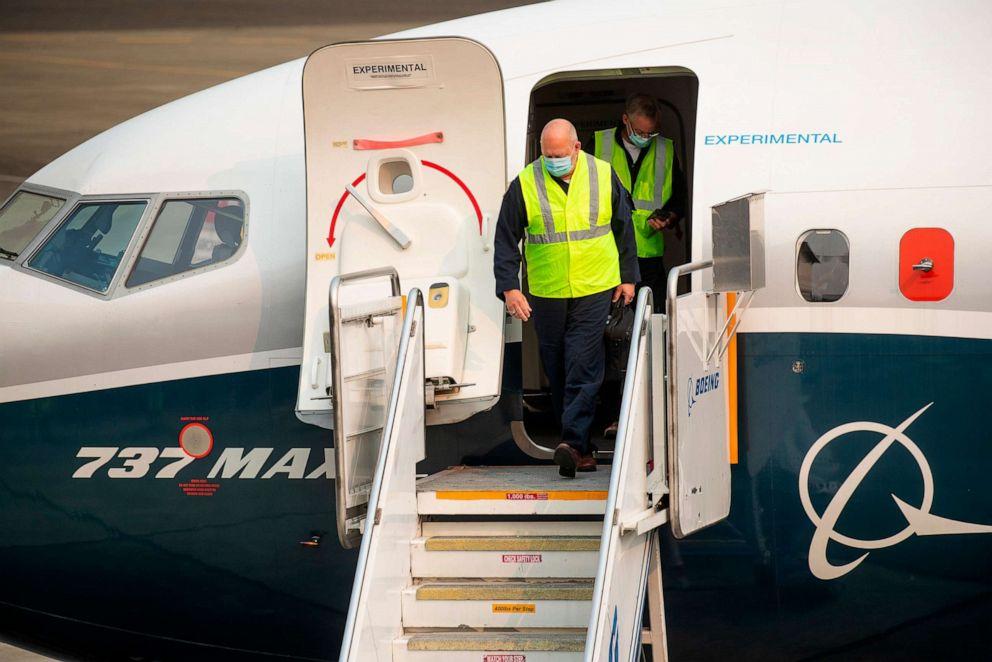
A U.S. federal appeals court has decertified a shareholder class action against Boeing, marking a significant legal victory for the aircraft manufacturer in a closely watched securities lawsuit tied to the 737 MAX safety crisis and the January 2024 Alaska Airlines mid-air cabin panel blowout.
In a ruling issued on Monday, the 4th U.S. Circuit Court of Appeals said the investors failed to demonstrate a reliable methodology for calculating damages across the proposed class, overturning a March 2025 decision that had allowed the lawsuit to proceed on a classwide basis.
Reported by Reuters, the decision sends the case back to U.S. District Judge Leonie Brinkema in Alexandria, Virginia, for further proceedings.
Appeals Court Rejects Class Certification
The lawsuit was brought by Boeing shareholders led by Rhode Island's state treasurer, who alleged the aerospace company misled investors by prioritizing profits over aircraft safety and overstating its commitment to safe airplane production.
The plaintiffs argued that Boeing's public statements artificially inflated its share price by downplaying safety risks in the aftermath of the two fatal 737 MAX crashes in Indonesia in October 2018 and Ethiopia in March 2019, which together claimed 346 lives.
Highlights: The 2018 and 2019 Boeing 737 MAX Crashes
- Two fatal crashes: The Boeing 737 MAX was involved in two fatal accidents within five months:
- October 29, 2018: Lion Air Flight 610 crashed into the Java Sea shortly after takeoff from Jakarta, Indonesia, killing 189 people.
- March 10, 2019: Ethiopian Airlines Flight 302 crashed minutes after departing Addis Ababa, Ethiopia, killing 157 people.
- Total fatalities: The two crashes claimed 346 lives, making them one of the deadliest crises in modern commercial aviation.
- MCAS under scrutiny: Investigations identified the Maneuvering Characteristics Augmentation System (MCAS)—a flight-control software designed to automatically push the aircraft's nose downward—as a major contributing factor in both crashes.
- Faulty sensor data: In both accidents, MCAS was triggered by erroneous readings from a single angle-of-attack (AoA) sensor, repeatedly forcing the aircraft into a nose-down position.
- Pilot awareness and training: Many pilots were not fully informed about MCAS, and Boeing initially did not include detailed information about the system in pilot manuals or require simulator training.
- Global grounding: Following the Ethiopian Airlines crash, aviation regulators worldwide grounded the 737 MAX fleet in March 2019, with the aircraft remaining out of service for nearly 20 months in many jurisdictions.
- Regulatory investigations: The crashes prompted multiple investigations into Boeing's aircraft design, safety culture and the U.S. Federal Aviation Administration's (FAA) certification process.
- Aircraft modifications: Boeing redesigned the MCAS software to rely on inputs from two AoA sensors instead of one, limited its authority, enhanced cockpit alerts and revised pilot training before the aircraft was cleared to return to service.
- Financial impact: The crisis cost Boeing tens of billions of dollars through compensation payments, production halts, regulatory penalties, legal settlements and lost aircraft deliveries.
- Legal fallout: Boeing faced numerous lawsuits from victims' families, shareholder litigation, criminal and civil investigations, and heightened regulatory oversight. The shareholder lawsuit referenced in the latest appeals court ruling stems from allegations that Boeing misled investors about the safety and financial risks associated with the 737 MAX program.
They also contended that Boeing continued making misleading statements until the January 5, 2024, mid-air cabin panel blowout involving an Alaska Airlines 737 MAX 9, an incident that reignited global concerns over the manufacturer's safety culture and production quality.
However, the appeals court ruled that the proposed class failed to satisfy a key requirement for certification because it did not provide an appropriate common methodology for determining investor damages on a classwide basis.
Class-action status is often crucial in securities litigation because it enables thousands of shareholders with similar claims to pursue recovery collectively rather than filing individual lawsuits.
The two fatal Boeing 737 MAX crashes—Lion Air Flight 610 (October 2018) and Ethiopian Airlines Flight 302 (March 2019), which killed 346 people—triggered one of the largest waves of aviation litigation in history.
A U.S. District Court jury in Seattle concluded that Boeing did not defraud LOT Polish Airlines by hiding a safety-related change to the 737 MAX.
Case Returns to District Court
Judge Brinkema had ruled in March 2025 that investors who purchased Boeing shares between January 7, 2021, and January 8, 2024, could pursue their claims together.
Monday's ruling vacates that certification without addressing whether Boeing committed securities fraud. Instead, it focuses solely on whether the legal requirements for class treatment were met.
The district court must now reconsider the case in light of the appellate court's guidance.
Lawyers representing the shareholders did not immediately respond to requests for comment. Boeing and its legal team also declined immediate comment.
Safety Claims Remain at the Center
Although the appeals court decision represents a procedural win for Boeing, it does not resolve the underlying allegations.
Investors continue to claim Boeing portrayed its safety oversight, manufacturing practices and regulatory compliance more positively than internal conditions warranted, helping sustain its stock price despite ongoing concerns surrounding the 737 MAX program.
The litigation spans a turbulent period for Boeing that includes increased regulatory scrutiny, manufacturing quality concerns and the Alaska Airlines Flight 1282 accident, in which a cabin door plug detached shortly after takeoff, prompting the temporary grounding of dozens of 737 MAX 9 aircraft and renewed Federal Aviation Administration oversight.
Wider Implications for Aviation
The case highlights the growing legal and financial consequences that major safety incidents can create for aerospace manufacturers beyond traditional accident investigations and passenger lawsuits.
While this litigation centers on investor disclosures rather than aviation safety regulation, legal experts say it underscores increasing expectations that aircraft manufacturers provide transparent and timely information about safety risks, certification challenges and production quality.
For airlines, the 737 MAX saga has already resulted in delivery delays, fleet planning disruptions and higher operational costs as carriers adjusted schedules during aircraft groundings and certification reviews.
The appeals court's ruling narrows one avenue of shareholder litigation for now, but Boeing continues to face multiple legal, regulatory and operational challenges as it works to restore confidence among regulators, airline customers, investors and the traveling public.
The outcome of the remanded proceedings could still shape how courts evaluate investor claims arising from aviation safety crises and how manufacturers communicate material safety risks to financial markets.
Boeing 737 MAX (2018–2019 Crashes): Major Lawsuits and Legal Actions
Till date, the legal actions span wrongful death claims, shareholder lawsuits, criminal proceedings, SEC enforcement, airline compensation claims and derivative suits.
1. Wrongful Death Lawsuits
- Families of victims filed hundreds of wrongful death lawsuits against Boeing, primarily in U.S. federal courts in Chicago.
- The suits alleged Boeing:
- Designed a defective aircraft.
- Failed to adequately disclose the MCAS flight-control system.
- Did not provide sufficient pilot training or cockpit warnings.
- Put commercial interests ahead of passenger safety.
- By late 2019, Boeing faced more than 150 lawsuits from victims' families. Many cases have since been settled confidentially, while a small number proceeded to jury trials.
2. Boeing Accepted Liability in Many Civil Cases
- Boeing ultimately accepted liability for the crashes in many civil proceedings, limiting trials largely to the issue of damages rather than fault.
- Most settlements remain confidential.
- In May 2026, a U.S. jury awarded $49.5 million to the family of Ethiopian Airlines crash victim Samya Stumo, one of the few cases to reach a verdict.
3. U.S. Department of Justice Criminal Case
- In January 2021, the U.S. Department of Justice charged Boeing with conspiracy to defraud the Federal Aviation Administration (FAA) over the certification of the 737 MAX.
- Prosecutors alleged Boeing employees concealed important information about the MCAS system from FAA regulators.
- Boeing entered into a Deferred Prosecution Agreement (DPA) that required payments totaling more than $2.5 billion, including:
- $243.6 million criminal penalty.
- $1.77 billion compensation to airline customers.
- $500 million compensation fund for the families of the 346 crash victims.
4. Criminal Proceedings Continued After 2024
- After the January 2024 Alaska Airlines 737 MAX 9 door-plug blowout, the DOJ concluded Boeing had breached its 2021 agreement.
- Criminal proceedings continued before the government later reached a new resolution, although victims' families challenged that outcome in court.
5. Shareholder Securities Lawsuits
Investors filed multiple securities fraud lawsuits alleging Boeing:
- Misrepresented the safety of the 737 MAX.
- Understated regulatory and financial risks.
- Misled shareholders regarding certification and production issues.
- Artificially inflated Boeing's stock price before the market learned the full extent of the crisis.
Several shareholder cases remain active:
- A Chicago federal court certified one shareholder class covering investors who purchased Boeing stock during part of the 2018–2019 period.
- A separate shareholder lawsuit related to statements made before the 2024 Alaska Airlines incident was decertified by the 4th U.S. Circuit Court of Appeals in July 2026 after the court found plaintiffs had not shown a workable classwide damages model.
6. SEC Enforcement
- The U.S. Securities and Exchange Commission (SEC) separately investigated Boeing's disclosures.
- The SEC alleged Boeing and former CEO Dennis Muilenburg misled investors about the safety of the 737 MAX following the first crash.
- Boeing settled the SEC action without admitting or denying the allegations and agreed to pay civil penalties.
7. Shareholder Derivative Litigation
- Boeing directors and executives were sued by shareholders in derivative actions alleging failures in board oversight and corporate governance.
- Plaintiffs claimed Boeing's board failed to adequately oversee aircraft safety and risk management before the crashes.
- Boeing later agreed to governance reforms as part of a settlement.
8. Airline Compensation Claims
- Airlines sought compensation for:
- Aircraft groundings.
- Delivery delays.
- Lost revenue.
- Operational disruptions.
- Boeing compensated many airline customers through negotiated settlements.
- The DOJ agreement included $1.77 billion specifically earmarked for airline customers.
Core Allegations Across the Litigation
Across the various lawsuits, plaintiffs generally alleged that Boeing:
- Concealed problems with the Maneuvering Characteristics Augmentation System (MCAS).
- Relied on a single angle-of-attack sensor, making MCAS vulnerable to erroneous activation.
- Failed to adequately inform pilots and airlines about MCAS.
- Minimized training requirements to make the 737 MAX more attractive commercially.
- Misled regulators, investors and the public regarding the aircraft's safety and certification.
Current Status
- Most wrongful death claims have been settled, though some damages trials have continued.
- Shareholder litigation remains active in multiple federal courts.
- The legal fallout from the 737 MAX crashes continues to influence Boeing's governance, regulatory oversight and disclosure obligations years after the accidents.
You may like to read......