
Key Highlights
Russia’s aviation sector is facing mounting pressure from a nationwide fuel shortage, with airports introducing restrictions on aircraft refueling as disruptions to the country’s oil-refining industry continue.
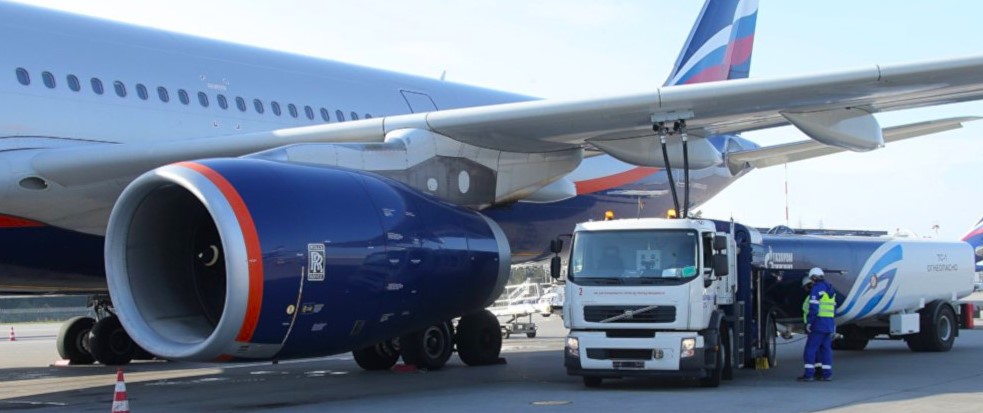
According to RBC-Ukraine, citing The Moscow Times, refueling restrictions have been introduced at 26 Russian airports, stretching from Kaliningrad in the west to Petropavlovsk-Kamchatsky in the Far East. The measures highlight how problems in Russia’s fuel sector are increasingly affecting civil aviation operations.
The restrictions were identified through data from Russia’s aeronautical information system analyzed by the independent outlet Verstka.
Restrictions Spread Across 26 Airports
The first restrictions were introduced in June, followed by a second wave in September. Their duration varies by airport, ranging from roughly one month to seven months.
At Pulkovo Airport in St. Petersburg, aircraft can reportedly be refueled only according to the quantity specified in the flight plan, with no additional volumes permitted. That restriction is scheduled to remain in place until March 2027.
A similar procedure has been introduced at Khrabrovo Airport in Kaliningrad, where the measure is expected to remain in effect until December.
The restrictions do not affect every carrier equally. At 15 of the 26 airports, the measures reportedly apply specifically to foreign airlines, limiting them to the amount of fuel required for a single flight.
Among the airports affected are those in Kazan, Ufa, Perm, Yekaterinburg, Chelyabinsk, Tyumen, Irkutsk, Vladivostok, Khabarovsk and Yakutsk.
Southern Airports Face Particularly Severe Constraints
The situation is especially sensitive in southern Russia, where several airports remain closed because of the war.
Of the six operating airports in the region, restrictions covering both Russian and foreign carriers have reportedly been imposed at Sochi, Volgograd and Astrakhan.
At Krasnodar, the reported restrictions apply only to foreign airlines.
For airlines operating in the affected airports, limits on additional fuel can reduce operational flexibility, particularly on routes where carriers traditionally carry extra fuel to account for contingencies or supply uncertainty at destinations.
Previous Developments Point to a Wider Fuel Crisis
The aviation restrictions are the latest development in a fuel crisis that has been building for months.
The crisis has been linked to repeated Ukrainian drone strikes on Russian oil refineries. According to the reports cited by RBC-Ukraine, Russian refineries have been hit more than 70 times since the beginning of the year, with some of the country's largest facilities affected.
The attacks have disrupted refining capacity, with Russian oil processing reportedly falling to its lowest level since 2002.
The impact has extended beyond aviation. By the end of August, gasoline production had reportedly fallen to around 70% of domestic consumption, while fuel shortages and long queues were reported at filling stations in parts of Russia, including the Yelets district of the Lipetsk region.
Russian President Vladimir Putin previously acknowledged that authorities had not been adequately prepared for the series of attacks targeting the country's energy infrastructure.
Government Moves Fail to Eliminate Aviation-Fuel Pressure
In an effort to protect domestic supplies, the Russian government imposed a ban on aviation-fuel exports through November 30.
The measure, however, did not immediately resolve the supply concerns.
At the end of June, Azimuth Airlines reportedly warned of a critical kerosene situation. The statement came as Transport Minister Andrei Nikitin maintained that Russia was not experiencing an aviation-fuel shortage.
Authorities subsequently considered other measures to increase supply. The Ministry of Transport proposed lowering some requirements governing jet-fuel quality in an effort to expand production.
At the same time, the price of aviation fuel reached a historic high on the Russian exchange, adding further pressure on airlines.
Why Jet Fuel Is Particularly Difficult to Replace
Industry specialists have pointed to structural problems in Russia's aviation-fuel market.
Sergey Tereshkin, general director of Open Oil Market, said the number of Russian refineries producing aviation fuel is smaller than the number producing gasoline and diesel.
This makes it more difficult to quickly compensate for lost jet-fuel production when individual refineries are damaged or undergo repairs.
Dmitry Baranov of Finam Management has also argued that expanding aviation-fuel supplies through imports is difficult, while strict fuel specifications limit the ability to increase production by simply altering output.
As a result, industry experts have predicted that jet-fuel prices could continue rising until refinery repairs are completed and production capacity recovers.
What the Restrictions Mean for Airlines
The latest airport measures suggest that the fuel crisis is no longer confined to Russia's refining sector or road transportation. It is increasingly becoming an operational issue for the country's aviation industry.
Restrictions on refueling can force airlines to plan flights more carefully and may limit the amount of additional fuel they can carry. Foreign carriers appear to be particularly affected, with restrictions at 15 airports reportedly limiting them to fuel sufficient for a single flight.
For domestic airlines, the situation is also becoming more serious in parts of southern Russia, where restrictions reportedly apply to all carriers.
The duration of the measures is another concern. With some restrictions extending into late 2026 and, in the case of Pulkovo, March 2027, the problem could persist well beyond the immediate refinery disruptions.
Aviation Outlook
Russia's aviation fuel situation is therefore developing on several fronts simultaneously: refinery disruptions, higher jet-fuel prices, government intervention, and airport-level restrictions on refueling.
The export ban and efforts to increase domestic production may help stabilize supplies, but the underlying constraints remain significant. The ability of Russian refineries to return to normal production will be a key factor in determining whether the restrictions can eventually be lifted.
For airlines, the latest measures represent another layer of uncertainty in an operating environment already affected by airspace closures, sanctions and reduced international connectivity.
The spread of refueling restrictions across 26 airports nationwide indicates that Russia's fuel problems have moved beyond isolated supply disruptions and are now having a direct impact on the country's aviation infrastructure and flight operations.