
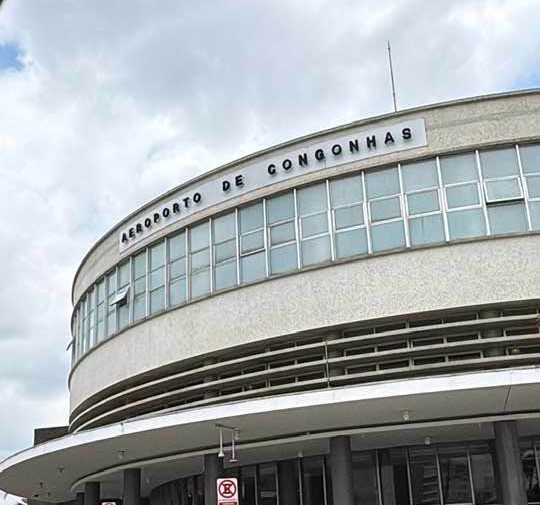
Brazil’s National Civil Aviation Agency (ANAC) has approved a new interpretation of the operating rules for São Paulo’s Congonhas Airport (CGH), allowing flights already scheduled for the day to be completed after 11:00 p.m. in exceptional circumstances.
The decision, approved on September 8, 2026, is intended to prevent major disruptions at Congonhas from cascading through Brazil’s wider air transport network. However, it does not permanently extend the airport’s operating hours, create additional slots or allow airlines to schedule new regular flights after 11 p.m.
Under the existing framework established by ANAC Resolution No. 55/2008, civil aircraft are generally prohibited from operating at Congonhas between 11:00 p.m. and 6:00 a.m. The regulation currently provides specific exceptions for flights transporting seriously ill or injured people, vital human organs for transplantation, and search-and-rescue operations.
The new ANAC interpretation creates an additional, tightly controlled pathway for exceptional operational contingencies.
If severe weather, a safety-related interruption, an emergency or another event outside an airline's control disrupts the day's schedule, aircraft that were already scheduled may, under the new mechanism, complete their operations after 11 p.m.
The measure therefore addresses the completion of an existing schedule, rather than expanding Congonhas into a late-night operating airport.
The exceptional mechanism is intended to cover situations such as:
The precise criteria and activation procedures have not yet been finalized. They will be established through a Carta de Acordo Operacional (CAOP), or Operational Agreement Letter, being prepared by Brazil’s Department of Airspace Control (DECEA), Congonhas operator Aena Brasil and the airlines LATAM, GOL and Azul.
Congonhas is a critical component of Brazil’s domestic air network. A disruption there can have consequences far beyond São Paulo, affecting aircraft rotations, connecting passengers and schedules at other airports.
The request was submitted by ABEAR (Brazilian Association of Airlines). The association argued that when an extraordinary event interrupts operations, the inability to complete flights already scheduled for the day can generate a chain reaction across the network.
ANAC's technical assessment similarly identified the risk of a cascade of operational effects, including diversions, go-arounds, aircraft returns to the gate and wider schedule disruption.
The case for greater flexibility was reinforced by two recent major disruptions.
According to information presented during the ANAC proceedings, more than 120,000 passengers were affected by two significant events involving Congonhas and the wider São Paulo aviation system.
One was a severe weather event in December 2025, when storms and winds approaching 100 km/h disrupted airport operations and contributed to the cancellation of more than 400 flights across São Paulo state.
Another occurred in April 2026, when an incident involving smoke and a suspected gas leak at a DECEA facility led to an evacuation and temporary disruption of air traffic control operations. The initial reports at the time differed over the precise cause: ANAC later said the source of the smoke was still under investigation and that a gas leak had been ruled out.
The proceedings argued that some of the resulting disruption could potentially have been mitigated if flights already scheduled at Congonhas had been allowed to finish after the normal 11 p.m. cutoff.
ANAC's assessment indicates that such situations are relatively uncommon.
There were five occasions in 2025 when Congonhas operations extended beyond the normal operating period. Through June 2026, there had been two such occasions in which the type of extension covered by the new interpretation would have been relevant.
That frequency was an important factor in ANAC's assessment that the measure should be treated as an exceptional contingency tool rather than a change to normal airport operations.
The decision does not abolish Congonhas' 11 p.m. curfew.
On normal operating days, the airport continues to operate within its established 6 a.m.–11 p.m. window. Airlines cannot use the new interpretation to add new flights, allocate new slots or routinely schedule departures or arrivals after 11 p.m.
This distinction is particularly important because Congonhas is located within São Paulo's densely populated urban area and its operating restrictions are closely linked to aircraft-noise management.
Noise concerns remain significant. Data cited in Brazilian reporting show that complaints increased from 13 during the final five months of 2021 to 160 between January and May 2026.
The next step is completion of the CAOP operational agreement, which will define exactly what constitutes a qualifying contingency and who can activate the exceptional procedure.
Once the agreement is finalized and the mechanism is implemented, ANAC intends to monitor its use and operational consequences. The regulator could subsequently consider whether further changes to Congonhas' operating framework are justified.
For airlines, the decision provides an additional recovery tool during major disruptions. For passengers, it could mean that a flight delayed by a major storm or network-wide operational event has a greater chance of operating rather than being cancelled solely because the clock has passed 11 p.m.
For residents around Congonhas, however, the measure does not eliminate the existing noise restrictions—it creates a limited exception designed to protect network resilience while retaining the 11 p.m. rule for normal operations.
Bottom line: ANAC has not opened Congonhas for routine nighttime flying. It has created a controlled contingency mechanism to let the airport finish flights that were already on the day's schedule when extraordinary disruptions make the 11 p.m. deadline impractical.