
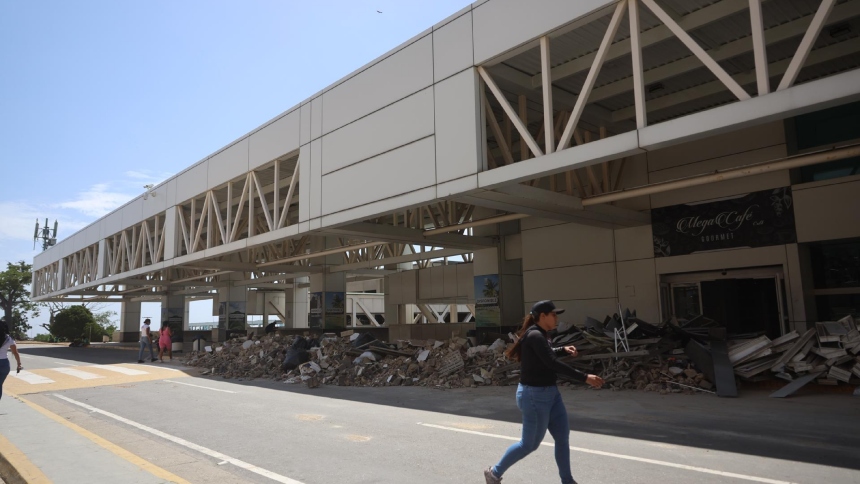
Venezuela's primary international gateway is preparing to reopen in stages after more than six weeks of complete closure, marking the most significant milestone yet in the country's aviation recovery following the devastating double earthquake of June 24.
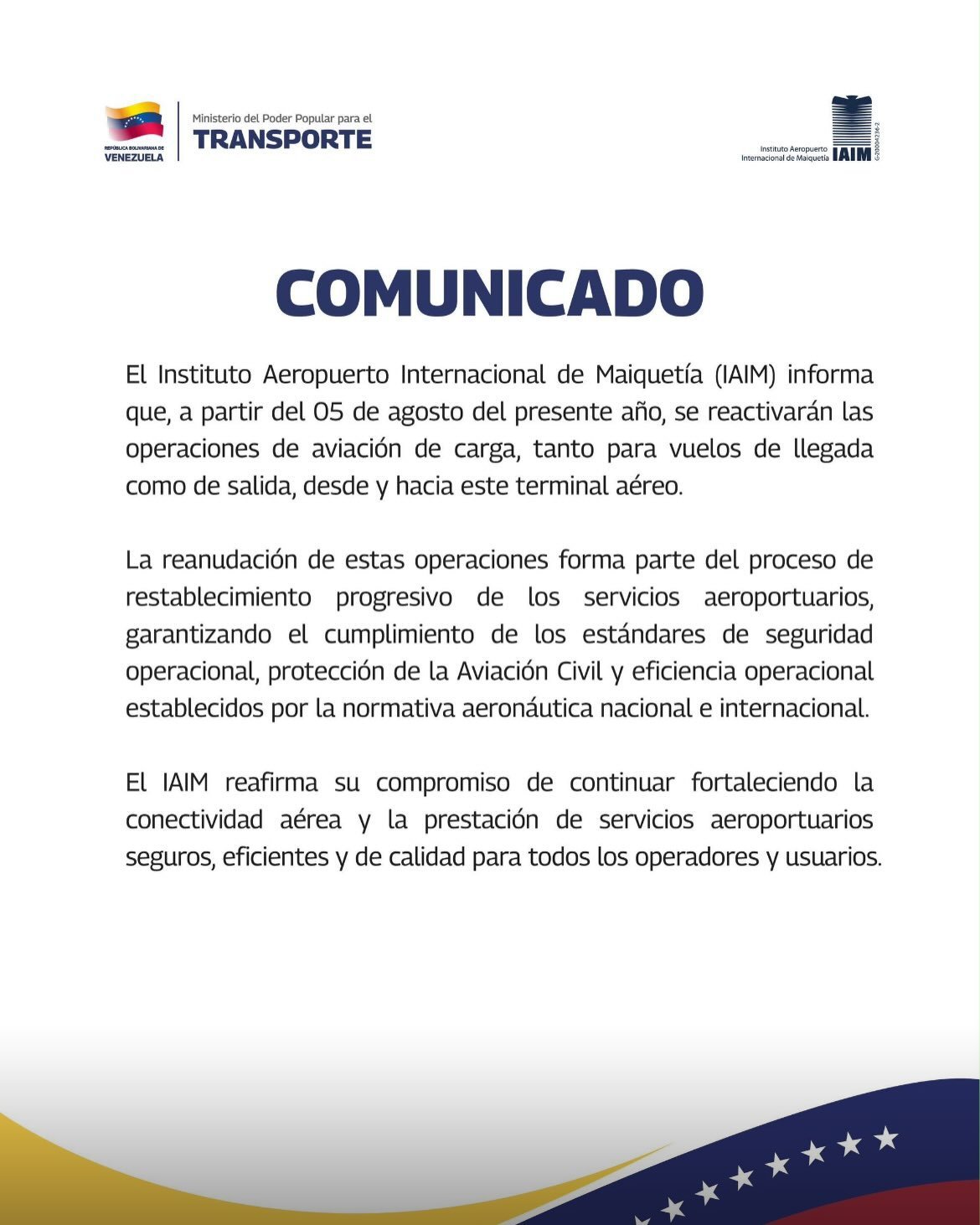
The Simón Bolívar International Airport in Maiquetía will resume air cargo operations on August 5, while commercial passenger flights are scheduled to restart on August 24 through a temporary terminal currently under construction. The phased reopening reflects a deliberate operational strategy that prioritizes infrastructure readiness and aviation safety rather than a simple return to normal operations.
The Maiquetía International Airport Institute (IAIM) formally confirmed the cargo restart through Circular IAIM-DG-2026-0000631, issued on July 31, directing cargo airlines, customs agencies, freight forwarders, and warehouse operators to reactivate concessions ahead of Tuesday's reopening. The Ministry of People's Power for Transport subsequently announced that both arriving and departing cargo flights would resume under full compliance with Venezuelan civil aviation regulations, international operational safety standards, and aviation security (AVSEC) requirements.
IAIM Director General Aníbal Rafael Bellorín Pereira said the institute remains committed to providing a safe and transparent operating environment as airport services gradually return.
The August 5 reopening represents the first confirmed operational milestone in a recovery roadmap that Venezuelan authorities expect will eventually restore approximately 85 percent of the airport's operational capacity by December 2026.
At first glance, the 19-day gap between cargo operations resuming on August 5 and passenger flights returning on August 24 may appear puzzling. The explanation lies in one of aviation's fundamental operational distinctions: aircraft require a runway, but passengers require an airport.
Both cargo aircraft and commercial airliners will operate from the same certified runway. The difference is everything that happens before passengers board.
Cargo operations primarily depend on:
Passenger operations require all of those systems plus:
In other words, reopening cargo operations is largely an airside challenge, while reopening passenger service is fundamentally a terminal readiness challenge.
That distinction was highlighted shortly after the earthquake by Peter Cerda, Regional Vice President for the Americas at the International Air Transport Association (IATA), who observed that "one thing is reopening the airport, another is restoring normal operations."
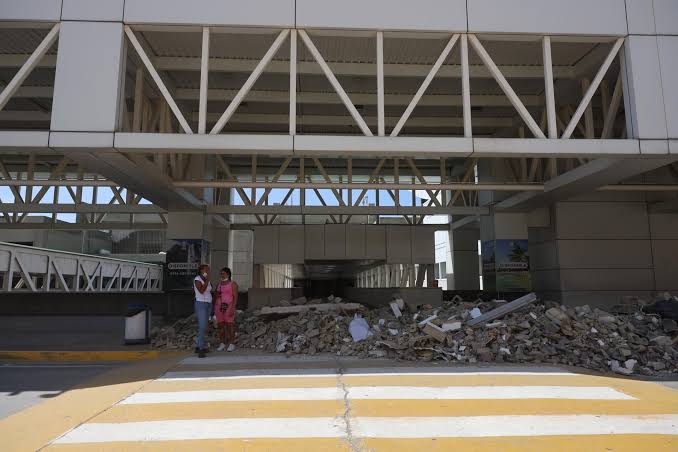
Authorities are now focusing on completing temporary passenger facilities that will allow scheduled commercial operations to resume while repairs continue on the damaged terminal complex.
Images released during recent inspections show rapid progress on the temporary terminal, with large tents, prefabricated metal structures, scaffolding, and temporary passenger processing areas already in place.
The temporary facilities are expected to accommodate approximately eight commercial flights per day during the initial reopening phase, serving both domestic and international passengers until reconstruction of the permanent terminal advances further.
The approach mirrors international best practice following major seismic disasters.
Following the 2010 earthquake in Chile, Santiago's Arturo Merino Benítez International Airport successfully maintained operations through temporary passenger facilities while permanent infrastructure underwent reconstruction. Venezuelan authorities are following a similar model to restore connectivity without compromising operational safety.
Transport Minister Francisco Garcés has described the structural damage at Maiquetía as "entirely repairable," indicating reconstruction remains on schedule.
The reopening is also possible because of a fortunate operational circumstance that existed before the earthquake.
Maiquetía operates three runways. Before June 24, one runway was already closed for scheduled maintenance while commercial traffic used another runway. It was this active runway that suffered extensive cracking during the earthquake, prompting Venezuela's civil aviation authority (INAC) to issue NOTAM A0266/26 closing the airport beginning June 25.
However, the runway already undergoing maintenance became the unexpected lifeline.
Following detailed inspections by a U.S. airfield management and assessment team, the runway was certified for heavy aircraft operations and subsequently used for humanitarian relief flights from Portugal, Qatar, Germany, and other international partners.
That same runway will now support the return of commercial cargo operations beginning August 5, allowing reconstruction supplies and commercial freight to once again reach Venezuela's principal international airport.
The cargo restart carries significance well beyond aviation.
Since Maiquetía's closure, importers and exporters have been forced to reroute freight through Valencia's Arturo Michelena International Airport, approximately 170 kilometers west of Caracas, as well as other contingency airports.
While effective, those diversions increased transportation costs, lengthened delivery times, and complicated logistics during one of Venezuela's largest reconstruction efforts in decades.
Restoring cargo operations at Maiquetía will significantly improve supply chains for construction materials, humanitarian goods, industrial equipment, pharmaceuticals, and high-value imports destined for Caracas and neighboring La Guaira, one of the regions hardest hit by the earthquakes.
The airport's reopening also resumes a broader aviation recovery that had already begun before nature intervened.
Following Venezuela's political transition in January 2026, international air service had started returning after years of sanctions, suspended routes, and limited connectivity.
American Airlines restored Miami-Caracas service on April 30, marking the first scheduled U.S.-Venezuela passenger flights in seven years.
Avianca resumed Bogotá-Caracas operations earlier in the year.
Copa Airlines expanded Panama City frequencies.
United Airlines had planned to inaugurate Houston-Caracas service on August 11.
Then the June 24 earthquakes halted the momentum almost overnight.
Ironically, only six days before the disaster, the U.S. Treasury's Office of Foreign Assets Control (OFAC) had issued General License 59, authorizing U.S. companies to provide maintenance, repair, overhaul, software, technical support, spare parts, logistics, and related aviation services for aircraft operated by Venezuela's state-owned airline Conviasa.
For the first time in years, legal and regulatory barriers to rebuilding Venezuela's commercial aviation sector were easing.
The earthquakes shifted the challenge from regulatory restrictions to physical infrastructure.
Despite Maiquetía's closure, Venezuela has remained connected through an expanding network of contingency airports.
Valencia has emerged as the country's principal temporary international gateway, operating approximately 64 weekly international flights, including services by Copa Airlines, Avianca, Iberia, Air Europa, Plus Ultra, TAP Air Portugal, Conviasa, Estelar, Rutaca, Turpial, and Wingo.
Barcelona's General José Antonio Anzoátegui Airport has also absorbed additional traffic, handling roughly 25 weekly international flights, while Avianca has continued serving Maracaibo directly.
The temporary redistribution of traffic has demonstrated the resilience of Venezuela's aviation network, although no airport can fully replace Maiquetía's role as the country's primary international hub.
Infrastructure is only one part of the recovery.
According to Marisela de Loaiza, president of the Venezuelan Airlines Association, many airport employees live in La Guaira, the coastal state located adjacent to Maiquetía and among the regions most severely affected by the earthquake.
With widespread residential damage throughout the area, airport authorities must also determine how many trained personnel are available to support the gradual restoration of passenger operations.
Staffing, alongside terminal readiness, may prove just as important as engineering progress in determining how quickly operations can expand beyond the initial reopening.
From an aviation management perspective, Maiquetía's reopening follows a well-established post-disaster recovery model.
Rather than rushing to restore full commercial service, authorities are rebuilding operations sequentially:
This sequence minimizes operational risk while allowing engineers additional time to certify repaired infrastructure.
The August 5 cargo reopening should therefore be viewed less as the end of the crisis than as the beginning of operational normalization. Cargo flights will demonstrate the readiness of airfield systems, ground handling, customs procedures, and airport coordination before passenger volumes place substantially greater demands on the airport.
If the August 24 passenger reopening proceeds as scheduled, Maiquetía will have achieved in just two months what many earthquake-damaged international airports have required considerably longer to accomplish.
For Venezuela's aviation sector, the significance extends beyond a single airport. The reopening restores the country's principal international gateway at a moment when airlines, regulators, maintenance providers, and foreign operators had already begun rebuilding international connectivity. The earthquakes interrupted that momentum, but they did not end it.
The return of cargo operations on August 5 signals that Venezuela's aviation recovery has moved from emergency response to operational reconstruction. Passenger flights later this month will determine whether that recovery can now accelerate toward restoring the country's position as one of northern South America's principal international aviation gateways.
You may like to read......