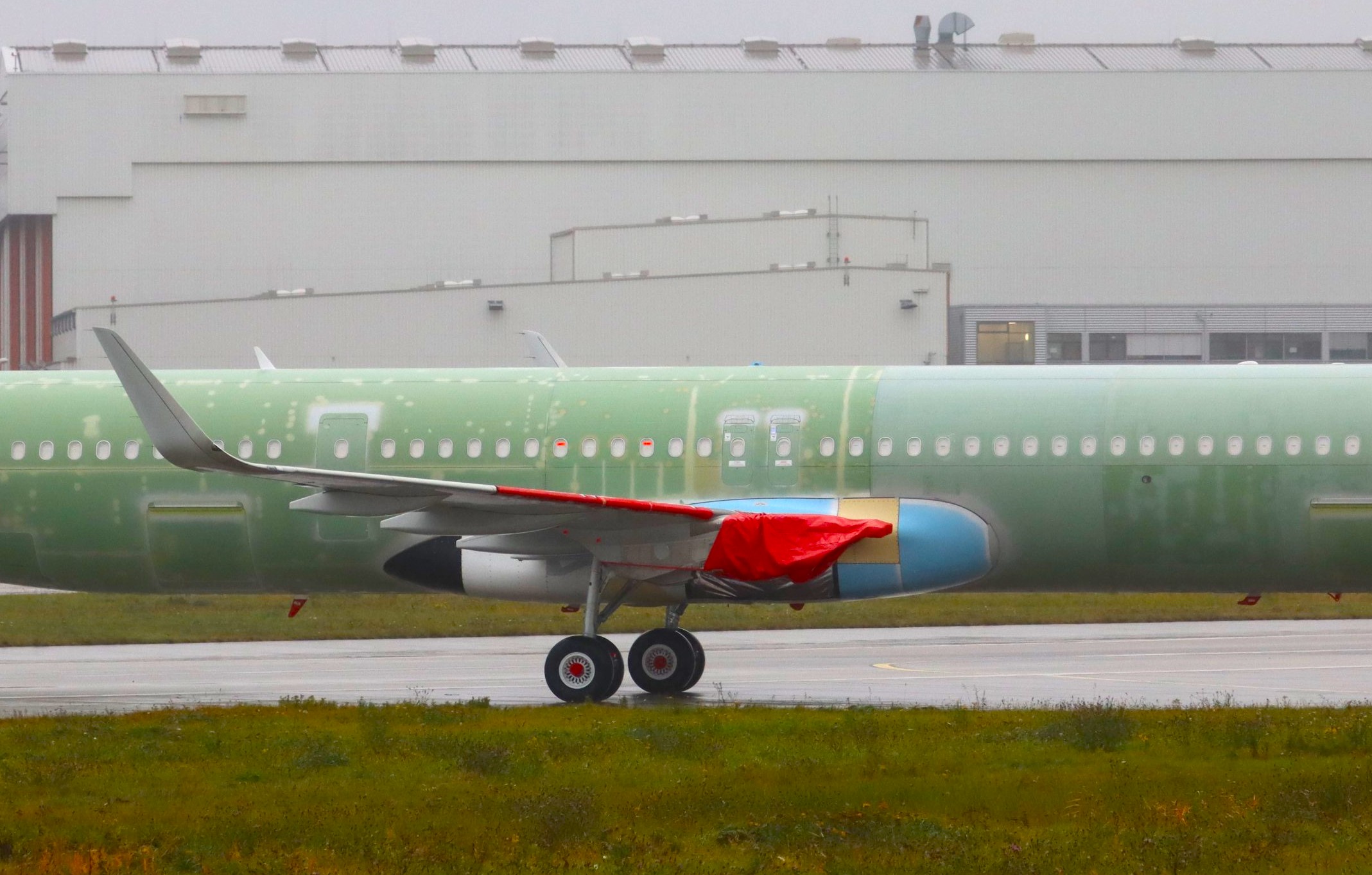


The U.S. Federal Aviation Administration (FAA) has finalized a new Airworthiness Directive (AD 2026-17-02) requiring inspections on certain Boeing 787-8, 787-9 and 787-10 Dreamliners after a Boeing manufacturing investigation identified potentially excessive shim gaps and assembly preload forces in a critical area of the wing structure.
The directive addresses a potential fatigue-cracking mechanism involving the lower side-of-body (SOB) splice plates, which are structural components associated with the lower outboard wing skins near the wing-to-fuselage structural junction.
According to the FAA, Boeing's investigation concluded that some shim gaps may have exceeded the engineering allowances specified for the joint. During assembly, excessive gaps can require components to be pulled into position with higher-than-intended forces. That preload condition can increase local stresses around fastener holes and potentially initiate fatigue cracks.
The issue is rooted in the way structural components are fitted together during aircraft production.
A shim is a precisely manufactured filler installed between structural surfaces when a controlled gap exists between mating components. In aircraft structures, shimming is not simply about eliminating a visible gap; the thickness and fit of the shim form part of the engineering-controlled load-transfer system.
If the gap is larger than the permitted engineering allowance, an assembly technician may need to apply greater pull-up force to bring the components into the required position before fastening.
That creates a potentially important structural condition.
Instead of the joint being assembled with the intended geometry and preload, the components can experience additional localized loading. At fastener holes—where stress concentrations already exist—this can contribute to the initiation of fatigue cracking.
The FAA specifically identifies excessive preload forces at the lower SOB splice plates as part of the unsafe condition.
The lower side-of-body structure is located around the transition between the aircraft's fuselage center section and the wing structure.
The wing carries enormous aerodynamic loads during flight. Those loads are transferred through the wing box, spars, skins, fittings and surrounding center-section structure into the fuselage.
The lower wing skin, in particular, participates in carrying significant tensile loads during positive-g manoeuvres and normal flight.
The splice plates form part of this structural load path. Consequently, fatigue damage developing around fastener holes in this region cannot be treated as a cosmetic manufacturing discrepancy.
The FAA classifies the affected AD under ATA Chapter 57 — Wings.
The engineering sequence is important:
Excessive structural gap → increased pull-up force → additional local preload/stress → stress concentration at fastener holes → fatigue-crack initiation → crack propagation under repeated flight loading.
Aircraft wings experience millions of repeated load cycles over their service lives. Even when an individual flight does not exceed the aircraft's structural design limits, repeated cyclic loading can progressively extend a small crack.
Fastener holes are particularly sensitive locations because their geometry creates a stress concentration. If a manufacturing-induced preload is superimposed on normal operational stresses, the local stress state can become more severe than assumed in the original structural analysis.
The concern therefore is not necessarily immediate structural failure. It is the possibility of a fatigue crack that remains undetected and progressively grows with flight cycles.
The FAA states that, if left unaddressed, cracks could grow sufficiently to weaken primary wing structure until it can no longer sustain limit load, potentially resulting in loss of continued safe flight and landing.
The final AD requires a combination of ultrasonic testing (UT) and detailed visual inspection (DET), depending on the aircraft configuration.
The inspection program can include:
Ultrasonic testing is particularly useful for detecting structural discontinuities that may not be visible from the surface.
High-frequency sound waves are introduced into the material and reflections from internal interfaces or discontinuities can be analyzed to identify indications consistent with cracking.
For a fatigue-crack scenario around fastener holes, UT can provide a significantly greater level of inspection sensitivity than relying solely on visual examination.
The FAA's directive specifically calls for repetitive UT inspections at designated structural locations, together with detailed inspections of specified splice plates.
One technically significant aspect of the directive is the compliance-time calculation.
American Airlines asked the FAA to simplify the inspection intervals by using only total flight hours or flight cycles. The FAA rejected the request because the affected splice plates are considered flight-length sensitive.
The compliance methodology therefore accounts for both flight hours and flight cycles.
This distinction is important from a fatigue-analysis perspective.
A long-haul 787 may accumulate substantial flight hours with relatively fewer takeoff/landing cycles, while a short-haul aircraft can accumulate many more cycles over the same period. Because fatigue damage can depend on the number and nature of structural loading cycles, a simple hours-only threshold would not necessarily provide an equivalent safety margin.
The FAA concluded that the equation-based compliance times better account for the combined effects of flight hours and cycles.
The FAA estimates that the final AD affects 17 Boeing 787 aircraft on the U.S. registry.
The applicable aircraft are certain:
787-8
787-9
787-10
Importantly, this does not mean that every 787 worldwide has been determined to have a structural defect.
Applicability is defined by the aircraft identified in Boeing Alert Requirements Bulletin B787-81205-SB570048-00 RB, Issue 001, dated August 11, 2025.
The AD provides for on-condition corrective action, including repair.
Where Boeing's requirements bulletin calls for repair instructions, the FAA requires the repair to be accomplished using an approved method under the AD's provisions.
Alternative methods of compliance may also be considered when they provide an acceptable level of safety and receive the required FAA approval.
This is an important distinction: the FAA is not directing operators to automatically replace the affected wing structure. The inspection program is designed to identify whether cracking exists and then determine the appropriate engineering disposition.
The FAA estimates up to 286 labor hours per inspection cycle per aircraft, at an assumed labor rate of $85 per hour.
That equates to approximately $24,310 per aircraft per inspection cycle, excluding repair costs.
For the estimated 17 affected U.S.-registered aircraft, the FAA calculates up to approximately $413,270 per inspection cycle for the known inspection labor costs.
The agency notes that it does not have definitive data for the potential cost of repairs because those costs depend on whether cracking is actually discovered and what corrective action is required. Some costs may also be covered under Boeing warranty arrangements.
The regulatory sequence is also significant.
Boeing's investigation identified the manufacturing issue, after which the FAA proposed mandatory inspections through an NPRM published March 13, 2026.
Following the comment period, the FAA reviewed responses from operators and aviation-safety stakeholders. United Airlines reported no objection, while American Airlines requested changes to compliance-time tracking. The Foundation for Aviation Safety also raised broader questions concerning manufacturing quality.
The FAA ultimately adopted the AD essentially as proposed, with minor editorial and reference changes.
For operators, this is primarily a structural integrity and scheduled-maintenance compliance issue, rather than evidence of an immediate fleet-wide grounding.
Affected aircraft must be inspected within the specified compliance limits and then inspected repetitively according to the prescribed flight-hour/flight-cycle methodology.
From an aircraft-maintenance perspective, the event demonstrates why manufacturing quality, structural fit-up, shimming practices and assembly preload are directly connected to long-term fatigue performance.
A shim that is outside an engineering tolerance may appear to be a relatively small production discrepancy. However, in a highly loaded primary structure, the resulting assembly forces can alter the local stress environment around fastener holes.
That is precisely why aircraft structural engineering treats gap control, fastener installation, joint fit-up and preload as controlled parameters rather than simple assembly details.
The FAA's new AD 2026-17-02 does not identify a generic structural problem across the entire Boeing 787 fleet.
Instead, it targets specific aircraft and structural configurations where Boeing identified a manufacturing condition involving potentially excessive shim gaps and pull-up forces at lower side-of-body splice plates.
The engineering concern is straightforward but serious:
A manufacturing gap can create excessive assembly preload. Excessive preload can increase local stress around fastener holes. Repeated flight loading can then drive fatigue-crack initiation and growth.
The FAA's inspection program is intended to find those cracks before they can progress to a level that threatens the primary wing load path.
For aviation maintenance and structural-engineering professionals, the case is another reminder that manufacturing conformity is itself an element of continued airworthiness—particularly in primary composite/metal aircraft structures where joint geometry, load transfer and fatigue behavior are tightly interconnected.
Source: U.S. Federal Aviation Administration, Airworthiness Directive 2026-17-02, Docket FAA-2026-2295, Project Identifier AD-2025-01361-T. The final rule is scheduled for Federal Register publication on August 27, 2026 and is specified to become effective 35 days after publication.
You may like to read.......

.jpg)