
Airbus is facing a fresh manufacturing-quality challenge involving hundreds of A321neo aircraft, adding pressure to an already demanding production and delivery schedule as the European aircraft manufacturer works to achieve its 2026 target of around 870 commercial aircraft.
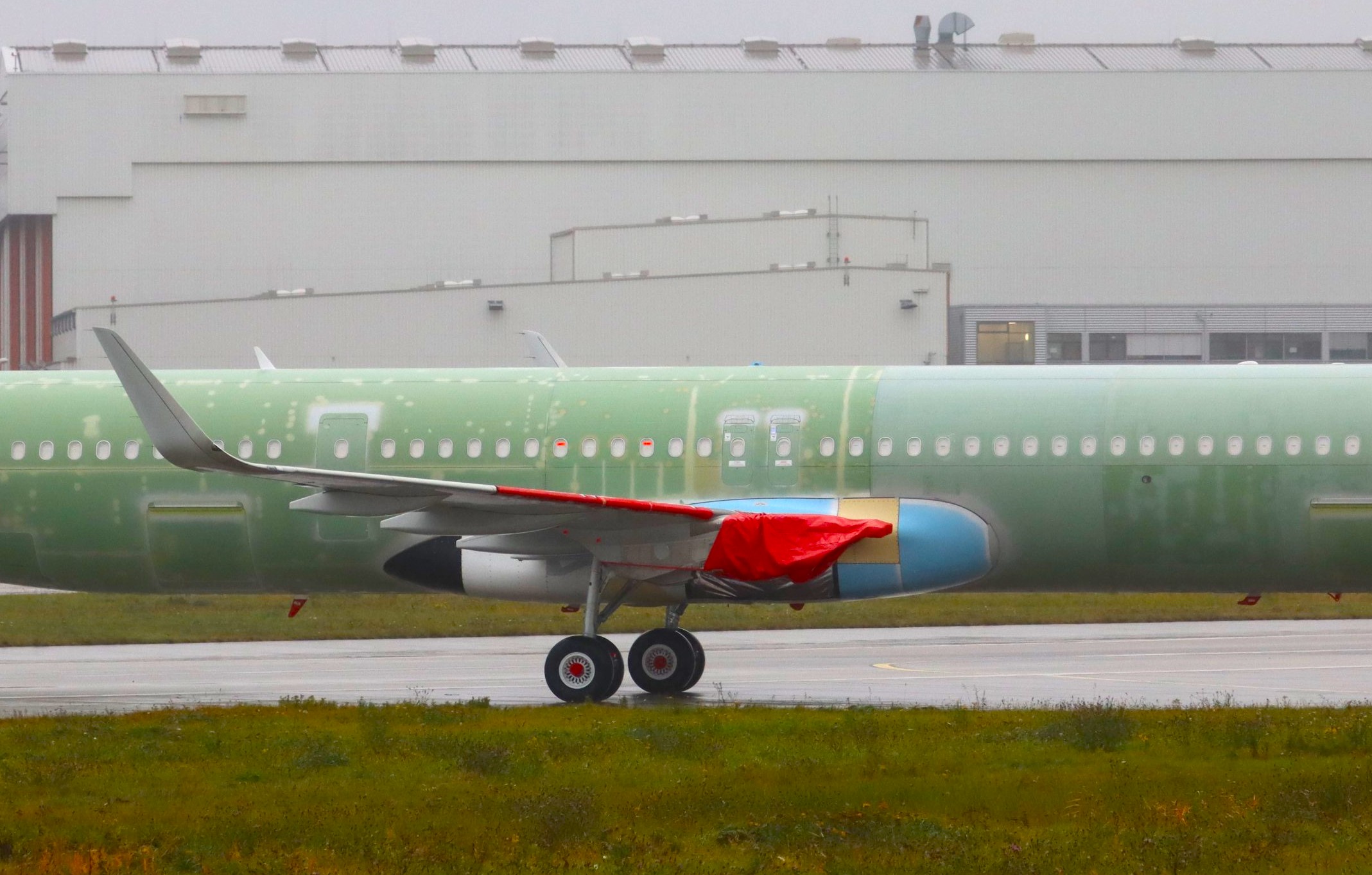
The issue involves inadequate corrosion protection on structural components known as stringers in the lower forward section of the A321neo fuselage. Airbus has confirmed that the problem originated with an external supplier and has stressed that it does not present a safety issue for aircraft already in service.
The problem was first reported by The Air Current on September 24, which said the defect could affect more than 500 aircraft, including jets already delivered to airlines and aircraft still moving through Airbus' production system. Airbus subsequently confirmed the existence of the quality deviation.
The affected components are fuselage stringers—longitudinal structural members that reinforce the aircraft's skin. The issue concerns the surface protection applied to these components, rather than a fundamental structural-design defect.
According to industry sources cited by Reuters, the problem arose from an incorrectly applied primer at an Italian supplier involved in the A321neo supply chain. Sources identified the supplier as TESI, based near Cicerale in southern Italy, and said the company carried out work for Leonardo, one of the suppliers involved in producing A321neo stringers.
Leonardo confirmed that TESI is among several suppliers associated with its A321neo work but did not confirm whether TESI performed the specific work involved in this case. TESI did not respond to Reuters' request for comment. Airbus has not publicly named the supplier.
The Air Current reported that approximately 250 affected aircraft are at various stages of production, including aircraft awaiting delivery, while the overall affected population is understood to be around 500 aircraft.
Airbus has identified and contained the source of the problem and has a repair or remediation process available. Aircraft already in airline service can continue operating, according to Airbus' assessment.
The defect comes at a particularly sensitive time for Airbus.
The company delivered 351 commercial aircraft during the first half of 2026 and maintained its full-year guidance of approximately 870 aircraft.
By the end of August, Airbus had delivered 475 aircraft, according to The Air Current and Reuters. That leaves roughly 395 deliveries required during the final four months of the year to reach the 870 target—an average of almost 99 aircraft per month.
That makes the final quarter particularly important. Airbus traditionally accelerates deliveries toward year-end, but affected aircraft may require additional inspection, rework or coordination with customers before they can be handed over.
Airbus has nevertheless maintained its existing public guidance.
“Our full-year guidance was formally stated during our first-half results on 29 July - this remains our current public position,” an Airbus spokesperson said, according to Reuters.
The significance of the issue extends beyond the individual aircraft affected.
The A321neo is the largest member of the A320neo family and has become the centrepiece of Airbus' narrowbody strategy. Airbus says the A321neo accounts for roughly two-thirds of the A320 Family order book, reflecting strong demand for larger single-aisle aircraft capable of carrying more passengers and serving longer routes.
As of the end of August, Airbus reported an A320 Family backlog of 7,577 aircraft, including 5,691 A321neo aircraft.
Airbus is simultaneously pursuing a major industrial ramp-up. The company is targeting production of 70–75 A320 Family aircraft per month by the end of 2027, with a sustained rate of 75 aircraft per month thereafter.
That expansion involves Airbus' final assembly network in Europe, China and the United States, as well as a large global network of suppliers.
The latest quality issue therefore highlights one of the central challenges facing the programme: increasing output while maintaining consistent quality across an increasingly complex supply chain.
The A321neo issue follows another significant A320-family manufacturing problem that emerged in late 2025.
Airbus discovered quality problems involving fuselage panels supplied for A320-family aircraft. At one stage, 628 aircraft were identified as potentially requiring inspection, including aircraft already in service and others at different stages of production.
That episode ultimately contributed to Airbus reducing its 2025 delivery target from approximately 820 aircraft to around 790.
The earlier problem was more disruptive to the delivery system than the current A321neo issue appears to be. Airbus has indicated that the latest deviation is contained and that a remedy is available, while aircraft already in service are not considered to face an immediate safety concern.
Nevertheless, the recurrence of supplier-related quality issues puts additional attention on Airbus' industrial oversight as it attempts to increase production.
Airbus' 2026 delivery objective was already ambitious.
The company entered the year dealing with continuing supply-chain constraints, including engine availability and other production bottlenecks. At its July half-year results, Airbus reported strong demand, with 886 gross commercial aircraft orders during the first half, resulting in 821 net orders after cancellations.
The company's problem is therefore not a shortage of demand. It is the ability to convert a very large order backlog into completed, inspected and customer-accepted aircraft at the required rate.
The A320 Family backlog stood at 7,577 aircraft at the end of August, including 5,691 A321neos.
The latest defect could add work at several points in this system. Aircraft still in production may need corrective action before delivery, while aircraft already handed over could require inspections or remedial work during scheduled maintenance.
Industry sources told Reuters that some airlines continue to accept affected aircraft, with commercial concessions—including arrangements related to future maintenance—being discussed in some cases.
Investors reacted cautiously to the news.
Airbus shares fell around 1.3% on September 25, underperforming other major stocks on France's CAC 40 index, as markets assessed whether the additional quality work could complicate the company's delivery ambitions.
Analysts cited by Reuters differed on the likely effect. Citi analyst Charles Armitage said the issue could affect Airbus' ability to achieve its delivery target depending on customer decisions and the scale of required repairs, while Jefferies analyst Chloe Lemarie said the availability of a fix should limit the potential impact on deliveries.
The immediate financial impact therefore remains uncertain and will depend largely on how quickly Airbus can complete the necessary work and whether customers accept aircraft subject to the deviation.
For Airbus, the priority will be to manage three parallel tasks:
For airlines, the issue is primarily a maintenance and fleet-management consideration rather than an immediate operational safety concern. Airbus says affected aircraft already in service can continue flying, while corrective action can be incorporated into maintenance activity where required.
The larger industrial question is whether Airbus can prevent relatively contained supplier-quality deviations from becoming major delivery bottlenecks.
With thousands of A320-family aircraft still on order and the A321neo representing the dominant share of that backlog, Airbus has a powerful demand position. But the company's ability to capitalize on that demand increasingly depends on its ability to expand production without compromising quality or creating additional rework across the supply chain.
For now, Airbus is maintaining its approximately 870-aircraft 2026 delivery target. The coming months—and particularly the traditionally intense fourth-quarter delivery period—will show whether the latest A321neo quality issue remains a manageable production complication or becomes another significant obstacle to Airbus' delivery ambitions.

.jpg)