
The latest Prevention of Aeronautical Accidents (Cenipa) report on 2024 crash of the Brazilian Voepass aircraft indicates that the combination of crew conduct inflight, internal safety management issues of the carrier along with failures of Anac's follow-up would have been behind the accident that killed 62 people in 2024, in Vinhedo, in the interior of São Paulo.
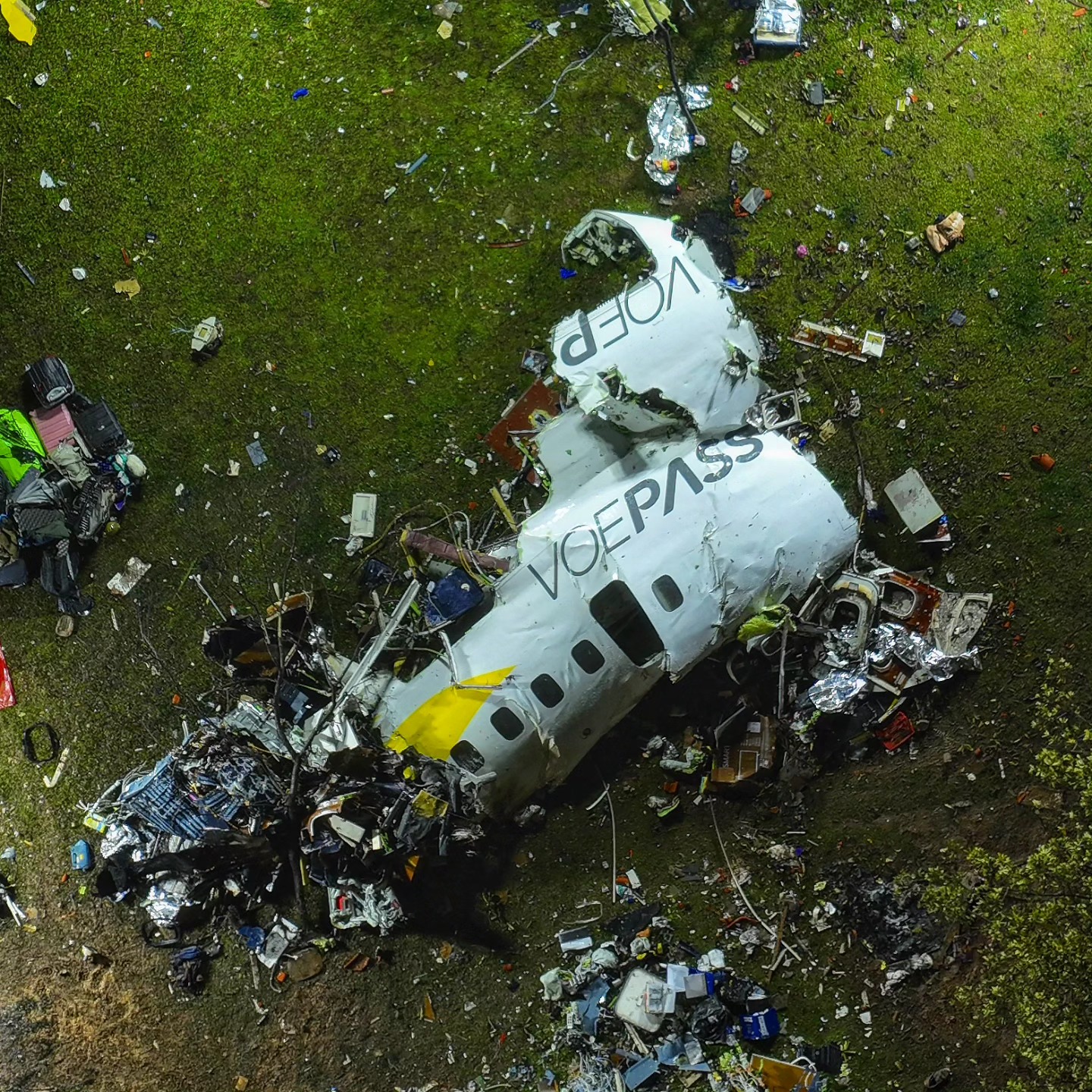
Voepass Flight 2283 was a scheduled domestic Brazilian passenger flight from Cascavel to Guarulhos. On August 9, 2024, the ATR 72 serving the flight crashed in Vinhedo, São Paulo State.
The aircraft was flying at an altitude of 17,000 ft (5,200 m) prior to stalling and entering a flat spin with a rapid descent at around 13:21 BRT.
All 62 people on board died. The crash was the deadliest aviation accident in Brazil since TAM Airlines Flight 3054 on July 17, 2007. The Brazilian Aeronautical Accidents Investigation and Prevention Center (CENIPA) launched an investigation following the crash.
According to the preliminary version, the company ignored safety flaws and had a deficient organizational context that tolerated deviations and disregarded warnings, such as those related to problems in the aircraft's de-icing system that had already been detected on previous flights.
On 2 August 2025, an anonymous former employee of Voepass was reported by G1 as claiming that a pilot who had piloted PS-VPB the night before the accident had verbally reported a fault in its de-icing system, but it was not included in the technical log book, which, as per ANAC regulations, would have prevented the aircraft from flying before the issue had been resolved.
Mônica Bergamo, from Folha de São Paulo, had access to excerpts from the draft report of the Center for Investigation and Prevention of Aeronautical Accidents, sent to authorities in France and Canada.
Brazilian CENIPA Draft report: "During a significant portion of the flight, the pilots remained engaged in informal conversations unrelated to the technical and operational management of the aircraft, which reduced the crew's focus on both monitoring the external environment, characterized by the presence of conditions favorable to severe ice formation, and observing the indications and alerts triggered in the cockpit."
"This state of distraction favored the emergence of inattentional blindness and inattentional deafness," according to the CENIPA report.
The agency added further, "organizational culture of the company (Voepass)," fragile in the area of safety, also contributed to the tragedy."
On 11 March 2025, the National Civil Aviation Agency (ANAC) suspended the operating license of Voepass, citing the airline's "inability to solve irregularities identified during the supervision, as well as the violation of previously established conditions for the continuity of the operation within the required safety standards".
Related article.......


.jpg)
.jpg)