
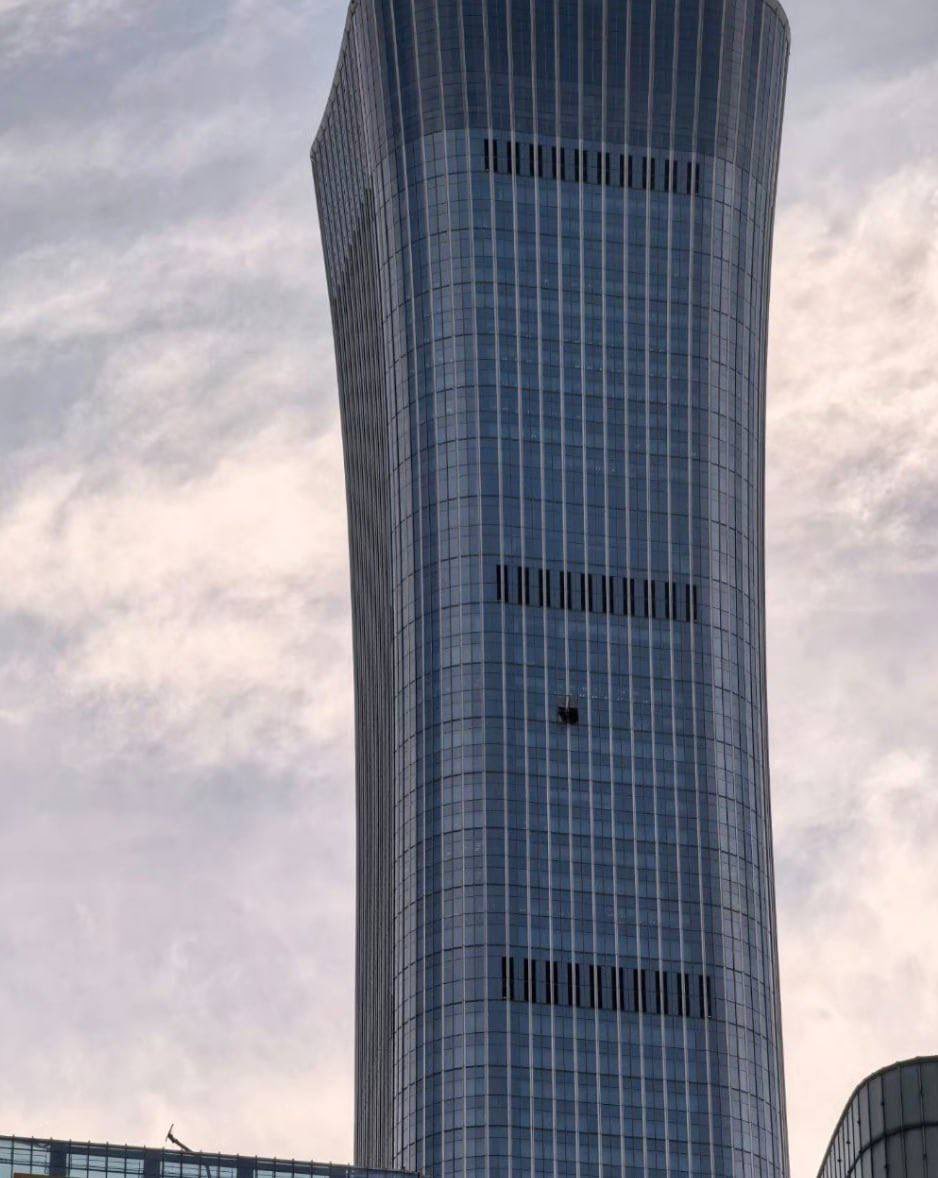
China has indefinitely suspended all non-essential general aviation operations—including private light fixed-wing flights, business jets, and pilot training—nationwide following a fatal June 26, 2026 crash.
The repercussions of the crash of a light aircraft into Beijing's tallest building, the CITIC Tower (also known as China Zun), continue to expand, prompting Chinese authorities to launch a swift nationwide crackdown.
According to Hong Kong's Ming Pao, the Chinese civil aviation sector has issued an emergency ban, effectively suspending all general aviation (referring to non-commercial passenger flights involving small planes, helicopters, private aircraft, and light aircraft) across China indefinitely, except for emergency rescue operations. This has paralyzed Beijing's vigorous promotion of the low-altitude economy industry.
This incident, considered a major security red line by Zhongnanhai, also exposed serious blind spots in Beijing's air defense network when defending against "low, slow, and small" targets.
The report, citing sources in the aviation industry, revealed that prior to the collision, Beijing's control tower and area air traffic control frantically called the crashed aircraft, registration number B-12PP, but received no response.
The military subsequently dispatched military helicopters to intercept it, but by the time military personnel arrived at the scene, the aircraft had already crashed into the tallest building in Beijing.
According to aviation enthusiasts, the pilot likely pretended not to hear and turned off the aircraft radio without authorization, then used the Beijing-Qinhuangdao Expressway as a visual landmark to drive straight into the central restricted area.
The civil aviation industry has issued the strictest no-fly order to date, with officials ordering a thorough investigation of the physical and mental health of all pilots.
Ming Pao, citing sources in China's civil aviation industry, reported that an emergency notice has been issued by the authorities, requiring a complete suspension of general aviation activities within a 300-kilometer radius of Beijing.
The notice mandates that all general aviation entities fully cooperate with the public security departments to conduct a comprehensive "background investigation" of all licensed pilots nationwide, and to fully assess and archive their technical capabilities and physical and mental health for at least one year.
This severe penalty of "indefinite suspension of all general aviation flights in China" undoubtedly casts a devastating shadow over the emerging "low-altitude economy" industry, which Xi Jinping highly values and actively develops.
In China, the tuition for a "sport pilot's license," with its extremely low entry requirements, is only about 80,000 RMB (approximately 360,000 NTD). Students only need 30 hours of training and 1 hour of solo flight to obtain the license within a month without a medical examination.
This extremely low training and assessment threshold is considered the core root cause of this major security lapse in the capital. Currently, flying clubs in Shanghai and other locations have been forced to cease operations entirely, and the suspension is expected to last at least 10 days.
China's skies are among the most tightly controlled in the world, with the military retaining primary authority over airspace access and allocation. Beijing is among the most sensitive areas under this framework.
While police and other official aircraft have occasionally been spotted over downtown Beijing, apart from military aircraft formations during national parades, aircraft flying near the city's skyscrapers are exceptionally rare.
Currently, Dongshi Shuangyue General Aviation Company, the owner of the crashed aircraft, is listed as "temporarily closed" on platforms such as "China Navigation and Consumer Review," and its official website is also inaccessible.
The Civil Aviation Administration of China, the Beijing Municipal Public Security Bureau, and CITIC Group have not issued further comments regarding the specific timeframe for the nationwide general aviation shutdown.
The airspace restriction for General aviation is here, just days before the Communist Party marks the 105th anniversary of its founding on July 1, has placed the incident under heightened political scrutiny, increasing pressure on authorities to adopt tighter controls.